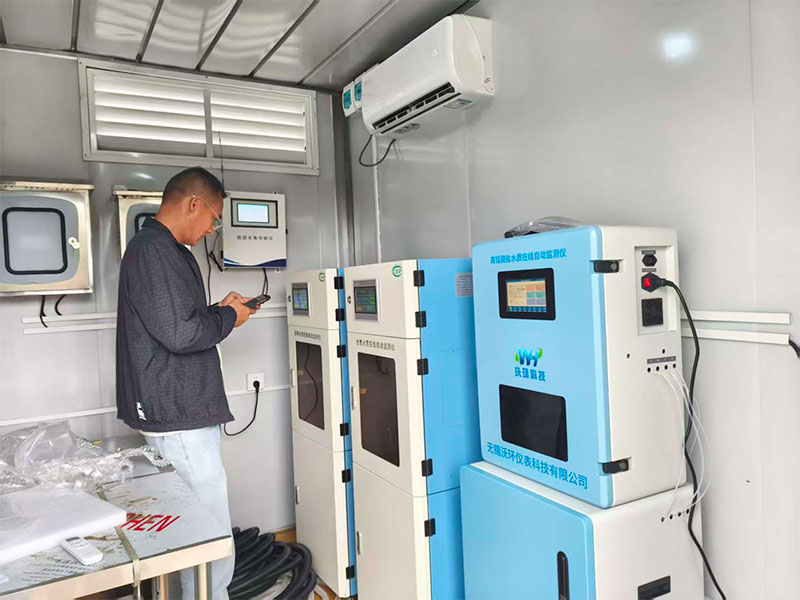
With increasingly strict environmental regulations and growing demand for stable and compliant operations, online water quality monitoring systems have become essential infrastructure across multiple industries.
This article explores how online water quality monitoring systems are applied in different industries and the operational value they bring, helping users choose suitable monitoring solutions.
Municipal Wastewater Treatment Monitoring
Application Background
Wastewater treatment plants must continuously monitor influent, treatment processes, and discharge quality to ensure stable operation and regulatory compliance.
Role of Online Monitoring
Online monitoring systems are typically used for:
Influent load monitoring
Biological treatment control
Effluent compliance monitoring
Process optimization and energy saving
Benefits
Real-time process visibility
Reduced manual sampling
Improved aeration & dosing control
Prevention of discharge violations
Industrial Wastewater Discharge Monitoring
Application Background
Industries such as chemical processing, pharmaceuticals, food production, and electroplating generate complex wastewater requiring continuous discharge supervision.
Monitoring Functions
Systems typically monitor:
COD, ammonia nitrogen, pH, etc.
Discharge flow variations
Abnormal discharge alarms
Business Benefits
Compliance with environmental regulations
Reduced violation risks
Automated monitoring
Transparent discharge recordsDrinking water sources
River, Lake & Water Source Monitoring
Application Background
Natural water bodies are influenced by industrial, agricultural, and municipal activities, requiring long-term monitoring.
Monitoring Deployment
Systems are deployed at:
River monitoring sections
Lake monitoring buoys
Reservoirs and protected sources
Drinking water sources
Management Advantages
Real-time water condition tracking
Support environmental management decisions
Quick pollution detection
Early warning capabilities
Aquaculture Water Quality Monitoring
Application Background
Aquaculture environments are highly sensitive to water quality fluctuations, which can cause significant losses.
Monitoring Role
Systems typically monitor:
Dissolved oxygen
pH level
Temperature
Ammonia concentration
Farm Benefits
Reduced fish/shrimp mortality
More stable production
Reduced manual inspections
Smart aquaculture upgrades
Future Development Trends
With the growth of smart environmental and water management, monitoring systems are evolving into intelligent platforms:
Cloud-based centralized platforms
Multi-site networked monitoring
AI-based data analysis
Unmanned monitoring stations
Remote operation and maintenance
Monitoring systems will evolve from simple data collection to intelligent decision support.
Conclusion: Choosing the Right Monitoring Solution
Different applications require different monitoring parameters and system stability. Selection should consider:
Application requirements
Monitoring parameters
Installation environment
Maintenance convenience
Data platform compatibility
A suitable monitoring solution ensures compliance while reducing long-term operational costs.