Introduction
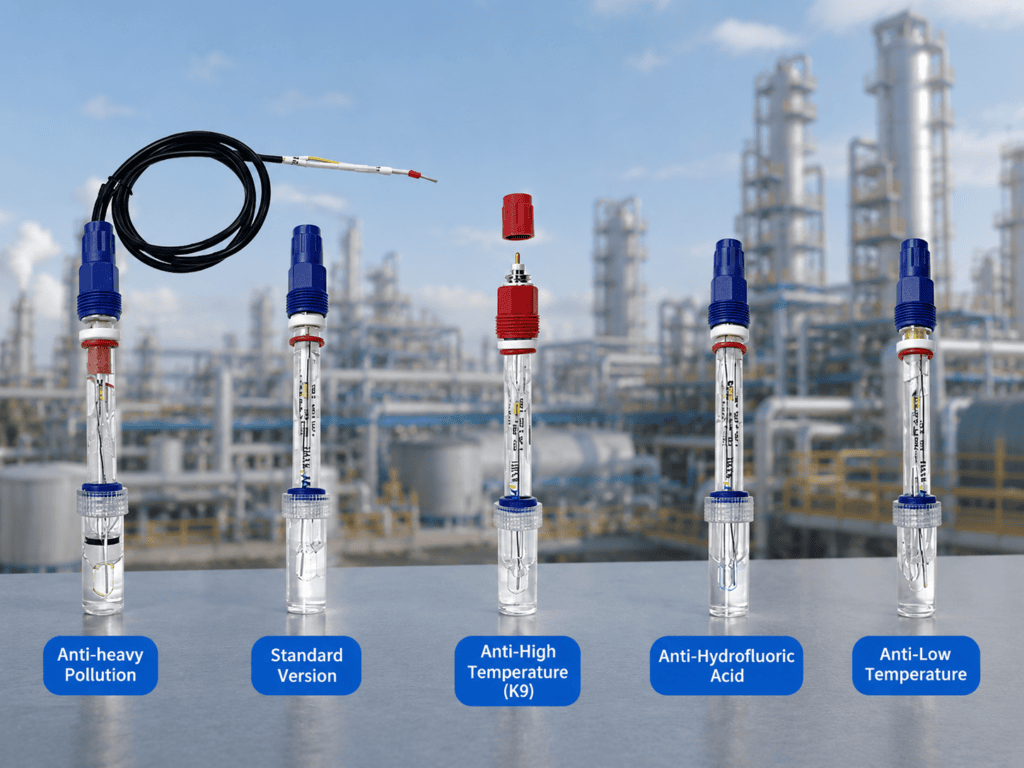
Choosing the right glass pH electrode is one of the most important decisions in any pH measurement system. While many users focus on the analyzer or controller, long-term measurement accuracy often depends on selecting a glass electrode that matches the actual process conditions.
Different applications place different demands on a pH sensor. Wastewater treatment plants must deal with contamination and suspended solids. Chemical reactors may operate at elevated temperatures and pressures. Food processing applications often involve aggressive cleaning cycles and varying process conditions. Selecting the wrong electrode can lead to unstable readings, shortened service life, and increased maintenance costs.
This guide explains the main types of industrial glass pH electrodes, their applications, selection criteria, and common mistakes to avoid.
Quick Answer: How Many Types of Glass pH Electrodes Are There?
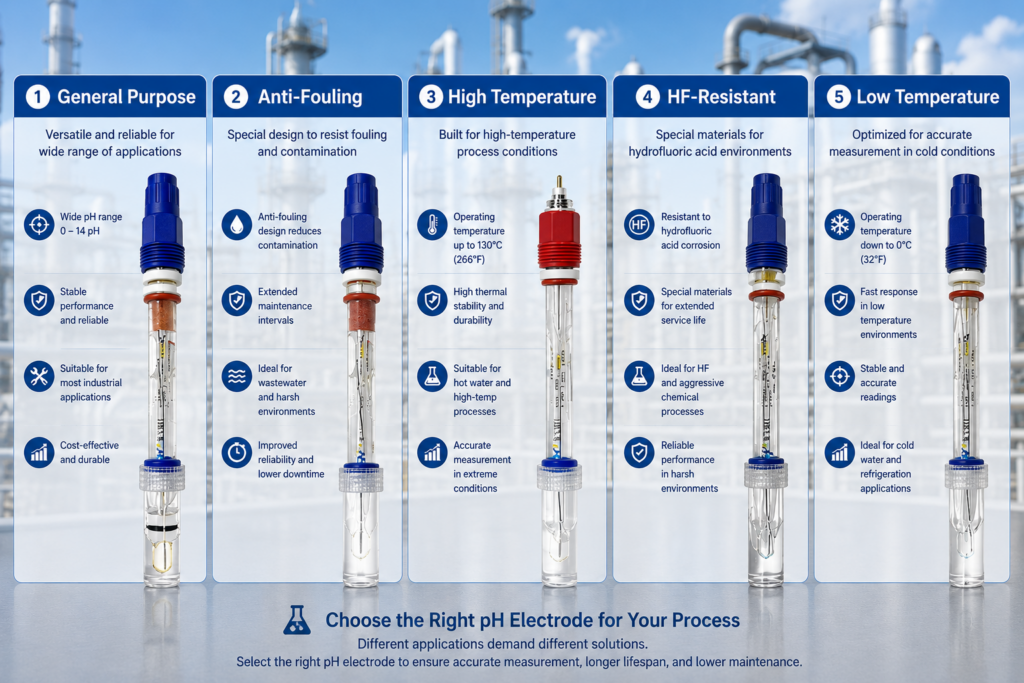
Industrial glass pH electrodes can generally be divided into several categories based on application requirements:
- General-purpose glass pH electrodes
- Anti-fouling glass pH electrodes
- High-temperature glass pH electrodes
- HF-resistant glass pH electrodes
- Low-temperature glass pH electrodes
- Refillable glass pH electrodes
- Gel-filled glass pH electrodes
The best choice depends on process temperature, contamination level, sample composition, maintenance requirements, and installation conditions.
General-Purpose Glass pH Electrodes
General-purpose glass electrodes are designed for clean water and standard industrial applications.
Typical applications include:
- Drinking water treatment
- Municipal water plants
- Cooling water systems
- General industrial processes
Advantages:
- Cost-effective
- Easy maintenance
- Suitable for most clean aqueous solutions
However, they may not perform well in heavily contaminated wastewater or aggressive chemical environments.
Anti-Fouling Glass pH Electrodes
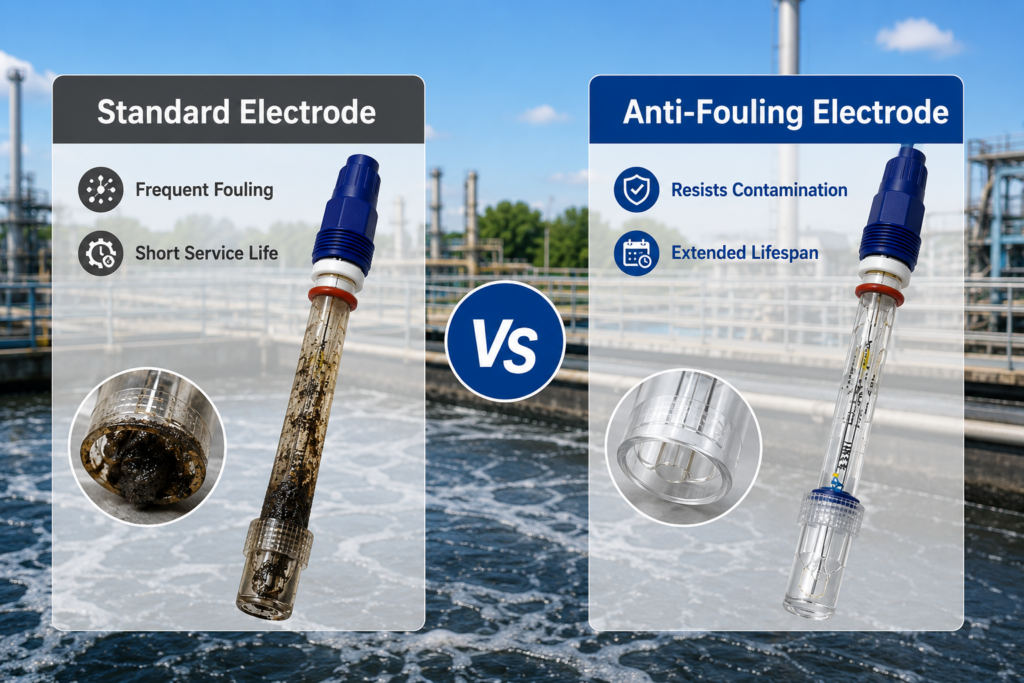
Anti-fouling electrodes are designed for wastewater and high-contamination applications.
Typical applications include:
- Municipal wastewater treatment
- Textile wastewater
- Electroplating wastewater
- Industrial effluent monitoring
Advantages:
- Improved junction protection
- Better resistance to contamination
- Reduced maintenance frequency
From Our Field Experience: Why a Standard pH Electrode Failed in Textile Wastewater
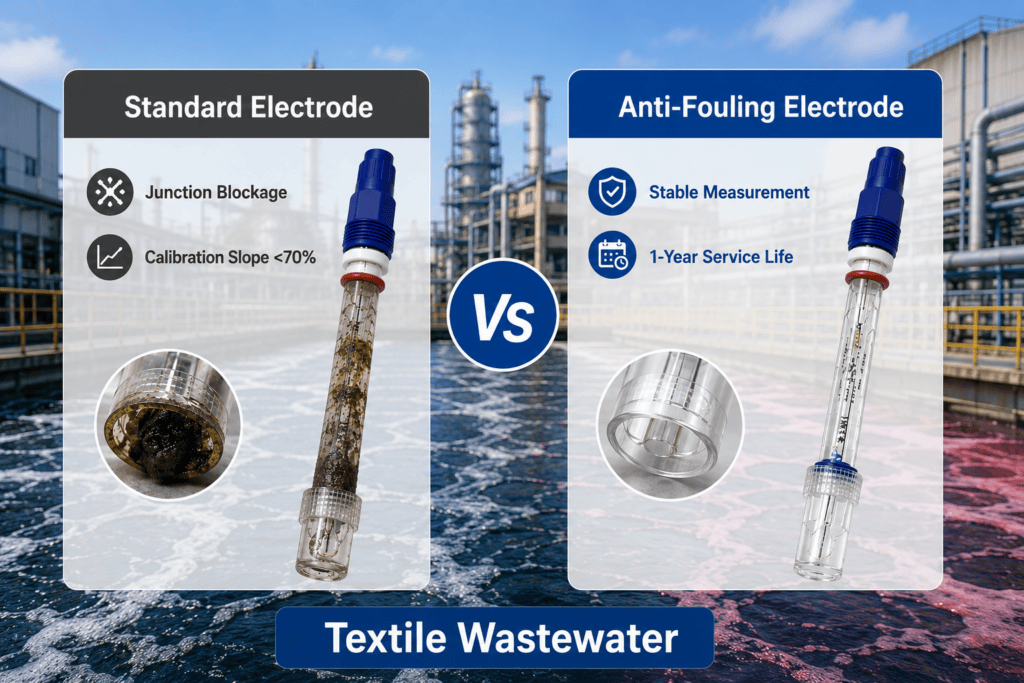
Selecting the wrong electrode for a contaminated process can dramatically shorten sensor life.
We once worked with a textile dyeing factory that installed a standard glass pH electrode in an equalization tank. During the purchasing stage, the customer believed the wastewater contained only light dye contamination and assumed a general-purpose electrode would be sufficient.
However, after installation, the electrode failed within just seven days.
When our engineers investigated the problem, we found that dyes, sizing agents, and suspended contaminants rapidly clogged the ceramic junction. This caused instability in the reference system and continuous junction potential drift. At the same time, colored organic deposits accumulated on the glass membrane, slowing the electrode response and reducing the calibration slope to below 70%.
Although the electrode itself was not defective, it was simply not designed for this level of contamination.
After reviewing the process conditions, we recommended an anti-fouling pH electrode specifically designed for wastewater applications. The service life increased from less than one week to approximately one year, while calibration frequency was reduced to just once per month. The customer also avoided frequent shutdowns and significantly reduced maintenance costs.
This case demonstrates an important selection principle: contamination level should always be considered when choosing a pH electrode, not just the pH measurement range.
High-Temperature Glass pH Electrodes
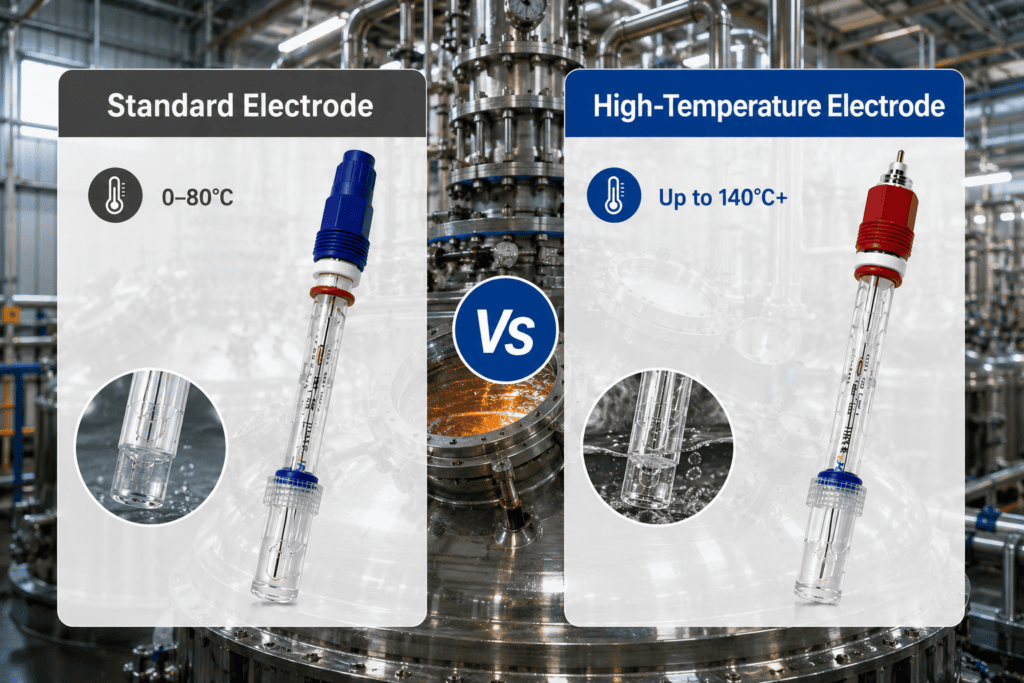
High-temperature glass electrodes are specifically designed for elevated-temperature processes.
Typical applications include:
- Chemical reactors
- Desulfurization systems
- High-temperature process water
- Industrial manufacturing processes
Advantages:
- Wider temperature tolerance
- Improved electrolyte stability
- Longer service life under heat exposure
From Our Field Experience: Why ATC Does Not Mean High-Temperature Resistance
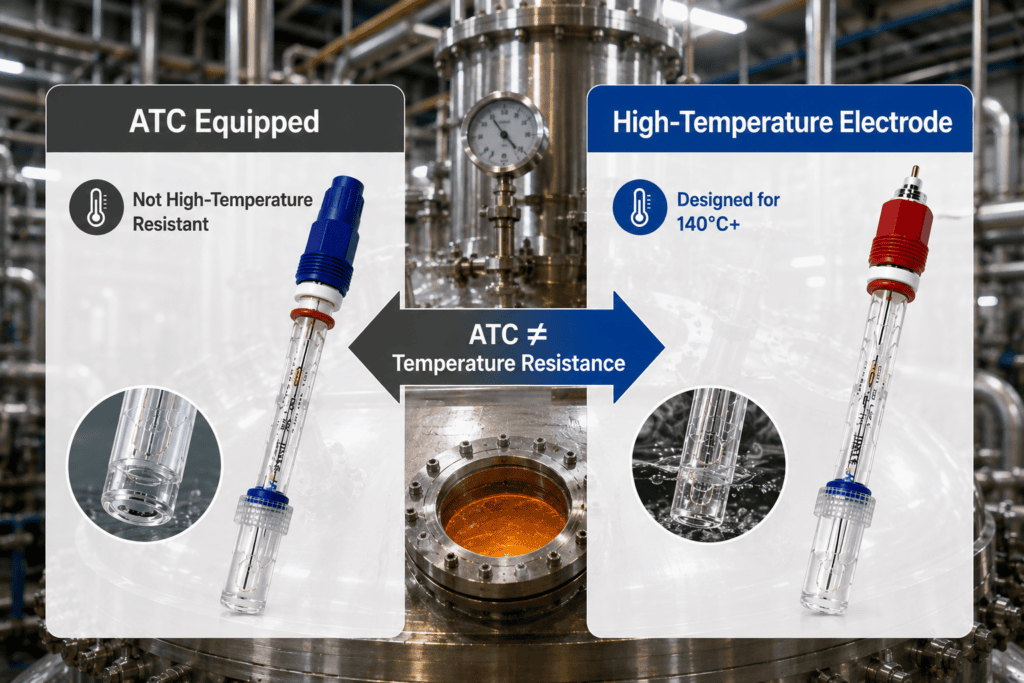
One of the most common misconceptions in pH electrode selection is assuming that automatic temperature compensation (ATC) means the electrode can withstand high temperatures.
We once supported a chemical manufacturer that used a standard industrial glass pH electrode to monitor a reactor operating at approximately 140°C. Before purchasing, the customer was aware of the elevated process temperature but assumed that the electrode’s built-in ATC function made it suitable for high-temperature service.
In practice, the results were very different.
The 140°C operating environment caused the internal KCl electrolyte to evaporate rapidly and form crystalline deposits that blocked the junction. At the same time, the sealing materials used in standard electrodes, which are typically rated for temperatures below 60°C, softened and began to leak under prolonged heat exposure.
The electrode failed shortly after installation.
After evaluating the application, our engineers recommended a dedicated high-temperature glass pH electrode designed for elevated-temperature processes. The upgraded sensor used heat-resistant materials, a more robust sealing structure, and a reference system capable of operating reliably under extreme thermal conditions.
This experience highlights an important fact: ATC improves measurement accuracy by compensating for temperature effects on pH readings, but it does not increase the physical temperature tolerance of the electrode itself.
For reactors, desulfurization systems, and other high-temperature applications, a dedicated high-temperature pH electrode should always be selected.
HF-Resistant Glass pH Electrodes
Hydrofluoric acid (HF) is one of the most aggressive chemicals for conventional glass pH electrodes. Standard glass membranes can be attacked and gradually dissolved by fluoride ions, resulting in unstable readings and shortened service life.
HF-resistant glass pH electrodes are designed with specialized glass formulations and optimized reference systems to withstand fluoride-containing environments.
Typical applications include:
- Semiconductor manufacturing
- Metal surface treatment
- Pickling processes
- Chemical processing
- Fluoride-containing wastewater treatment
Advantages:
- Improved resistance to HF corrosion
- Extended electrode lifespan
- Reduced maintenance frequency
- Better measurement stability in fluoride-rich environments
When selecting an HF-resistant electrode, both HF concentration and operating temperature should be considered to ensure reliable long-term performance.
Low-Temperature Glass pH Electrodes
Low-temperature applications can significantly affect the response speed and accuracy of standard glass pH electrodes. As temperatures decrease, ion exchange at the glass membrane becomes slower, resulting in delayed response and unstable readings.
Low-temperature glass pH electrodes use specially formulated glass membranes that maintain sensitivity even in cold environments.
Typical applications include:
- Cold-water treatment systems
- Refrigerated process water
- Food and beverage production
- Cold storage facilities
- Outdoor environmental monitoring
Advantages:
- Faster response in cold conditions
- Improved measurement stability
- Better sensitivity at low temperatures
- Reduced measurement lag
For applications operating near freezing temperatures, dedicated low-temperature pH electrodes provide significantly better performance than standard industrial electrodes.
Refillable vs. Gel-Filled Glass pH Electrodes
Refillable Electrodes
Advantages:
- Longer service life
- Better long-term stability
- Lower operating cost over time
- Suitable for continuous industrial monitoring
Best for:
- Wastewater treatment plants
- Chemical processing
- Industrial process control
Gel-Filled Electrodes
Advantages:
- Minimal maintenance
- Easy installation
- No electrolyte refilling required
Best for:
- General industrial applications
- Remote monitoring locations
- Users seeking simplified maintenance
Buyer Selection Matrix
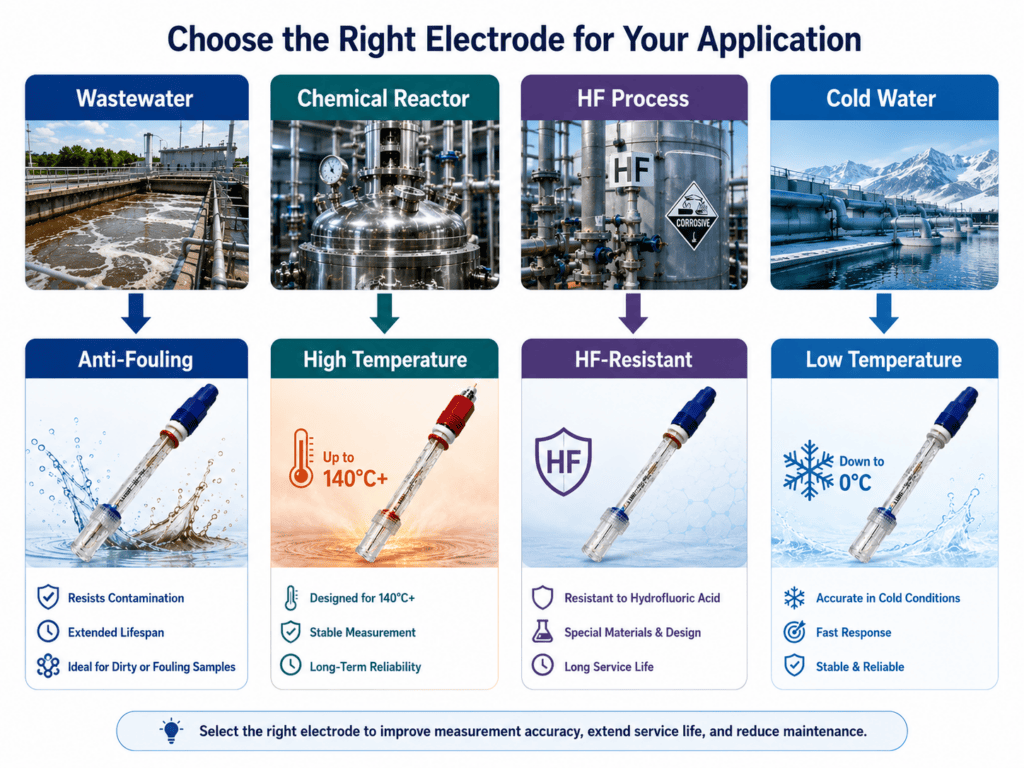
| Application | Recommended Electrode |
|---|---|
| Drinking Water | General-Purpose |
| Municipal Wastewater | Anti-Fouling |
| Textile Wastewater | Anti-Fouling |
| Electroplating Wastewater | Anti-Fouling |
| Chemical Reactor | High-Temperature |
| Semiconductor Manufacturing | HF-Resistant |
| Pickling Process | HF-Resistant |
| Cold Water Process | Low-Temperature |
| Outdoor Winter Monitoring | Low-Temperature |
Frequently Asked Questions
What is the most common type of pH electrode?
General-purpose glass pH electrodes remain the most widely used type for water treatment and industrial applications.
Which pH electrode is best for wastewater?
Anti-fouling glass pH electrodes are generally recommended because they offer better resistance to contamination, fouling, and junction blockage.
Can a standard pH electrode be used at high temperatures?
Not always. Most standard industrial pH electrodes are designed for temperatures up to approximately 80°C. Higher temperatures require dedicated high-temperature pH electrodes.
How long does a glass pH electrode last?
Service life depends on process conditions, maintenance practices, and contamination levels. In industrial applications, electrode lifespan typically ranges from 6 to 24 months.
Can standard pH electrodes be used in hydrofluoric acid applications?
No. Hydrofluoric acid can attack conventional glass membranes and significantly shorten electrode life. Dedicated HF-resistant pH electrodes are recommended for fluoride-containing applications.
Does ATC mean the electrode can withstand high temperatures?
No. Automatic temperature compensation improves measurement accuracy but does not increase the physical temperature resistance of the electrode. High-temperature processes require dedicated high-temperature pH electrodes.
Conclusion
Selecting the right glass pH electrode depends on much more than measurement range alone. Process temperature, contamination level, sample composition, chemical compatibility, and maintenance requirements all influence long-term measurement performance.
As the field examples in this guide demonstrate, many electrode failures are not caused by manufacturing defects, but by selecting an electrode that does not match the actual operating conditions. Understanding the strengths and limitations of each electrode type can help improve measurement reliability, reduce maintenance costs, and extend sensor service life.
About Industrial Glass pH Electrodes
Accurate pH measurement is essential for wastewater treatment, chemical processing, electroplating, food production, and industrial process control. However, long-term measurement reliability depends not only on the analyzer, but also on selecting the correct glass pH electrode for the application.
As discussed in this guide, factors such as contamination levels, process temperature, sample composition, and maintenance requirements can significantly affect electrode performance and service life. Choosing the wrong electrode often leads to unstable readings, excessive maintenance, and premature sensor failure.
Wohuan Instrument specializes in industrial glass pH electrodes, online pH analyzers, and water quality monitoring solutions. With extensive experience supporting wastewater treatment plants, chemical factories, and industrial users, we help customers identify suitable electrode configurations for challenging operating environments.
Need Help Selecting the Right Glass pH Electrode?
Selecting a glass pH electrode involves more than choosing a measurement range. Process temperature, contamination level, suspended solids, chemical compatibility, and installation conditions all influence long-term performance.
Whether you are monitoring municipal wastewater, textile wastewater, electroplating solutions, chemical reactors, semiconductor processes, or industrial process water, choosing the correct electrode can improve measurement stability and reduce maintenance costs.
If you are evaluating industrial glass pH electrodes, online pH analyzers, or water quality monitoring systems, our engineering team can help recommend suitable solutions based on your specific application.
Homepage
https://wxinstrument.com/
Industrial pH Electrodes
https://wxinstrument.com/product-cate/online-ph-meter/
Contact Us
https://wxinstrument.com/contact/
Send us your application details, process medium, temperature range, and installation requirements. We will be happy to recommend a suitable solution for your project.