Introduction
A pH measurement is only as trustworthy as its reference electrode. Even a perfect glass membrane produces meaningless numbers if the reference side drifts, clogs, or dries out. Yet many users focus entirely on calibration buffers and ignore the half of the sensor that quietly sets the baseline.
Understanding what the reference electrode does, how to find it on a diagram, and how to keep it healthy is the difference between stable readings and constant frustration. This guide explains how reference electrodes work, how to identify them in a pH electrode diagram, how to select the correct design, and how to maintain them for reliable long-term performance.
Quick Answer
A reference electrode supplies a fixed, known voltage that does not change with the sample’s pH. The pH-sensitive glass electrode generates a voltage that does change with hydrogen ion activity, and the meter calculates pH from the difference between the two.
Most modern reference electrodes use an Ag/AgCl half-cell consisting of a silver wire coated with silver chloride immersed in a potassium chloride electrolyte solution. To maintain accuracy, keep the junction hydrated, refill the electrolyte when required, and never store the electrode in distilled or deionized water.
What Is a Reference Electrode in pH Measurement?
The Role of the Reference Electrode in Creating a Stable Potential
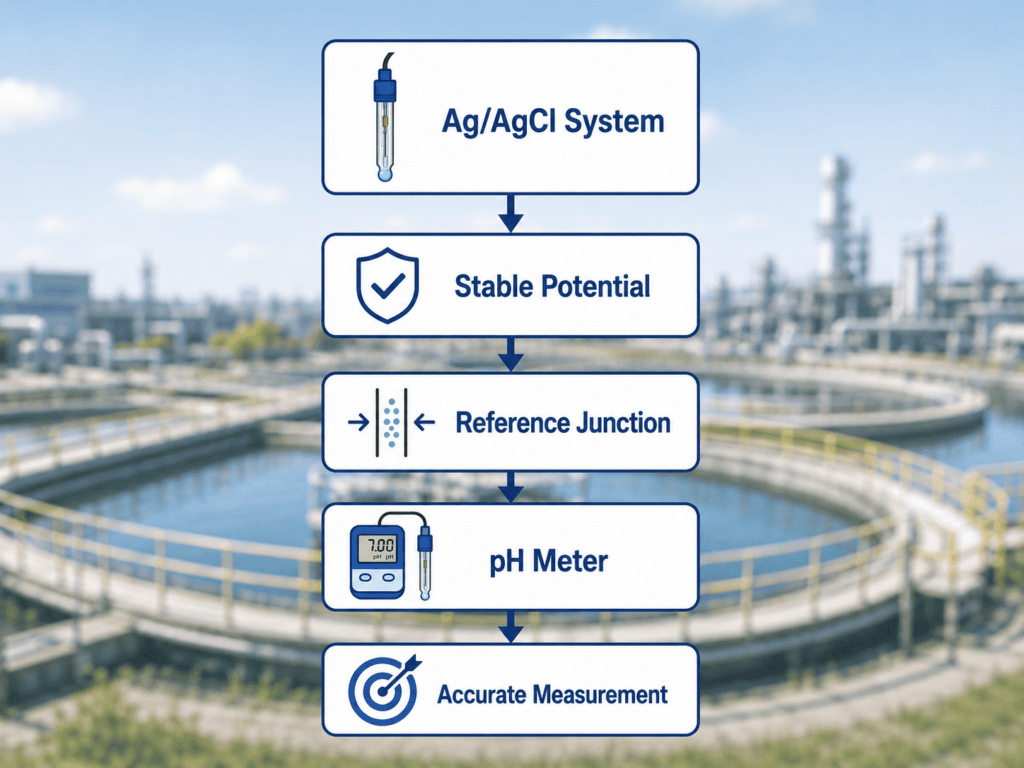
The reference electrode establishes a defined and stable electrical connection between the sample and the pH meter.
Inside a typical Ag/AgCl reference electrode, a silver wire coated with silver chloride sits inside a chamber filled with concentrated potassium chloride electrolyte. This system maintains a constant potential regardless of the sample’s pH.
Without this stable baseline, the measured voltage would continuously drift and accurate pH measurement would become impossible.
How the Reference Electrode Works with the Glass Electrode
A pH measurement system contains two essential electrochemical elements:
- The glass measuring electrode
- The reference electrode
The glass membrane responds to hydrogen ion activity and generates a variable voltage.
The reference electrode generates a stable voltage.
The pH meter measures the difference between these two voltages and converts the signal into a pH value.
For difficult samples containing proteins, sulfides, heavy metals, or TRIS buffers, double-junction reference electrodes are often preferred because they reduce contamination and improve long-term stability.
pH Electrode Diagram Breakdown: Identifying the Reference Electrode
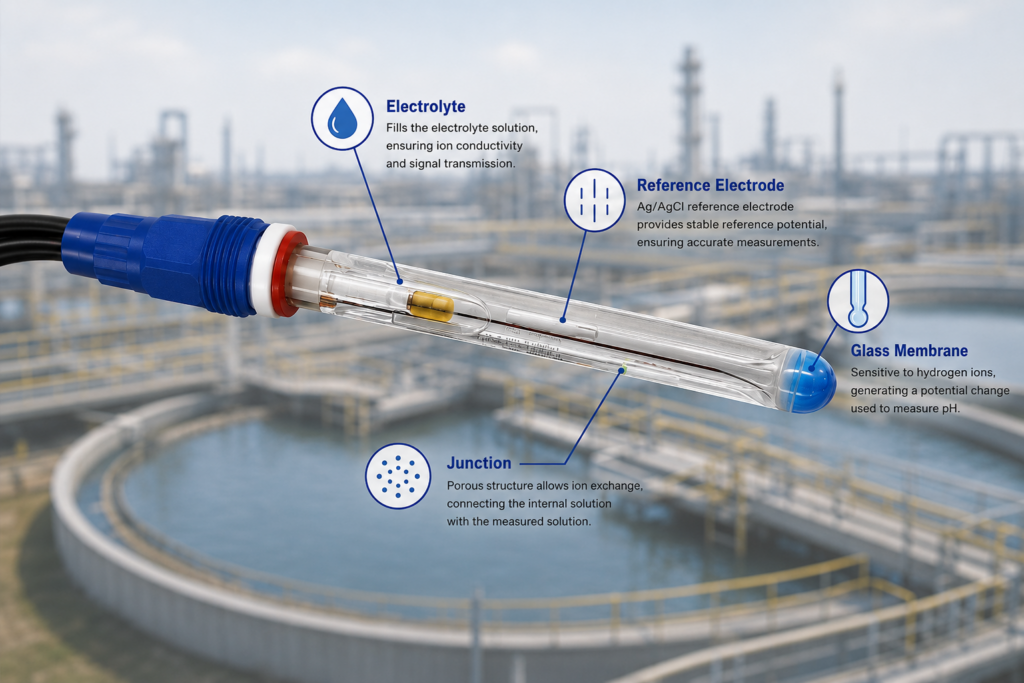
Key Components: Glass Membrane, Reference Electrode, Junction, and Filling Solution
A typical combination pH electrode contains two electrochemical half-cells: a glass sensing element and a reference system.
Key components include:
- Glass membrane
- Ag/AgCl reference element
- Potassium chloride electrolyte
- Porous liquid junction
- Electrode body
The glass membrane generates a pH-dependent voltage, while the reference system maintains a constant electrical potential.
The porous junction allows ionic contact between the electrolyte and the sample, completing the measurement circuit.
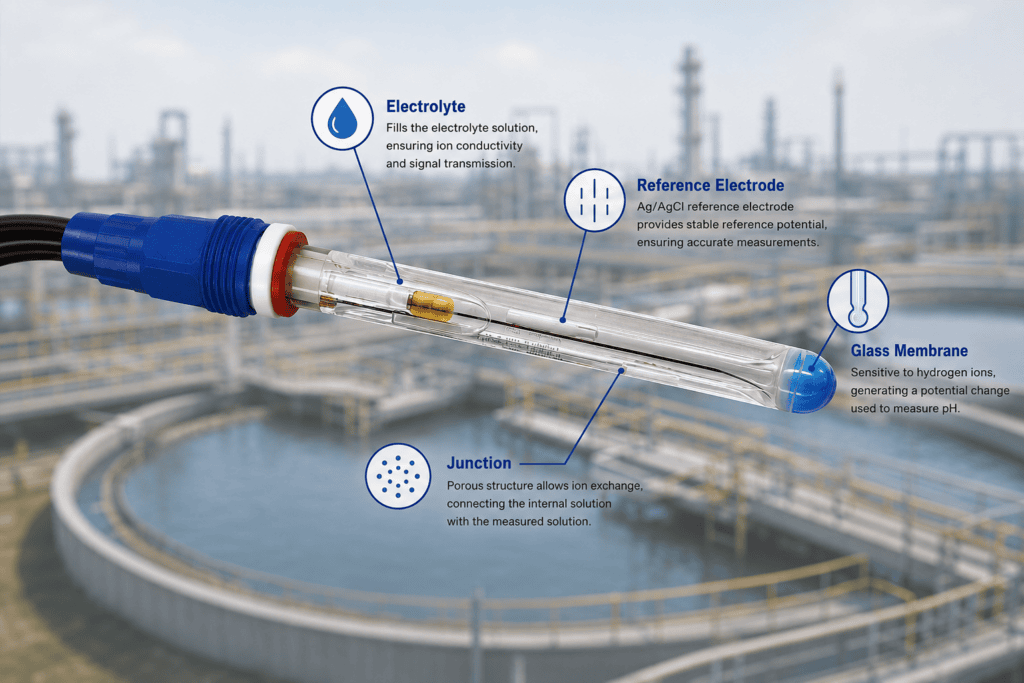
Step-by-Step: Locating the Reference Electrode on a Diagram
- Locate the cable connection at the top.
- Identify the Ag/AgCl reference wire inside the body.
- Locate the electrolyte chamber, usually labeled as KCl solution.
- Find the porous junction connecting the reference chamber to the sample.
- Distinguish the junction from the glass bulb at the tip.
Understanding these components makes troubleshooting much easier when instability or drift occurs.
Ag/AgCl Reference Electrode and Other Common Types
How the Ag/AgCl Reference Electrode Works
An Ag/AgCl reference electrode uses a silver wire coated with silver chloride immersed in concentrated potassium chloride electrolyte.
This electrochemical system generates a highly stable potential that remains essentially independent of sample pH.
Most industrial pH electrodes today use Ag/AgCl reference systems because they provide:
- Excellent stability
- Fast response
- Good chemical compatibility
- Low maintenance
Ag/AgCl Versus Saturated Calomel and Other References
Historically, saturated calomel electrodes (SCE) were widely used.
Today, Ag/AgCl reference systems dominate industrial and laboratory applications because they:
- Eliminate mercury-related concerns
- Offer excellent stability
- Support double-junction designs
- Require less maintenance
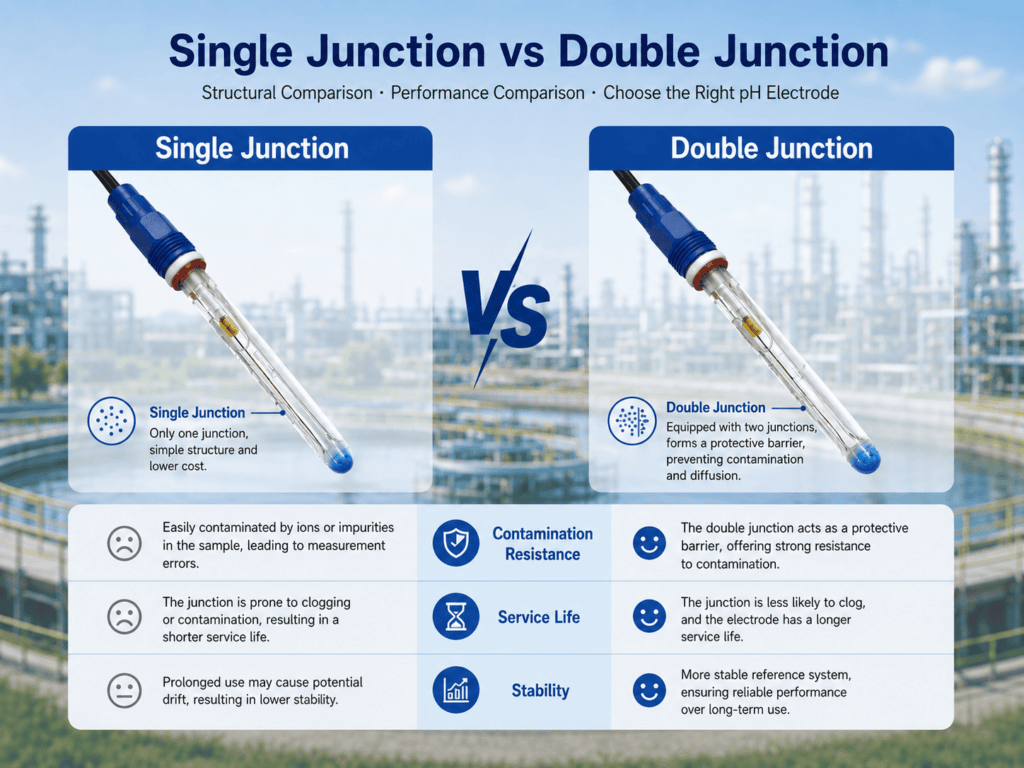
For wastewater, biological samples, and electroplating solutions, double-junction Ag/AgCl references are generally preferred because they better resist contamination.
How to Choose the Right Reference Electrode for Your pH Meter
Selection Checklist
When selecting a reference electrode, consider:
- Chemical compatibility
- Temperature range
- Pressure conditions
- Junction type
- Body material
- Maintenance requirements
For difficult industrial applications, junction design is often the most important factor.
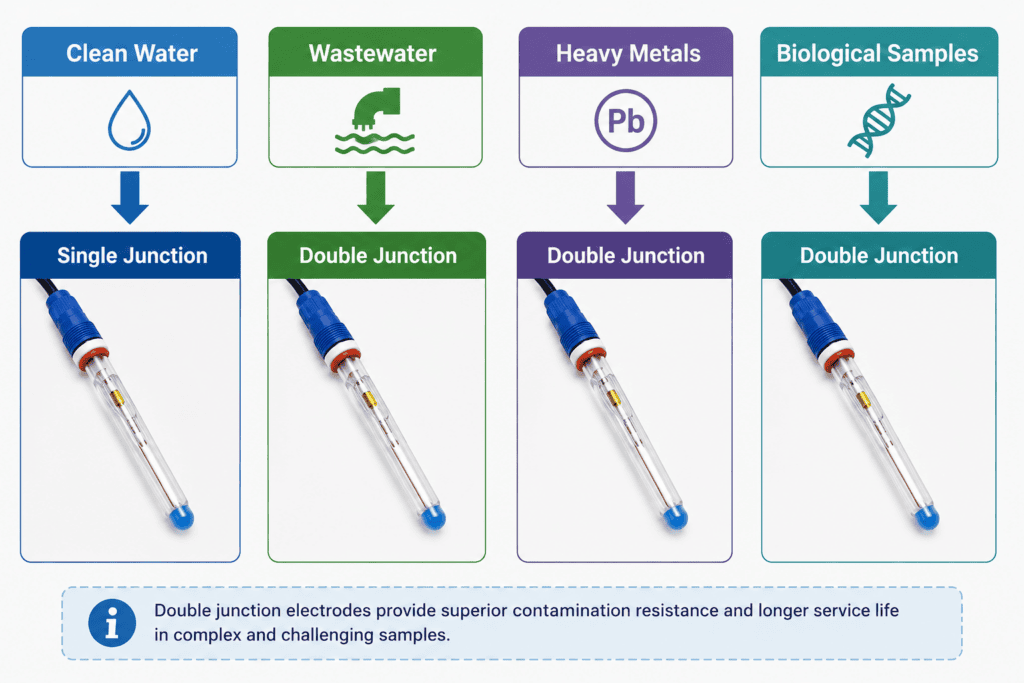
Matching the Reference Electrode to Your Application
Different process conditions require different reference electrode designs.
For example:
- Clean water applications often use standard single-junction electrodes.
- Wastewater treatment frequently benefits from double-junction designs.
- Heavy-metal processes require enhanced contamination resistance.
- Biological samples often require isolation from silver ions.
Selecting the wrong reference system can dramatically shorten electrode life and reduce measurement reliability.
From Our Field Experience: Why the Wrong Reference Junction Caused Measurement Failure
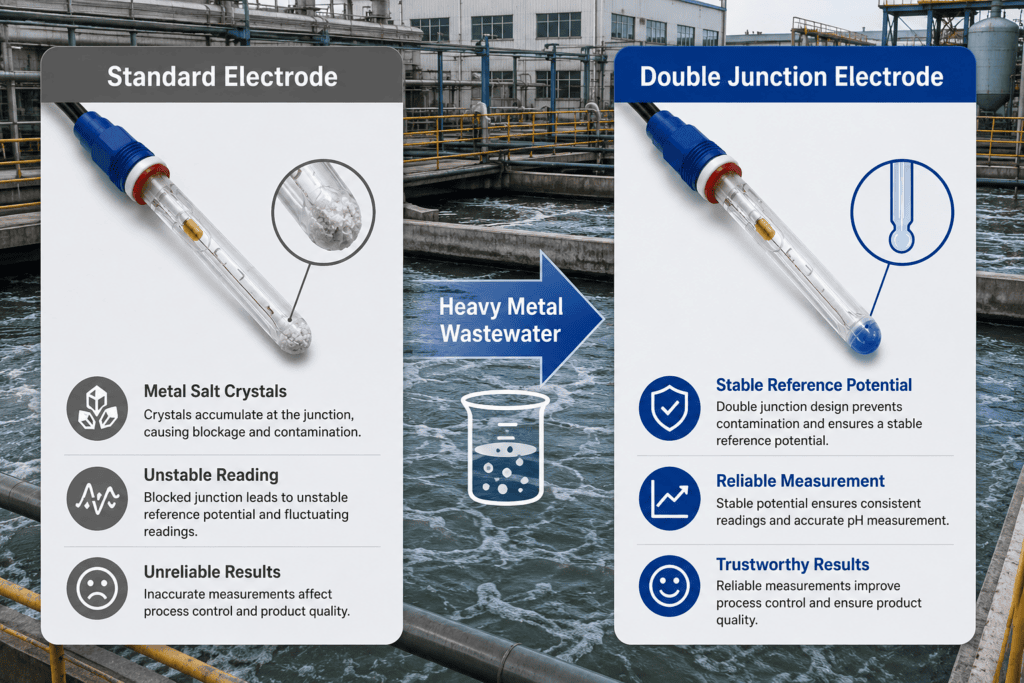
Selecting the correct reference junction is often more important than users realize, especially in contaminated industrial applications.
We once worked with an electroplating facility that used an online pH monitoring system to control heavy-metal precipitation processes. During the initial project, the customer selected a standard pH electrode because the measurement range appeared suitable for the application.
However, the electrode began failing repeatedly, and the pH readings became unstable and erratic.
After investigating the process conditions, our engineers found that dissolved heavy-metal ions were reacting within the reference junction. Over time, metal salts crystallized inside the porous ceramic junction, restricting electrolyte flow and causing severe reference potential instability.
The root problem was not the glass membrane but the reference junction design.
To solve the issue, we recommended a double-junction reference electrode. Unlike standard designs, a double-junction system includes an additional electrolyte chamber that isolates the Ag/AgCl reference system from the process fluid. This prevents silver ions from contacting the sample and significantly reduces the risk of precipitation and contamination.
After upgrading to the double-junction design, the measurement became stable and reliable, and electrode service life improved dramatically.
This experience demonstrates why double-junction reference electrodes are often the preferred choice for wastewater treatment, biological processes, and electroplating applications where contamination risks are high.
Maintaining Your Reference Electrode for Accurate pH Readings
Daily Care: Cleaning the Junction and Refilling Electrolyte
Stable pH measurements depend heavily on the condition of the reference junction.
The porous junction allows ionic contact between the reference electrolyte and the sample. If this junction becomes clogged or contaminated, the reference potential can drift and measurement accuracy will suffer.
For refillable electrodes:
- Check electrolyte levels regularly.
- Refill using the manufacturer’s recommended electrolyte.
- Keep the fill port open during measurement when required.
- Prevent the junction from drying out.
Routine inspection and cleaning can significantly extend electrode service life.
Troubleshooting: Drift, Clogged Junction, and Slow Response
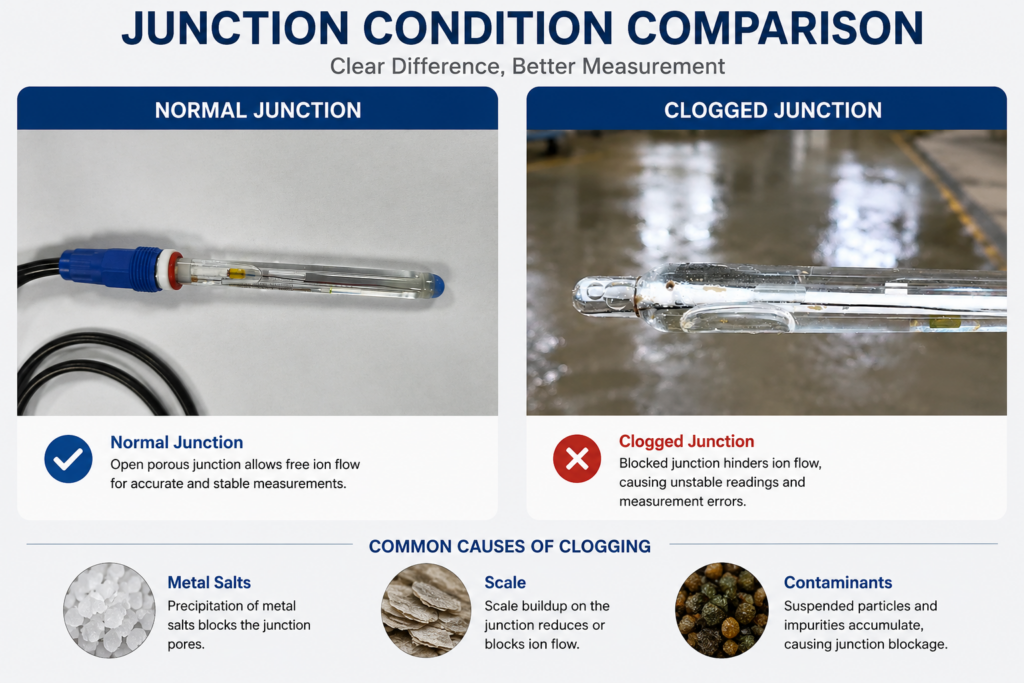
Most reference-electrode-related problems can be traced to one of three causes:
- Junction blockage
- Electrolyte contamination
- Junction dehydration
Common symptoms include:
- Unstable readings
- Continuous drift
- Slow response
- Calibration failure
Recommended troubleshooting steps:
- Confirm the junction is hydrated.
- Inspect for visible contamination.
- Clean according to the manufacturer’s recommendations.
- Refill electrolyte if necessary.
- Replace the electrode if performance does not recover.
Many apparent “sensor failures” are actually maintenance-related issues that can be prevented with proper care.
Proper Storage to Extend Electrode Life
Correct storage is one of the most overlooked aspects of pH electrode maintenance.
When not in use:
- Store the electrode in the recommended storage solution.
- Keep the junction hydrated.
- Never allow the sensing tip to dry out.
- Avoid prolonged exposure to air.
One of the most common mistakes is storing electrodes in distilled water or deionized water.
Although this seems harmless, it can permanently damage the reference system.
From Our Field Experience: How Improper Storage Destroyed a Reference Electrode
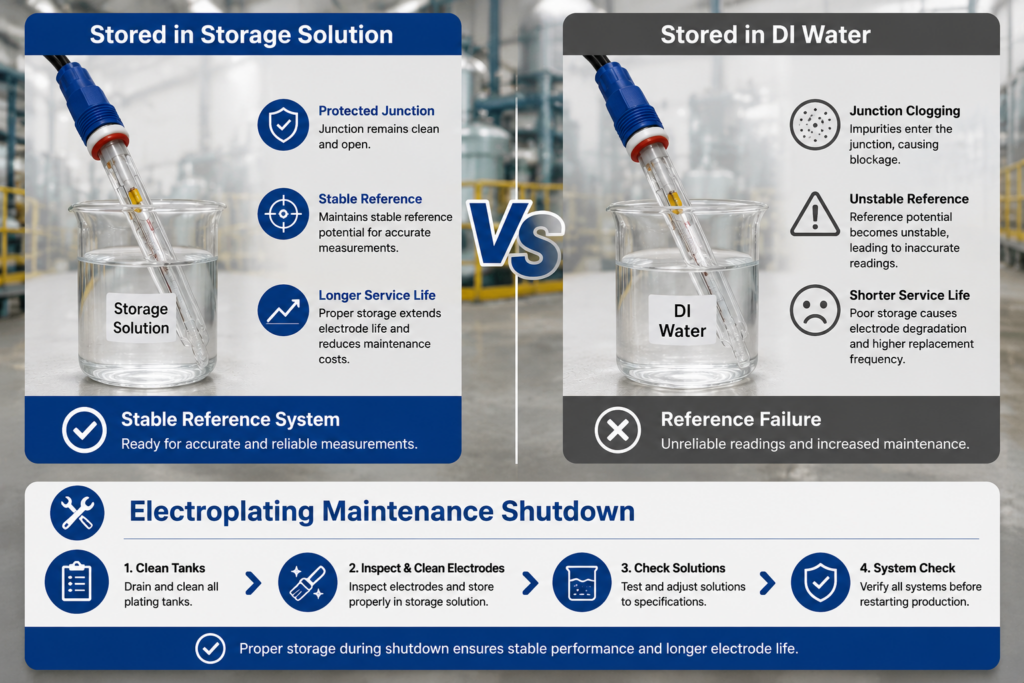
Even a high-quality reference electrode can fail prematurely if it is stored incorrectly.
We once supported an electroplating facility that used a double-junction pH electrode for continuous monitoring of plating baths. During a scheduled maintenance shutdown, technicians removed the electrode and stored it in a bucket of deionized (DI) water instead of using the recommended storage solution specified in the operating manual.
Because the shutdown lasted much longer than expected, the electrode remained immersed in DI water for an extended period.
When the electrode was returned to service, the readings drifted continuously and could no longer be calibrated properly.
After examining the sensor at our factory, we found that prolonged exposure to DI water had damaged the reference system. Chloride and potassium ions gradually diffused out of the reference chamber into the ultra-pure water, disrupting the stability of the Ag/AgCl reference half-cell. At the same time, electrolyte within the porous junction became diluted, permanently altering the junction potential.
Although the electrode had been in service for only a little over one month, the damage was irreversible and the sensor had to be replaced.
This case highlights one of the most important maintenance rules for reference electrodes: never store them in distilled water or deionized water. Always use the manufacturer’s recommended storage solution to maintain junction hydration and preserve reference stability.
Frequently Asked Questions About Reference Electrodes
What is the role of the reference electrode in a pH meter?
The reference electrode provides a stable electrical potential that does not change with sample pH. The pH meter calculates pH from the voltage difference between the glass electrode and the reference electrode.
What are the main parts of a pH electrode diagram?
A typical pH electrode diagram includes:
- Glass membrane
- Ag/AgCl reference element
- Electrolyte chamber
- Porous liquid junction
- Electrode body
How does an Ag/AgCl reference electrode work?
An Ag/AgCl reference electrode uses a silver wire coated with silver chloride immersed in potassium chloride electrolyte. This electrochemical system generates a stable reference potential independent of sample pH.
How do I choose the right reference electrode for my pH meter?
Selection should be based on:
- Chemical compatibility
- Temperature range
- Pressure conditions
- Junction type
- Contamination risk
For wastewater, electroplating, and biological applications, double-junction reference electrodes are often recommended.
Why do double-junction electrodes last longer in electroplating applications?
The additional electrolyte chamber isolates the Ag/AgCl reference system from the process fluid. This greatly reduces contamination, silver precipitation, and junction blockage.
Can I store a pH electrode in distilled or deionized water?
No. Distilled water and DI water can extract ions from the reference system, dilute the electrolyte, and permanently damage the reference junction. Always use the recommended storage solution.
About Reference Electrode Performance in Industrial Applications
A reference electrode may appear to be a small component inside a pH sensor, but it often determines the long-term stability and reliability of the entire measurement system. In industrial environments such as wastewater treatment, electroplating, chemical processing, and biological applications, contamination, heavy metals, temperature, and maintenance practices can significantly affect reference electrode performance.
As shown in the field examples throughout this guide, many pH measurement problems are not caused by the glass membrane itself. In practice, unstable readings, calibration failures, and premature electrode replacement are frequently linked to reference junction contamination, incorrect junction selection, or improper storage methods.
Wohuan Instrument specializes in industrial pH electrodes, online pH analyzers, and water quality monitoring systems. With extensive experience supporting wastewater treatment plants, electroplating facilities, chemical factories, and industrial process users, we help customers select suitable reference electrode configurations for challenging operating conditions.
Need Help Selecting the Right Reference Electrode?
Selecting the correct reference electrode involves more than choosing a pH range. Process chemistry, contamination levels, heavy metals, temperature, pressure, and maintenance requirements all influence long-term measurement performance.
Whether you are monitoring wastewater treatment systems, electroplating processes, chemical reactors, biological treatment systems, or industrial process water, choosing the right reference electrode can significantly improve measurement stability and reduce maintenance costs.
If you are evaluating industrial pH electrodes, online pH analyzers, or water quality monitoring systems, our engineering team can help identify suitable solutions based on your operating conditions.
Homepage
https://wxinstrument.com/
Industrial pH Electrodes
https://wxinstrument.com/product-cate/online-ph-controller-sensor/
Contact Us
https://wxinstrument.com/contact/
Send us your application details, process medium, temperature range, contamination level, and installation requirements. Our engineers will be happy to recommend a suitable solution for your project.
Conclusion
The reference electrode is the foundation of every reliable pH measurement. While the glass membrane receives most of the attention, the stability of the reference system ultimately determines whether a pH value can be trusted.
Understanding how reference electrodes work, how to identify them on a diagram, how to select the correct junction design, and how to maintain them properly can dramatically improve measurement accuracy and electrode lifespan.
As the real-world examples in this guide demonstrate, many failures are not caused by manufacturing defects but by incorrect electrode selection, contamination, or improper storage. By applying these best practices, users can reduce downtime, improve measurement reliability, and maximize the performance of their pH monitoring systems.