Industry Challenges
Small municipal wastewater treatment stations face significant operational difficulties due to their small scale and dispersed locations, making high-frequency maintenance impractical for water utilities. Currently, most small stations still rely on time‑based control and fixed‑frequency metering pump dosing, without linkage to real‑time water quality. This leads to two critical problems:
- When influent pollutant concentrations are low – flocculants and disinfectants are overdosed, wasting chemicals and causing secondary pollution (excess residual chlorine, increased sludge production).
- When influent pollutant concentrations spike – the dosing amount is insufficient, resulting in effluent quality exceeding discharge limits.
These challenges clearly highlight the urgent need to deploy online water quality monitoring systems integrated with dosing control to achieve real‑time water quality regulation and exceedance early warning.
Technical Solution for Online Water Quality Monitoring
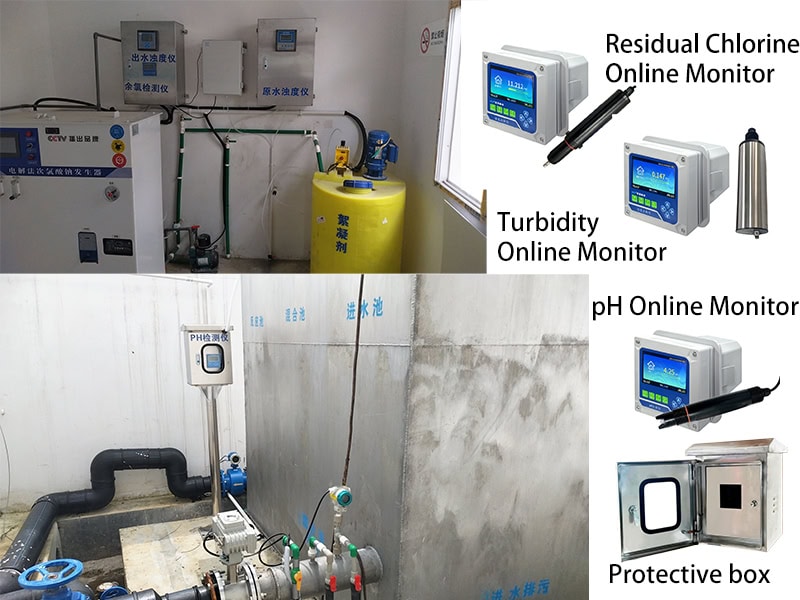
To address the pain points of small municipal wastewater treatment stations, we propose a complete online water quality monitoring system with the following components:
Core Monitoring Instruments
- pH online monitor
- Turbidity online monitor
- Residual chlorine monitor
These instruments continuously measure key water quality parameters in real time.
Integrated Dosing Control
The monitoring system is linked to the chemical dosing system (sodium hypochlorite generator and flocculant dosing equipment), automatically adjusting dosing rates based on live water quality data.
Smart Operation & Maintenance
All monitoring data are transmitted in real time to an operation platform, where AI algorithms perform precise dosing calculations, enabling digital and intelligent O&M management.
Key Equipment Advantage
Self‑cleaning Electrodes – Drastically Reduced Maintenance Frequency
Small stations cannot support frequent on‑site maintenance. Moreover, municipal wastewater contains high suspended solids, causing sludge adhesion and biofilm growth that readily foul pH electrodes, turbidity probes, and residual chlorine sensors. Utility field staff often lack the expertise for professional electrode cleaning.
Our solution: Electrodes with built‑in self‑cleaning function that significantly reduce manual cleaning effort.
| Comparison | Traditional Electrodes | Self‑cleaning Electrodes |
|---|---|---|
| Maintenance frequency | At least once a week | Only once every three months (routine inspection) |
| Maintenance cost | High | Low |
Stainless Steel Protection Enclosures – Stable Outdoor Operation
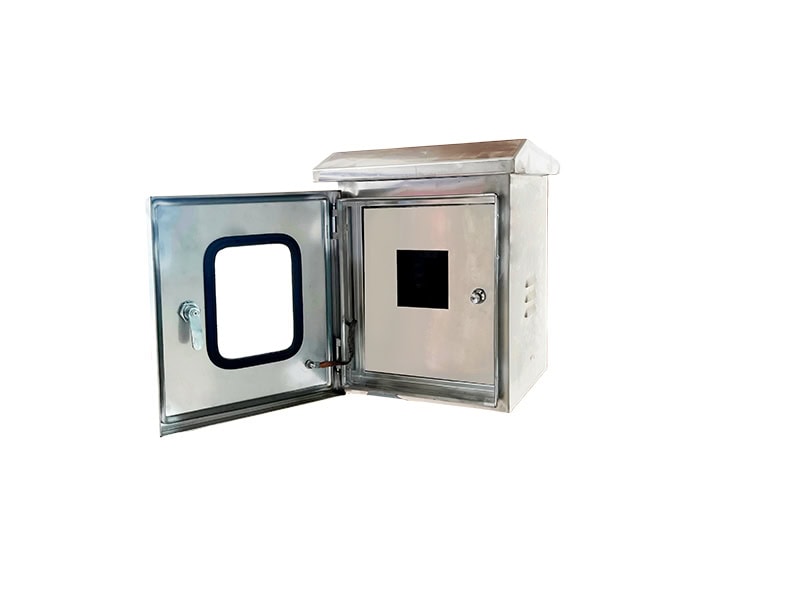
Most small stations have simple facilities, with instruments often installed outdoors and exposed to weather. Rain, temperature variations, and humidity can compromise data accuracy and shorten instrument life.
Our solution: All monitors (pH, turbidity, residual chlorine) come with stainless steel protection enclosures, ensuring stable operation in harsh outdoor environments and extending service life.
Technical Specifications of Core Instruments
pH Online Monitor
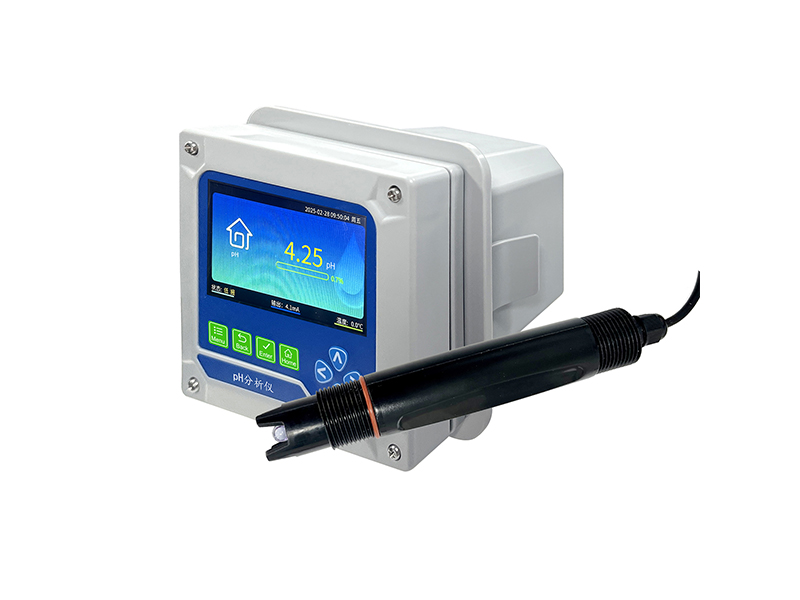
| Parameter | Specification |
|---|---|
| Power supply | 230 VAC ±10%, 60±1 Hz, <3 W; 24 VDC, <1 W; 12 VDC, <1 W |
| Relay contacts | Two groups, 3 A 240 VAC, 6 A 28 VDC / 120 VAC |
| Signal output | 0~10 mA (load <1.5 kΩ); 4~20 mA (load <750 Ω); optional 0~5 V, 0~10 V |
| Stability | pH: 0.02 pH/24h; ORP: 2 mV/24h |
| Temperature compensation | Automatic or manual, range 0~110°C |
| Measuring range | pH: 0.01~14.00 pH; ORP: –1999~+1999 mV; Temperature: –5~110.0°C |
| Resolution | pH: 0.01 pH; ORP: 1 mV |
| Intrinsic error | pH: 0.1 pH; ORP: 3 mV; Temperature: 0.5°C |
Residual Chlorine Online Monitor
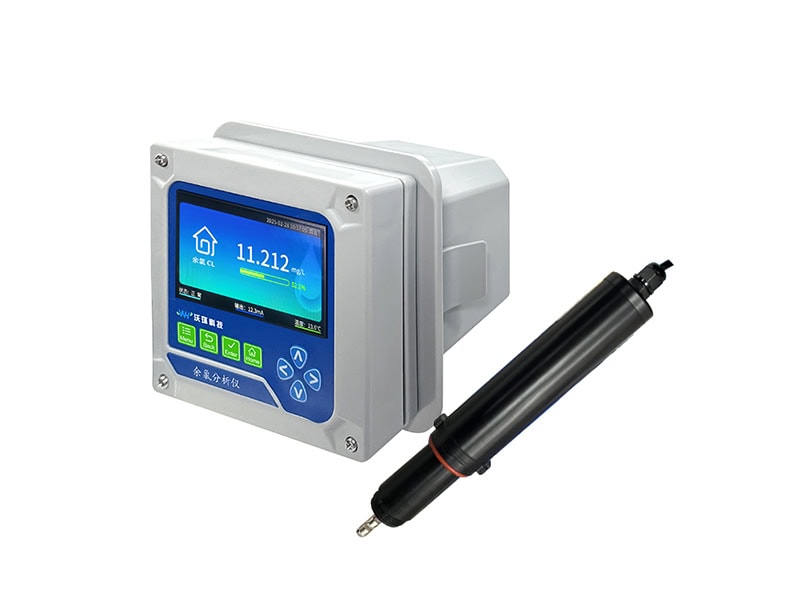
| Parameter | Specification |
|---|---|
| Measuring range | Residual chlorine 0~20.00 mg/L (ppm); Temperature 0~60°C |
| Resolution | Residual chlorine 0.001 mg/L; Temperature 0.1°C |
| Temperature compensation | 0~60°C (reference 25°C) |
| pH compensation | 5~9 pH (automatic/manual) |
| Response time | <2 minutes (90%, 20°C) |
| Minimum flow rate | 15 cm³/s (flow‑through type) |
| Stability | Monthly drift <2% FS (at room temperature) |
| Signal output | 0~10 mA (load <1.5 kΩ); 4~20 mA (load <750 Ω) |
| Relay contacts | 3 A 240 VAC, 6 A 28 VDC / 120 VAC |
Turbidity Online Monitor
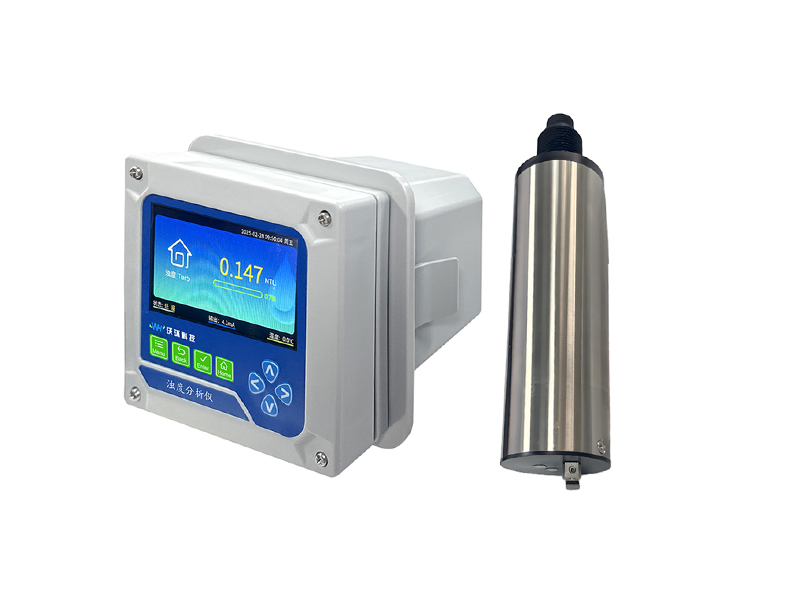
| Parameter | Specification |
|---|---|
| Measuring range | 0.001~400 NTU / 0.001~2000 NTU / 0.001~4000 NTU |
| Weight | 1.4 kg (including 10 m cable) |
| Accuracy | ±5% |
| Resolution | 0.001 / 0.01 / 0.1 / 1 (when matching the controller) |
| Pressure | ≤0.2 MPa |
| Calibration | Solution calibration or sample calibration |
| Response time | 6s < 90s < 300s (adjustable) |
| Power supply | 9~36 VDC |
| Output signal | MODBUS RS‑485 |
| Storage temperature | –15°C ~ 50°C |
| Operating temperature | 0°C ~ 45°C |
| Enclosure rating | IP68 / NEMA6P |
| Cable length | 10 m (extendable to 100 m) |
Field‑Tested O&M Efficiency Improvements
After installing the online water quality monitoring system at small treatment stations, the following quantifiable benefits were achieved:
Annual Chemical Consumption Reduction
- Flocculant dosage reduced by 15%–35%
- Disinfectant consumption decreased by 10%–28%
- Sludge production reduced simultaneously by 10%–25%, lowering sludge disposal costs
Annual Labour Cost Optimisation
- Only 4–5 routine inspections required per year
- Total saving of 200 labour‑hours per year
- Routine on‑site inspection frequency reduced by 50%–80%, significantly cutting O&M labour costs
Monitoring Data Stability
- Eliminated manual calibration errors
- Instrument readings consistently maintained within ±1% F.S. tolerance
- Reduced need for re‑testing and re‑checking
Energy Savings and Extended Equipment Life
- Precise control avoids overload conditions and reduces frequent start/stop shocks
- Less chemical corrosion extends the service life of dosing pumps, piping, and valves
- Maintenance frequency for metering pumps and valves reduced by 20%–40%
Digital Operation Management Metrics
- Before: Manual intermittent sampling, only a few data points per day
- After: Data collection at minute‑level intervals, with effective data coverage >95%
Conclusion
By deploying online water quality monitoring + AI‑based intelligent dosing control, small municipal wastewater treatment stations can achieve five key objectives:
Lower chemical consumption, less sludge, reduced labour, assured compliance, and full digitalisation.
This provides water utilities with a scalable, replicable intelligent O&M solution that significantly improves operational efficiency and management standards.