Industry Challenges
As water scarcity becomes increasingly serious in China, reclaimed water reuse has become an important solution for improving water resource efficiency.
In March 2024, China launched a three-year action plan to promote reclaimed water utilization in 50 prefecture-level and above cities, further accelerating the development of municipal wastewater reuse projects.
A large water utility company has developed a reclaimed water demonstration project in Xinwu Industrial Park, Wuxi, Jiangsu. The project treats 52,000 m³ of wastewater per day, of which 34,000 m³ is converted into high-quality reclaimed water and supplied directly to major industrial users in the park.
For a project of this scale, stable water quality depends heavily on accurate process monitoring.
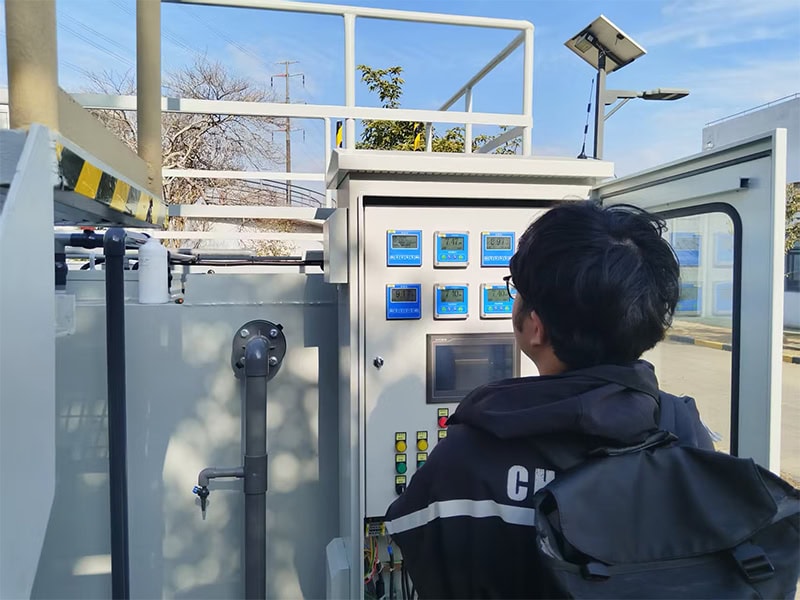
Why Dissolved Oxygen Matters in Reclaimed Water Treatment
The biological treatment stage is one of the most important parts of reclaimed water production.
Aerobic microorganisms break down pollutants, and dissolved oxygen (DO) directly affects their activity. Too much DO wastes aeration energy, while too little DO can reduce biological treatment efficiency and affect effluent quality.
Different biological zones also require very different DO conditions.
The aerobic zone typically operates at 2–4 mg/L, while the anoxic zone requires approximately 0.2–0.5 mg/L. In the anaerobic zone, DO should remain close to zero.
Traditional manual sampling and scheduled inspections cannot continuously capture these changes.
Without real-time DO data, operators may struggle to maintain precise aeration control. Large DO fluctuations can affect treatment stability while increasing unnecessary energy consumption.
Why Continuous pH Monitoring Is Also Important
pH is another critical parameter throughout reclaimed water treatment.
Changes in influent quality or chemical dosing can cause pH to move away from the desired operating range. This may affect biological reactions as well as downstream coagulation, sedimentation, and disinfection processes.
Traditional manual testing provides only limited data points.
If a pH abnormality occurs between two sampling events, operators may not discover it for several hours and can miss the best time for process adjustment.
The Limitation of Experience-Based Process Control
Another challenge is the lack of direct linkage between water quality data and process equipment.
In traditional operation, DO and pH measurements may not automatically control aeration or chemical dosing systems. Operators still need to make adjustments based largely on experience.
This makes process response slower and less precise.
Under traditional operating conditions, DO control accuracy can be difficult to maintain consistently above 90%.
These challenges show why reclaimed water projects increasingly need online dissolved oxygen and pH monitoring systems integrated with aeration and chemical dosing control.
Technical Solution for Online Water Quality Monitoring
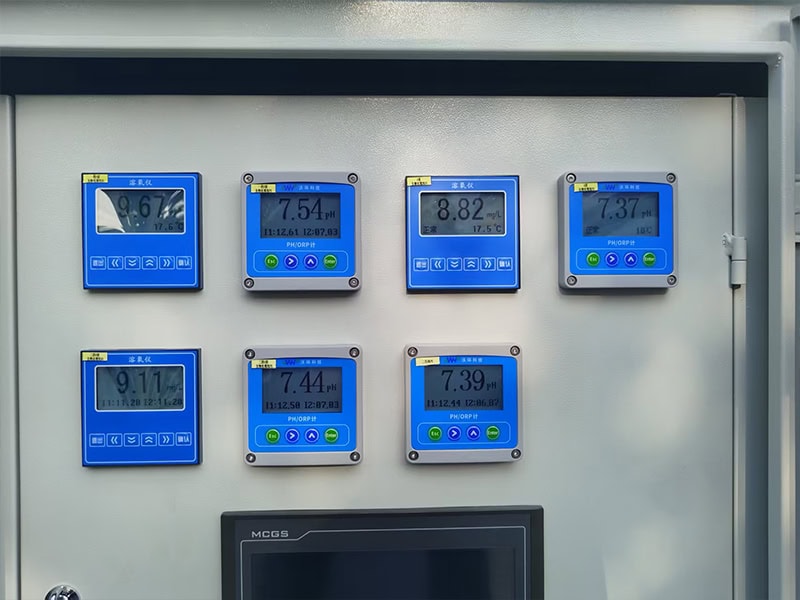
Real-Time DO and pH Monitoring for Reclaimed Water Treatment
To meet the monitoring requirements of biological and advanced treatment processes, the project uses an integrated online monitoring solution centered on dissolved oxygen and pH.
The system continuously collects process data and connects monitoring results with aeration, chemical dosing, and the central control platform.
Core Monitoring Instruments
The online dissolved oxygen analyzer provides continuous DO measurement across different treatment stages.
It supports both ppb- and ppm-level measurement and is suitable for aerobic tanks, anoxic tanks, membrane bioreactors (MBR), and other water treatment processes.
Automatic PT1000/NTC10K temperature compensation helps maintain measurement stability under changing water temperatures.
The online pH analyzer continuously monitors pH at the influent, treatment units, and effluent.
Its electrode uses a double-junction reference design to improve resistance to contamination in complex reclaimed water conditions. Automatic temperature compensation further supports stable long-term measurement.
Integrated Aeration and Chemical Dosing Control
The real value of online monitoring comes from turning measurement data into process control.
In this project, DO and pH data can be linked with aeration and chemical dosing systems.
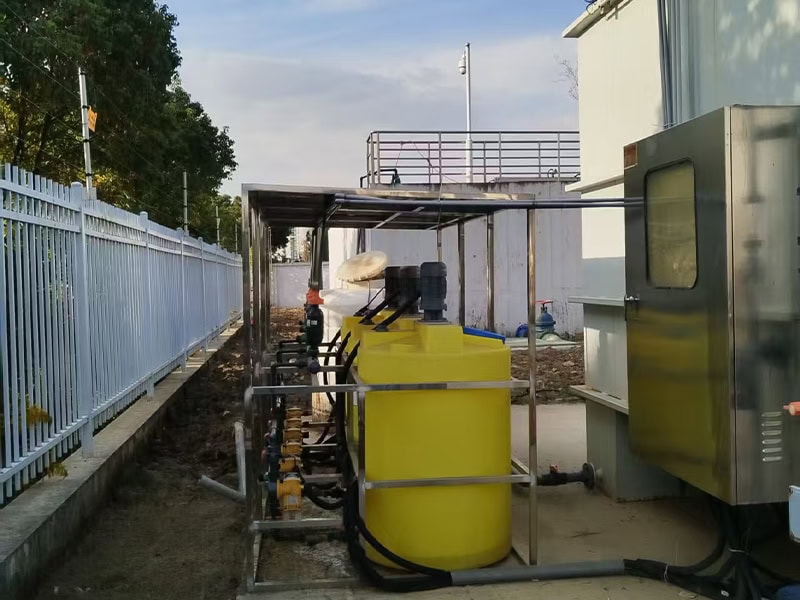
Precise Aeration Control
Real-time DO measurements from the aerobic tank provide direct feedback for blower and aeration control.
The system adjusts blower speed and air supply according to actual oxygen demand, helping maintain aerobic DO within the target range of 2–4 mg/L.
This reduces the risk of both over-aeration and insufficient aeration.
It also helps maintain suitable conditions for microorganisms while avoiding unnecessary energy consumption.
Intelligent Chemical Dosing
Real-time pH data provides a basis for adjusting acid and alkali dosing.
When pH begins to move away from the required operating range, the dosing system can respond according to actual process conditions rather than relying only on fixed dosing rates or operator experience.
This helps maintain more stable pH conditions and improves chemical utilization efficiency.
Closed-Loop Process Control
DO and pH data are continuously transmitted to the central control platform.
The control system analyzes process conditions and sends adjustment commands to the corresponding aeration or dosing equipment.
This moves reclaimed water operation from experience-based adjustment toward data-driven process control.
Smart Operation and Maintenance
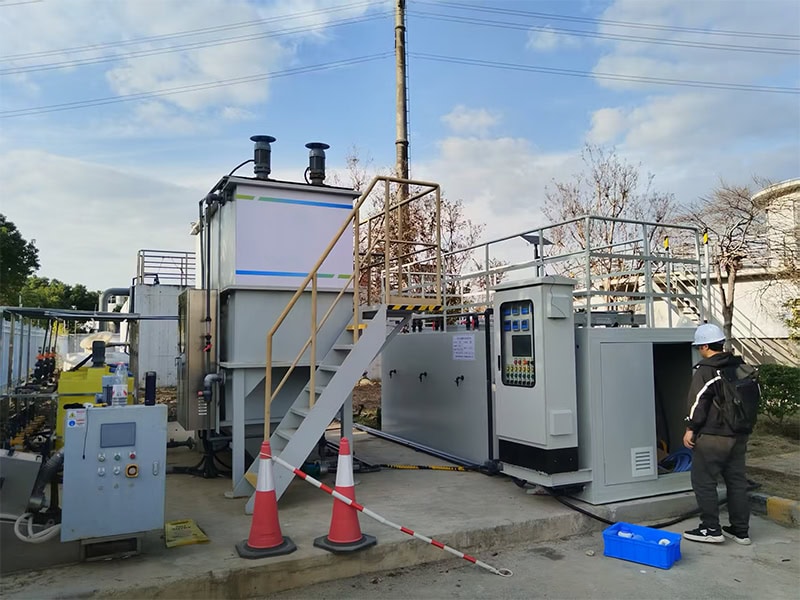
Centralized Water Quality Management
All monitoring data is transmitted to the intelligent centralized production platform.
Operators can view DO, pH, temperature, and equipment operating conditions from one interface.
When any monitored parameter exceeds its preset threshold, the system generates an alarm so that operators can respond quickly.
Historical measurements are also automatically stored.
Trend curves and reports help engineers analyze process changes and provide a more reliable basis for long-term treatment optimization.
Remote monitoring allows operators to check the status of individual monitoring points without relying entirely on frequent on-site inspections.
Key Equipment Advantages
High-Precision and Wide-Range DO Measurement
The dissolved oxygen analyzer covers a measuring range from 0–200.0 μg/L (ppb) to 0–20.00 mg/L (ppm).
It therefore supports both trace-level oxygen measurement and conventional dissolved oxygen monitoring.
Resolution reaches 0.1 μg/L or 0.01 mg/L, providing the measurement capability required for different reclaimed water treatment stages.
Reliable Design for Complex Water Conditions
Long-term online monitoring requires sensors to remain stable under changing water conditions.
The pH electrode uses a double-junction reference system to improve resistance to contamination and salt-related interference.
The monitoring instruments also incorporate industrial reliability functions designed for continuous operation.
Data transmission can resume after temporary interruptions, helping maintain monitoring continuity.
Flexible Communication and System Integration
The instruments support both 4–20 mA analog output and RS485 digital communication.
Multiple instruments can be connected to the same communication network for centralized monitoring and management.
This makes the system easier to integrate with existing PLC, DCS, or intelligent water management platforms.
Technical Specifications of Core Instruments
Online Dissolved Oxygen Analyzer
| Parameter | Specification |
|---|---|
| Measuring Range | 0–200.0 μg/L (ppb); 0–20.00 mg/L (ppm); 0–200%; -10.0–120.0°C |
| Resolution | 0.1 μg/L; 0.01 mg/L; 1°C |
| Accuracy | ±1% ±1 Digit |
| Temperature Compensation | PT1000 / NTC10K automatic compensation |
| Signal Output | 4–20 mA + RS485 |
| Typical Applications | Aerobic zone: 2–4 mg/L; Anoxic zone: 0.2–0.5 mg/L; Anaerobic zone: close to 0 |
Online pH Analyzer
| Parameter | Specification |
|---|---|
| Measuring Range | 0.00–14.00 pH |
| Resolution | 0.01 pH |
| Accuracy | ±0.02 pH |
| Stability | ≤0.01 pH/24 h |
| Temperature Compensation | Automatic, 0–110°C |
| Electrode Design | Double-junction reference electrode, anti-fouling |
| Signal Output | 4–20 mA + RS485 |
Field-Tested O&M Efficiency Improvements
After deploying the online DO and pH monitoring system with intelligent process control, the reclaimed water demonstration project achieved measurable improvements in operation and maintenance.
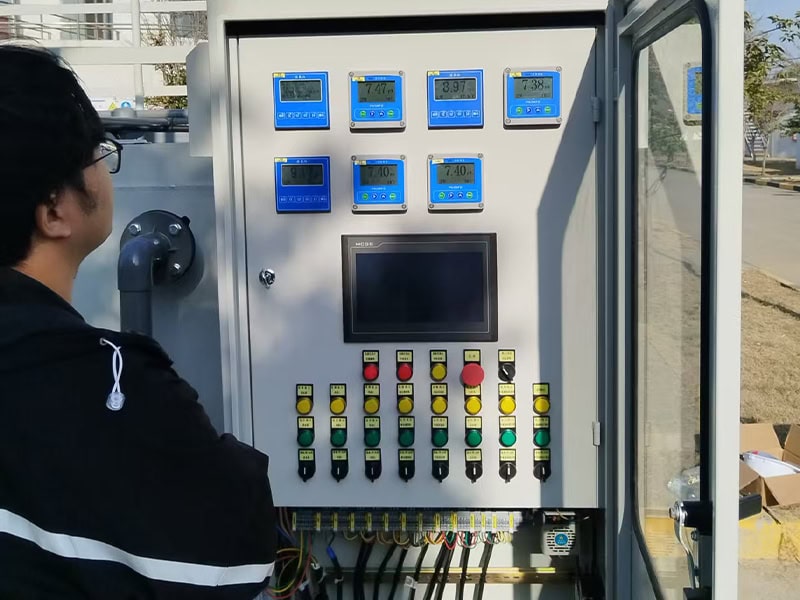
Improved Dissolved Oxygen Control
DO control accuracy increased to more than 95%, compared with less than 90% under the previous operating approach.
DO concentrations in the aerobic, anoxic, and anaerobic zones can now be controlled more precisely according to their different process requirements.
DO fluctuations were also reduced by more than half, improving overall biological treatment stability.
Reduced Energy and Chemical Consumption
Precise aeration control helps prevent excessive air supply.
As a result, average energy consumption was reduced by more than 5%.
Real-time pH monitoring also provides more accurate information for chemical dosing control.
Chemical consumption decreased by more than 20%, while treatment conditions remained stable.
The reclaimed water conductivity remained below 200 μS/cm, with water quality indicators meeting the project’s required standards.
Lower Routine O&M Workload
DO and pH data are collected and uploaded automatically.
Operators no longer need to rely on frequent manual sampling to understand daily process conditions.
The centralized intelligent monitoring platform collects water quality data and supports process optimization.
Combined intelligent inspection and manual maintenance helped maintain equipment availability above 99%.
Improved Compliance Management
The reclaimed water quality remained stable for industrial reuse, ecological replenishment, and other intended applications.
Key indicators such as DO and pH are monitored continuously 24 hours a day.
Historical monitoring records also provide traceable water quality data for operational management and regulatory inspections.
Digital Operation Management Improvements
| Indicator | Before Deployment | After Deployment |
|---|---|---|
| DO Monitoring | Periodic manual sampling | 24/7 continuous online monitoring |
| pH Monitoring | Periodic manual sampling | 24/7 continuous online monitoring |
| DO Control Accuracy | <90% | >95% |
| Alarm Mechanism | Manual discovery with delayed response | Immediate over-limit alarm |
| Data Tracking | Paper records | Automatic storage and historical trends |
| Aeration Control | Experience-based adjustment | Precise aeration based on real-time DO |
| Chemical Dosing | Experience-based estimation | Intelligent dosing based on real-time pH |
Conclusion
By deploying online dissolved oxygen and pH monitoring systems across the biological and advanced treatment processes, reclaimed water plants can gain continuous visibility into two of their most important process parameters.
More importantly, connecting monitoring data with aeration and chemical dosing equipment allows operators to move beyond periodic measurement and manual adjustment.
In this demonstration project, DO control accuracy reached more than 95%, while precise aeration reduced average energy consumption by more than 5%. Real-time pH-based dosing also contributed to a chemical consumption reduction of more than 20%.
The result is a more stable and data-driven reclaimed water treatment process built around five goals: higher control accuracy, lower energy consumption, reduced chemical use, stable water quality, and smarter operation.
For large reclaimed water projects, online monitoring is therefore more than a way to collect water quality data. It provides the measurement foundation needed to connect biological treatment, aeration, chemical dosing, alarms, and centralized operation into one coordinated control system.
As reclaimed water reuse continues to expand, reliable DO and pH monitoring will play an increasingly important role in helping water utilities improve treatment efficiency and make better use of limited water resources.
Further Reading
- pH Electrode Diagram and Reference Electrode Types: How to Read, Choose, and Maintain Them
- Industrial Glass pH Electrodes Explained: Types, Applications and Selection Guide
- How to Choose a Dissolved Oxygen Monitor: Optical vs. Electrochemical DO Sensors
- More about online-ph-controllers-sensors
- More about dissolved-oxygen-do-controllers-sensors