Introduction
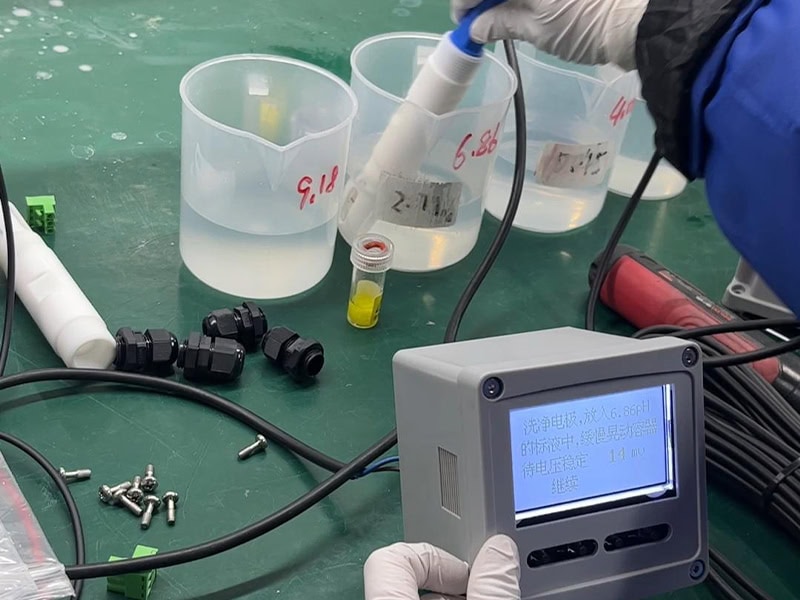
Why does an industrial online pH meter still produce inaccurate or unstable readings even after calibration? This is one of the most common questions raised by operators in wastewater treatment plants, chemical facilities, and water treatment systems. Through years of field service and application support, we have found that installation location, sensor condition, and process environment often have a greater impact on accuracy than calibration itself.
In this guide, you’ll learn proven methods for calibrating industrial pH sensors, improving measurement stability, and avoiding the costly mistakes that affect process control and compliance monitoring.
Why Calibrating Your Industrial Online pH Meter Matters
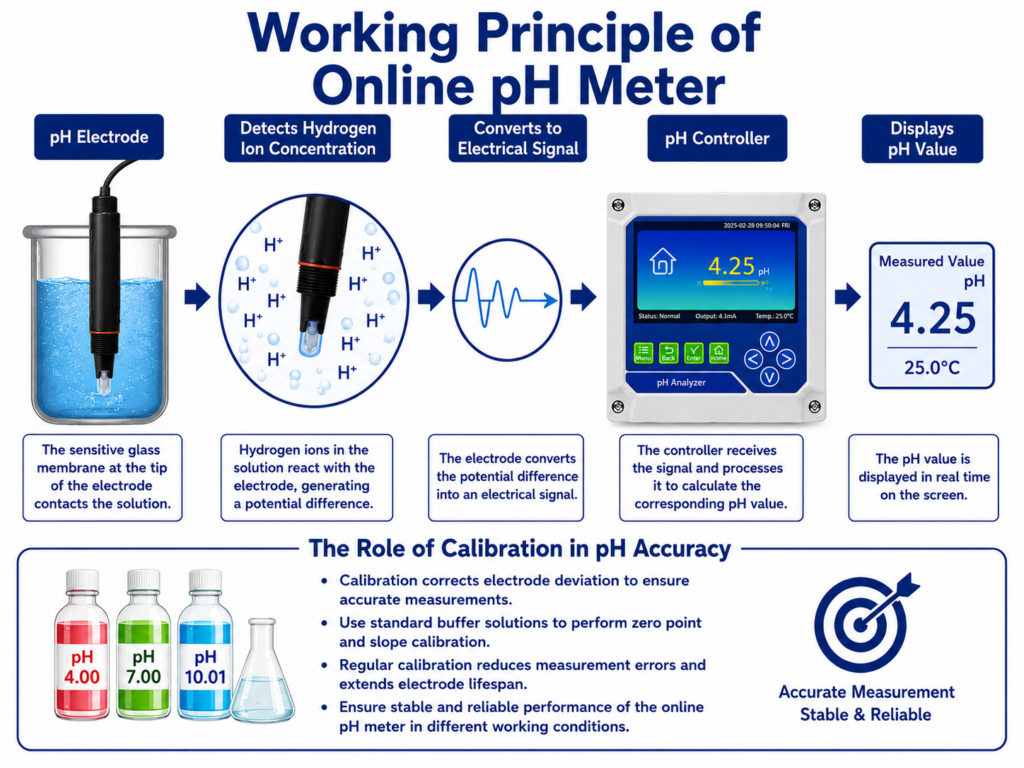
The Role of Calibration in pH Accuracy
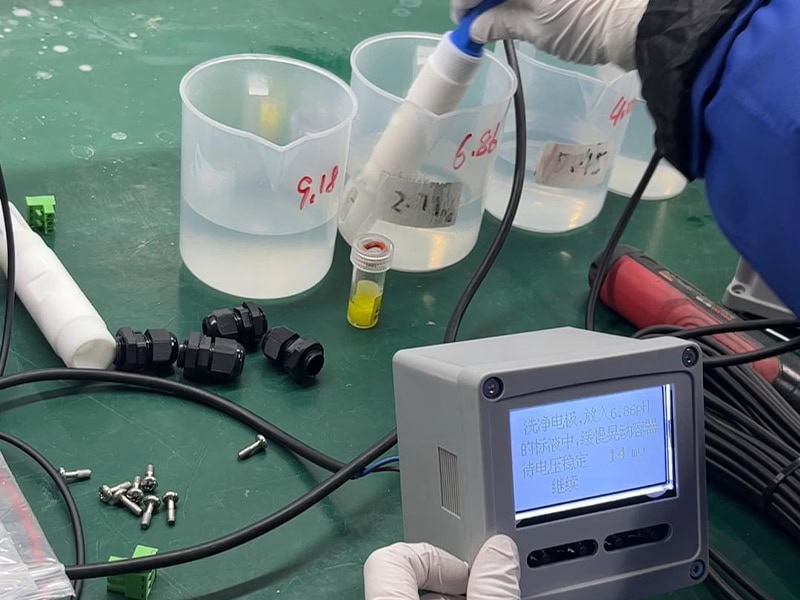
Calibration adjusts the pH sensor so its readings match known reference standards. Over time, even high-quality industrial pH sensors may experience measurement drift due to aging, contamination, temperature changes, or process conditions.
A properly calibrated pH meter reflects the true acidity or alkalinity of the process liquid. Without calibration, process control decisions may be based on inaccurate data, potentially affecting product quality, treatment efficiency, and regulatory compliance.
How Often Should You Calibrate?
Calibration frequency depends on application conditions, measurement requirements, and process criticality.
For most industrial applications, calibration should be performed regularly according to the maintenance schedule. Sensors operating in wastewater treatment, chemical processing, or heavily contaminated environments may require more frequent verification and calibration than sensors installed in relatively clean water systems.
If the sensor has been removed, cleaned, replaced, or left unused for an extended period, recalibration is recommended before returning it to service.
Common Calibration Mistakes and How to Avoid Them
A frequent mistake is using contaminated or expired buffer solutions. Always use fresh calibration buffers and avoid returning used solution to the original container.
Another common issue is failing to rinse the electrode between calibration points. Residual buffer solution can contaminate the next buffer and introduce calibration errors.
Operators should also avoid touching the glass sensing element with bare hands, as oils and contamination can affect sensor performance.
From Our Field Experience: Calibration Isn’t Always the Real Problem
One of the most common questions we receive is:
“Why is my pH meter still inaccurate even after calibration?”
In our experience, calibration is often blamed when the real issue lies elsewhere.
For newly installed industrial pH meters, calibration-related problems are relatively uncommon when the sensor is installed according to the manufacturer’s instructions. In fact, more than 90% of the “calibrated but inaccurate” cases we encounter are caused by improper installation rather than calibration itself.
For example, we once supported a municipal wastewater treatment plant where the pH sensor was installed directly beside the acid and alkali dosing point. Every time chemicals were injected, the sensor measured the local concentration near the dosing point rather than the actual pH value of the reaction tank. The result was severe fluctuations and inaccurate process control.
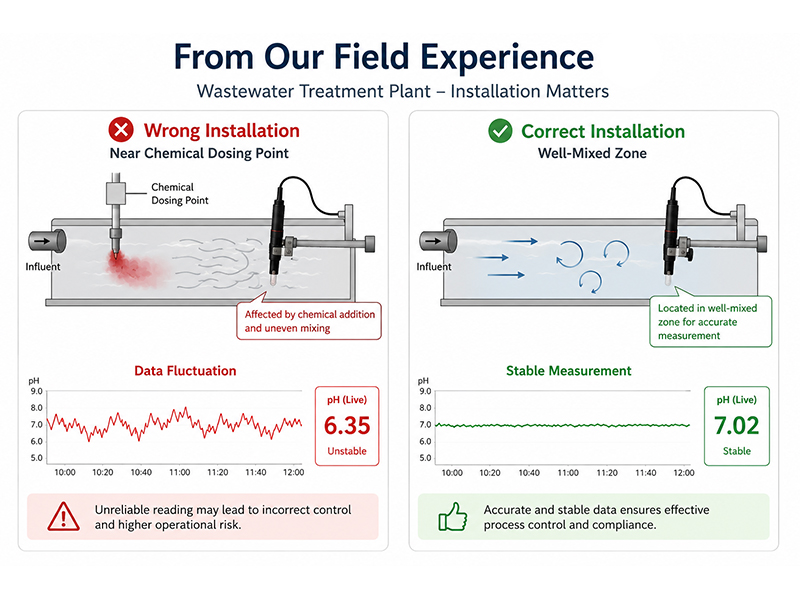
After relocating the sensor to a properly mixed area of the tank, the readings became stable and accurately reflected the actual process conditions.
For sensors that have been operating for a long time, persistent inaccuracy after calibration is often related to contamination or aging. In textile dyeing wastewater applications, dye deposits can coat the sensing surface and cause continuous measurement drift. In strong acid or strong alkali environments, prolonged chemical exposure may damage the sensor seal, clog the reference junction, affect the built-in ATC system, or weaken the glass membrane itself.
In these situations, cleaning the sensor, selecting a specialized industrial pH electrode, or replacing the sensor may be necessary.
Choosing the Right Calibration Solutions (pH 4.00, 6.86/7.00, and 9.18/10.01)
Accurate calibration begins with selecting the correct buffer solutions.
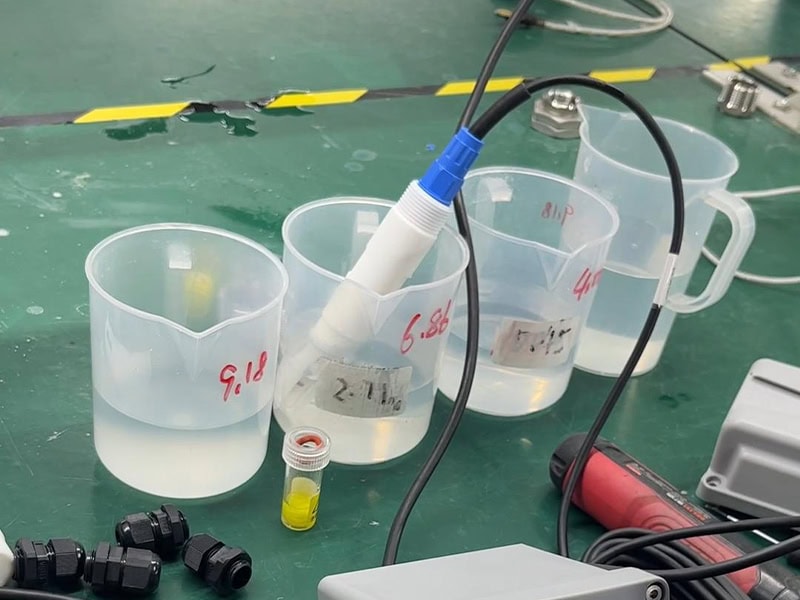
For industrial online pH meters, the most widely recommended method is three-point calibration, using standard buffer solutions at pH 4.00, pH 6.86 (or pH 7.00), and pH 9.18 (or pH 10.01). This approach allows the sensor to establish accurate reference points across the acidic, neutral, and alkaline ranges, helping improve overall measurement accuracy throughout the operating range.
During calibration, the electrode is typically calibrated first in the neutral buffer, followed by the acidic and alkaline buffers. This three-point method can better identify sensor aging, slope deviations, and calibration errors than a single-point or two-point calibration.
To achieve reliable results, always use fresh, uncontaminated, and unexpired buffer solutions. The buffer temperature should be close to the process temperature whenever possible, and calibration procedures should follow the manufacturer’s recommendations.
Temperature Compensation: Why It Matters During Calibration
pH measurements are affected by temperature.
Industrial pH sensors equipped with Automatic Temperature Compensation (ATC) can automatically correct temperature-related measurement variations and improve accuracy.
During calibration, the temperature of the buffer solutions should be reasonably close to the actual process temperature whenever possible.
Step-by-Step Guide: How to Calibrate an Industrial Online pH Meter
Step 1: Prepare Fresh Calibration Buffers
Prepare clean and uncontaminated pH buffer solutions appropriate for your process requirements.
Most industrial applications require at least a two-point calibration using pH 6.86/7.00 and either pH 4.0 or pH 9.18/10.01.
Step 2: Clean the pH Electrode
Before calibration, rinse the electrode thoroughly with distilled or deionized water.
Remove any deposits, scale, grease, or contaminants that may affect measurement accuracy.
Step 3: Calibrate Using pH 6.86/7.00 Buffer
Immerse the electrode in the pH 6.86/7.00 buffer solution and allow the reading to stabilize.
Follow the controller’s calibration procedure and confirm the neutral calibration point.
Step 4: Perform the Second Calibration Point
Rinse the electrode and repeat the procedure using pH 4.0 or pH 9.18/10.01 buffer.
This second point improves measurement accuracy across the intended operating range.
Step 5: Verify Calibration Results
After calibration is complete, verify that the sensor responds correctly in known buffer solutions before returning it to service.
How to Verify pH Measurements After Calibration
Step 1: Confirm Sensor Installation Location
Verify that the sensor is installed in a representative measurement location.
Avoid areas directly adjacent to chemical dosing points, dead zones, stagnant water, or locations with excessive turbulence.
Step 2: Check Sensor Condition
Inspect the sensor for contamination, scaling, coating, physical damage, or signs of aging.
Step 3: Allow the Reading to Stabilize
After calibration, allow sufficient time for the sensor to stabilize in the process liquid.
Stabilization time may vary depending on temperature, flow conditions, and process chemistry.
From Our Field Experience: Unstable Readings Are Usually Caused by Process Conditions
Many users assume an unstable pH reading means the sensor has failed.
In reality, the operating environment is often the first thing that should be checked.
When troubleshooting unstable pH measurements, our engineers typically begin by evaluating the installation conditions before inspecting the sensor itself.
One common issue is excessive water velocity. High-speed flow can continuously disturb the hydrated layer on the glass membrane and disrupt the ion equilibrium required for accurate measurement. The result is a display value that fluctuates continuously and struggles to stabilize.
Another frequent problem is trapped air bubbles. In aeration tanks, mixing zones, or turbulent process areas, bubbles can attach to the sensing surface and cause unstable or drifting readings.
If the installation location is confirmed to be correct, we then inspect the sensor for contamination or aging. Wastewater containing oils, dyes, suspended solids, or aggressive chemicals can foul the electrode and significantly increase stabilization time.
Strong acid and strong alkali environments may also accelerate sensor aging and gradually reduce measurement performance.
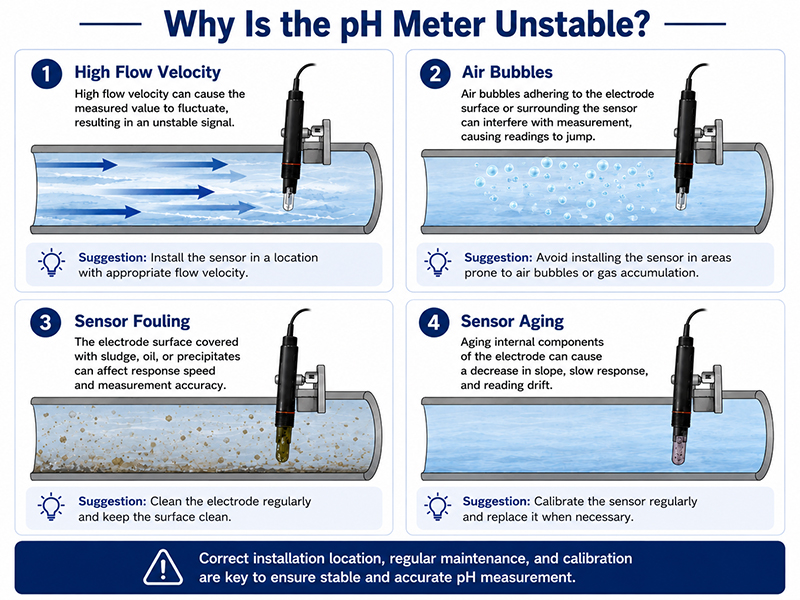
Finally, electrical interference may be investigated, although this is relatively uncommon. Across thousands of installations, interference-related issues represent only a small fraction of service cases because modern industrial pH sensors are typically designed with strong anti-interference capabilities.
For this reason, replacing the sensor should not be the first response when readings become unstable. Checking installation conditions, flow characteristics, and sensor cleanliness often resolves the issue much faster.
Step 4: Verify Measurement Accuracy
When required, compare the online measurement with a freshly calibrated portable meter or laboratory analysis to confirm accuracy.
Industrial pH Meter vs. pH Test Strips: Which Solution Provides More Reliable Measurements?
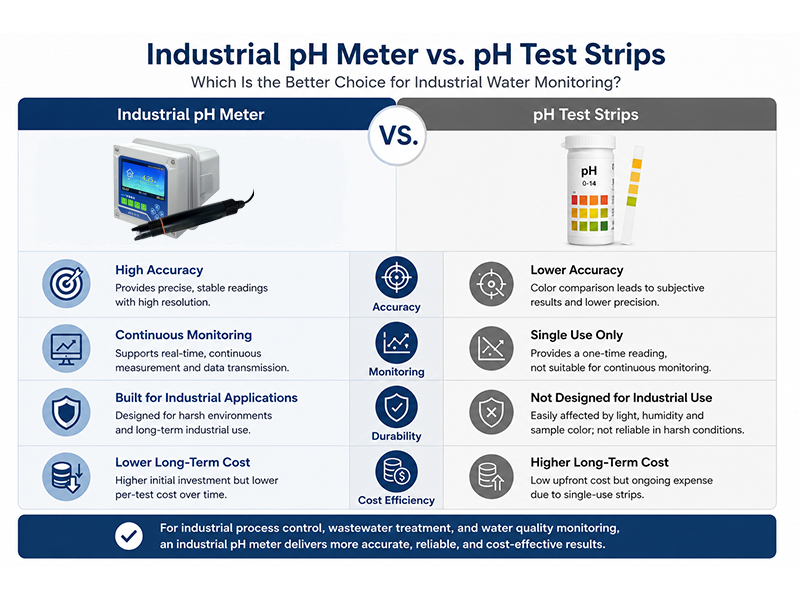
Accuracy and Precision Comparison
Industrial pH meters provide accurate, repeatable numerical measurements suitable for process control, compliance monitoring, and operational decision-making.
pH test strips rely on color comparison and operator interpretation, making them less accurate and less consistent.
Continuous Monitoring Capability
Industrial pH meters support continuous real-time monitoring and can transmit data to PLC, SCADA, or DCS systems.
Test strips only provide a single point-in-time measurement and cannot support automated monitoring or control.
Durability and Industrial Suitability
Industrial pH meters are specifically designed for wastewater treatment plants, chemical processing facilities, municipal water systems, and demanding industrial environments.
Test strips are intended primarily for spot checks and simple field testing.
Long-Term Cost Efficiency
Although industrial pH meters require a higher initial investment, they generally provide lower long-term operating costs for facilities that perform routine monitoring.
Test strips may appear economical initially but become more expensive over time due to continuous consumable replacement.
What Is the Recommended pH Range for Different Water Applications?
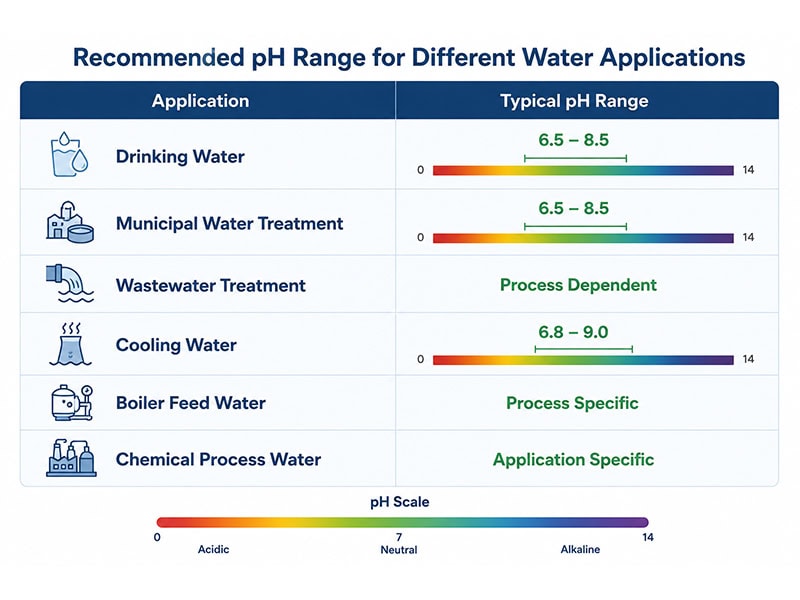
The ideal pH range depends on the application, process requirements, regulatory standards, and treatment objectives.
Common Mistakes When Using an Industrial Online pH Meter
Skipping Calibration
Routine calibration is essential for maintaining measurement accuracy.
Using Expired Buffer Solutions
Expired calibration solutions can introduce significant measurement errors.
Installing the Sensor in the Wrong Location
Poor installation location is one of the most common causes of inaccurate or unstable readings.
Ignoring Sensor Fouling
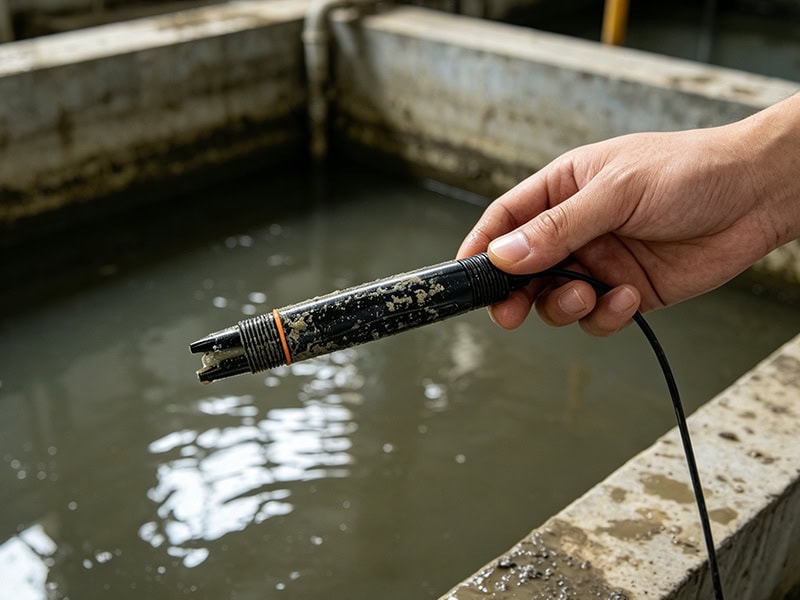
Contamination buildup can significantly reduce measurement accuracy and increase response time.
Delaying Sensor Replacement
All pH electrodes have a finite service life. Continuing to use severely aged sensors often results in unreliable measurements.
Proper Storage and Care for Industrial pH Sensors
Good maintenance practices can significantly extend sensor life and improve measurement stability.
Key recommendations include:
- Keep the sensing element hydrated at all times.
- Clean the sensor regularly according to process conditions.
- Inspect for contamination, scale, or physical damage.
- Replace calibration solutions before expiration.
- Verify sensor performance regularly.
- Replace aging sensors before accuracy becomes unacceptable.
Conclusion
Accurate industrial pH measurement depends on much more than calibration alone. Proper sensor selection, correct installation, regular maintenance, suitable operating conditions, and routine calibration all contribute to reliable long-term performance.
As our field experience has shown, many pH measurement problems are caused by installation issues, contamination, or process conditions rather than calibration itself. By understanding these factors and following best practices, operators can significantly improve measurement accuracy, reduce maintenance costs, and achieve more stable process control.
About Industrial pH Measurement and Monitoring
Accurate pH measurement is a critical part of wastewater treatment, chemical processing, municipal water treatment, environmental monitoring, and industrial process control. Reliable pH data helps operators optimize chemical dosing, maintain process stability, improve product quality, and meet environmental compliance requirements.
At Wohuan Instrument, we specialize in industrial online pH measurement solutions, including industrial pH probes, built-in ATC pH sensors, online pH analyzers, and integrated water quality monitoring systems. Drawing on extensive field experience across wastewater treatment plants, chemical facilities, and municipal water systems, we help customers improve measurement reliability and long-term operational performance.
Looking for a Reliable Industrial pH Monitoring Solution?
Selecting the right industrial pH monitoring solution depends on application conditions, installation requirements, measurement stability, maintenance expectations, and long-term operating costs.
Whether you are monitoring wastewater treatment processes, controlling chemical dosing systems, managing industrial process water, or upgrading an existing monitoring system, choosing the right pH sensor and analyzer can significantly improve operational efficiency and measurement reliability.
If you are evaluating industrial pH probes, online pH analyzers, built-in ATC sensors, or complete water quality monitoring systems, our engineering team can help you identify suitable solutions based on your specific operating conditions.
Learn More:
Website Homepage: https://wxinstrument.com/
Industrial pH Meter Solutions: https://wxinstrument.com/product-cate/online-ph-meter/
Contact Our Engineering Team: https://wxinstrument.com/contact/
Simply send us your application details, process medium, temperature range, installation method, and project requirements. Our engineers will be happy to discuss suitable solutions and support your project.