Introduction
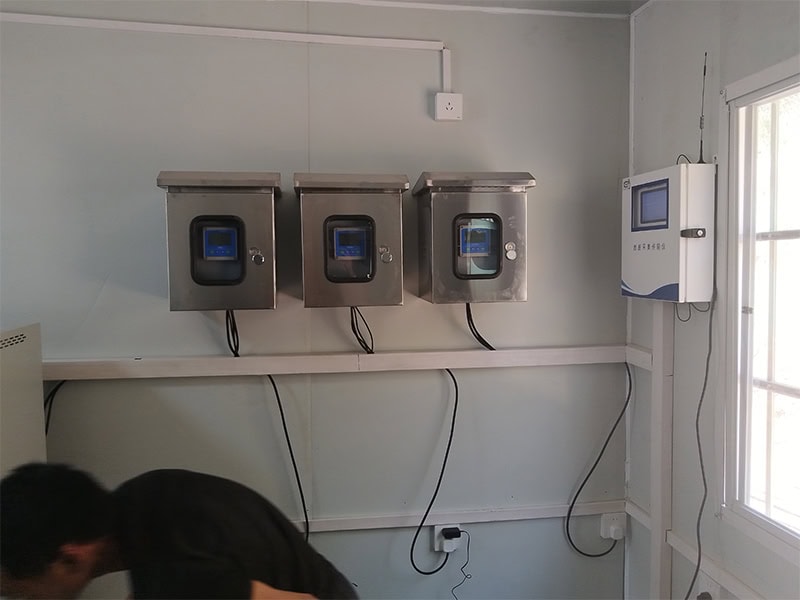
Are you struggling with slow pH readings, unstable measurements, or frequent electrode replacement? This guide explains the 7 most common pH probe problems that affect measurement accuracy in industrial and wastewater applications.
Based on real field experience from textile dyeing plants and wastewater treatment facilities, you’ll learn how to identify problems, improve pH measurement stability, and extend electrode lifespan. Let’s dive in and help you get more reliable pH monitoring results.
What Is a pH Probe and Why Is It Important?
A pH probe is the sensing component of a pH meter.Its job is simple: detect hydrogen ion activity in a solution and convert it into an electrical signal that the pH meter can interpret.Without a reliable pH probe, even the most advanced pH analyzer cannot provide accurate measurements.
pH probes are widely used in:
- Wastewater treatment
- Drinking water monitoring
- Chemical processing
- Textile manufacturing
- Food and beverage production
- Environmental monitoring
Because the probe is constantly exposed to harsh process conditions, it is often the first component affected by contamination, temperature fluctuations, and aging.
How Does a pH Probe Measure pH?
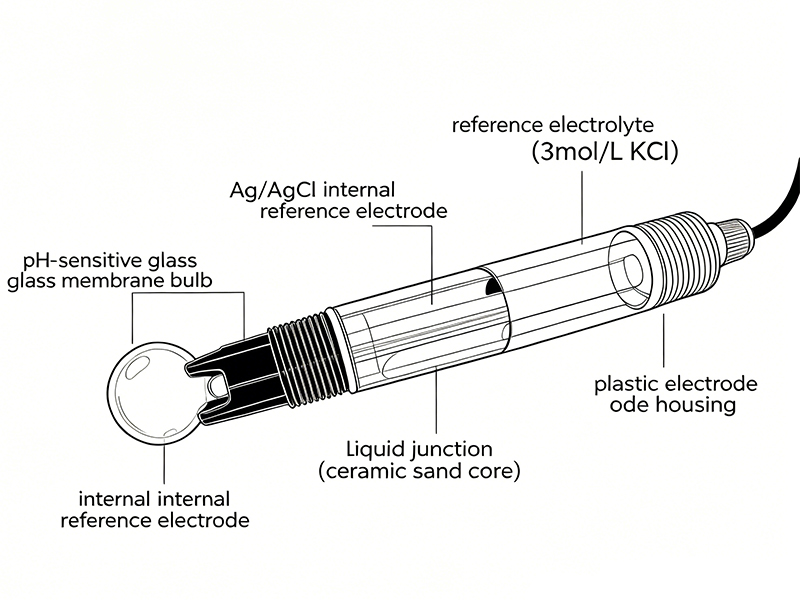
A pH probe contains two key elements:
- Measuring electrode
- Reference electrode
The glass membrane on the measuring electrode reacts to hydrogen ions in the solution.As hydrogen ion concentration changes, the electrical potential changes.The pH meter converts this voltage difference into a pH value.
The entire process happens continuously, allowing real-time monitoring of changing process conditions.
How to Use a pH Probe Correctly
Many pH measurement problems start with improper operation.
Following a few simple steps can significantly improve accuracy.
Step 1: Calibrate Before Measurement
Use fresh buffer solutions.
Typical calibration points include:
- pH 4.01
- pH 7.00
- pH 10.01
Regular calibration compensates for electrode aging and environmental changes.
Step 2: Rinse the Probe
Always rinse the probe before and after testing.
This prevents cross-contamination between samples.
Step 3: Wait for Stable Readings
Do not record measurements immediately.
Allow sufficient time for the reading to stabilize.
Step 4: Store the Probe Properly
Never store a pH probe in distilled water.
Always use a proper storage solution.
Improper storage is one of the most common causes of premature probe failure.
7 Common pH Probe Problems and How to Fix Them
Problem 1: Slow Response Time
One of the most common complaints is that the pH probe becomes increasingly slow.
Instead of stabilizing within seconds, the reading may take several minutes.
Common causes include:
- Contaminated glass membrane
- Dehydrated electrode
- Aging sensor
- Fouled reference junction
How to Fix It
- Clean the electrode regularly
- Rehydrate the glass bulb
- Recalibrate the probe
- Replace aged electrodes
Real-World Experience: Textile Dyeing Wastewater Application
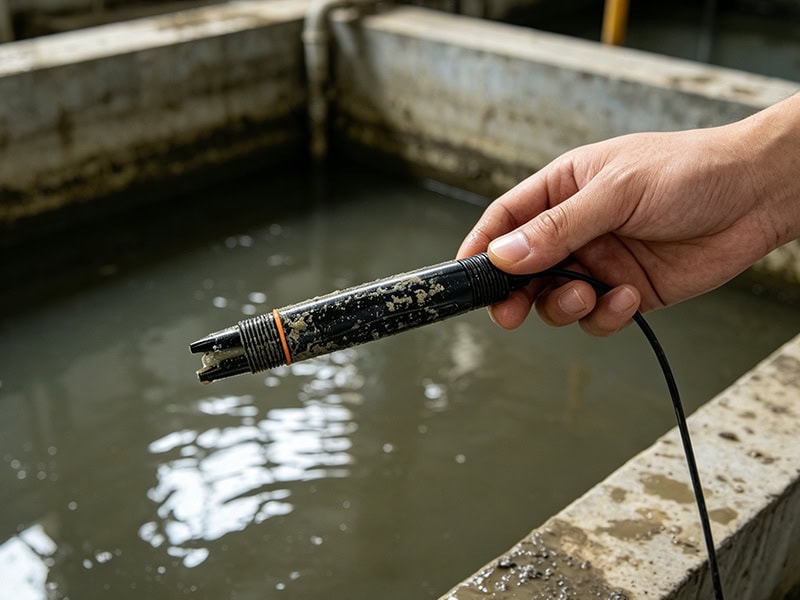
This is a real issue we encountered while supporting a textile dyeing wastewater treatment project.
The customer noticed that their pH electrode became slower and slower after only a few months of operation.
Initially, they believed the electrode quality was poor.
However, after inspection, our engineers found that the actual cause was contamination from the wastewater itself.
Textile dyeing wastewater contains various pigments and dye compounds.
Some reactive and acidic dyes gradually adhered to the glass membrane and formed a colored fouling layer.
This contamination covered the hydrated activation layer of the glass membrane and prevented efficient hydrogen ion exchange.
As a result:
- Response time became slower
- Readings started jumping
- Calibration frequency increased
- Electrode lifespan shortened dramatically
Solution
Our engineers recommended:
- Regular electrode cleaning
- Scheduled calibration
- Routine inspection
- Self-cleaning pH electrodes for severe fouling applications
This project demonstrated that proper maintenance often extends electrode life far more effectively than frequent replacement.
Problem 2: Readings Drift After Calibration
Many users assume calibration automatically solves all accuracy issues.
Unfortunately, that’s not always true.
Common causes include:
- Expired buffer solutions
- Reference junction contamination
- Temperature fluctuations
- Electrode aging
How to Fix It
- Use fresh calibration buffers
- Verify temperature conditions
- Clean the reference junction
- Replace worn electrodes
Problem 3: Unstable Online pH Measurements
Online pH monitoring systems sometimes show unstable values even when laboratory measurements appear normal.
Common causes include:
- Process turbulence
- Temperature changes
- Air bubbles
- Electrical interference
- Poor sensor installation
How to Fix It
- Relocate the sensor
- Improve shielding
- Eliminate air bubbles
- Use a suitable installation assembly
Real-World Experience: Wastewater Neutralization Tank Project
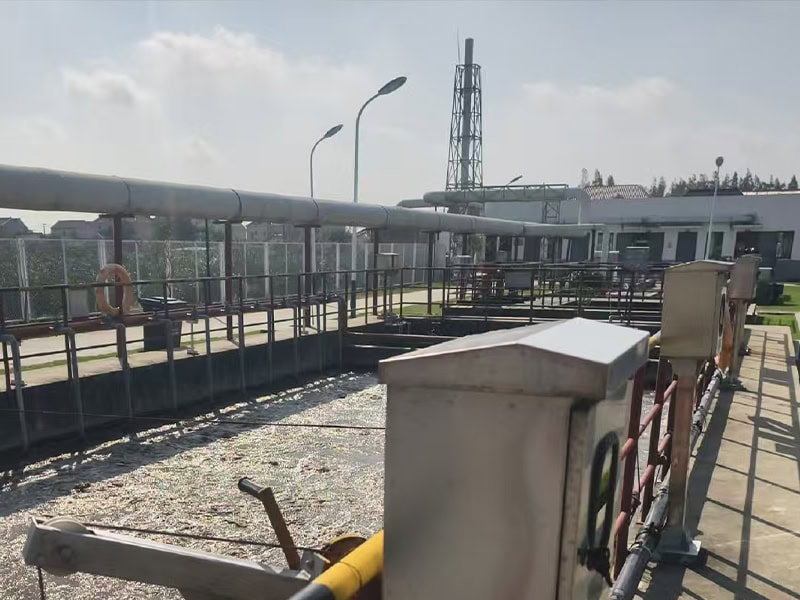
We encountered this problem while supporting a wastewater treatment plant.
The customer used a pH monitoring system to control chemical dosing in an acid-base neutralization tank.
Before shipment, the pH meter was fully calibrated and tested.
Laboratory performance was excellent.
However, after installation, the customer reported unstable pH readings and inconsistent dosing control.
Our engineers visited the site and conducted a full inspection.
The root cause was not the pH meter itself.
The neutralization process involved reactions between strong acids and strong alkalis.
These reactions generated significant heat and caused rapid temperature fluctuations.
The customer’s original pH electrode did not include Automatic Temperature Compensation (ATC).
When temperature changed rapidly, measurement accuracy deteriorated and readings became unstable.
Solution
Our engineers recommended replacing the standard electrode with a built-in ATC pH electrode.
After installation:
- Measurement stability improved significantly
- Dosing accuracy increased
- Process control became more reliable
- Operator intervention decreased
This project highlights an important lesson: choosing the right pH electrode is just as important as calibration.
Problem 4: Short Electrode Lifespan
Many users expect pH probes to last for years without maintenance.
In reality, process conditions heavily influence electrode life.
Common causes include:
- High-temperature wastewater
- Chemical attack
- Severe contamination
- Improper storage
How to Fix It
- Select the correct electrode type
- Follow maintenance schedules
- Use automatic cleaning systems
- Avoid prolonged dry storage
Problem 5: Erratic or Jumping Readings
Jumping values usually indicate interference or contamination.
Possible causes include:
- Air bubbles
- Loose cable connections
- Electrical noise
- Cracked glass membrane
How to Fix It
- Inspect wiring
- Remove air bubbles
- Check grounding
- Replace damaged electrodes
Problem 6: Temperature-Related Measurement Errors
Temperature directly affects pH measurement.
Even small temperature changes can create noticeable errors.
This issue becomes more serious in industrial applications.
How to Fix It
- Use ATC-equipped pH electrodes
- Monitor process temperature
- Recalibrate when temperature changes significantly
Problem 7: Improper Probe Storage
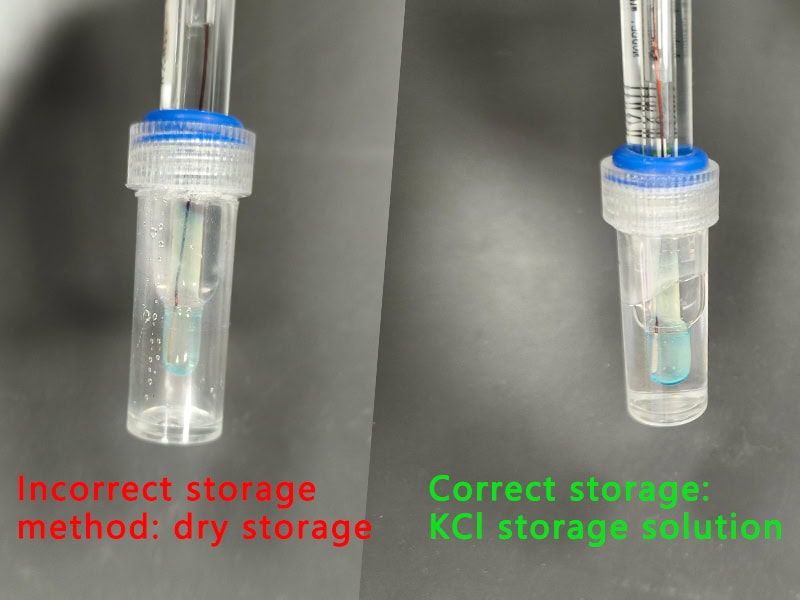
Poor storage practices can permanently damage a pH probe.
Common mistakes include:
- Storing in distilled water
- Allowing the probe to dry out
- Using contaminated storage solution
How to Fix It
Always:
- Use storage solution
- Keep the glass bulb hydrated
- Replace storage solution regularly
Never:
- Store dry
- Store in distilled water
- Leave exposed to sunlight
Frequently Asked Questions About pH Probes
How often should a pH probe be calibrated?
For industrial applications, calibration frequency depends on operating conditions.
Most facilities calibrate weekly or monthly.
Critical processes may require daily calibration.
Why is my pH probe responding slowly?
The most common causes are:
- Contamination
- Aging
- Improper storage
- Fouled reference junction
Regular cleaning and maintenance usually solve the problem.
Can temperature affect pH measurement?
Yes.
Temperature directly affects electrode response and measurement accuracy.
Using an ATC-equipped pH electrode can significantly improve measurement stability.
How long does a pH probe last?
Typical lifespan ranges from 12 to 24 months.
Harsh applications may reduce lifespan significantly.
Proper maintenance can extend service life.
Should I store a pH probe in distilled water?
No.
Distilled water damages the hydrated layer of the glass membrane.
Always use a proper storage solution.
Conclusion: Improve pH Probe Accuracy and Extend Electrode Life
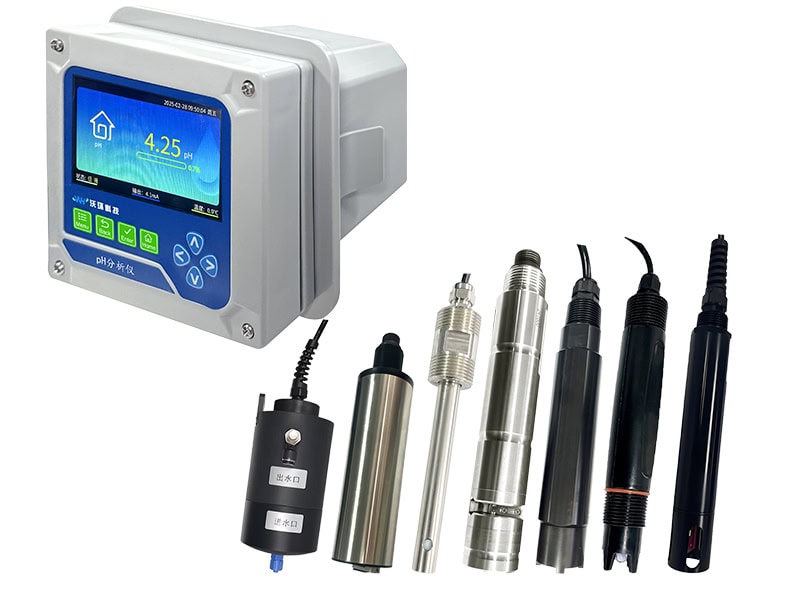
A pH probe is the heart of every pH measurement system.
Even the best pH meter cannot provide reliable results if the electrode is contaminated, improperly maintained, or incorrectly selected.
As the real-world examples in this article show, many pH measurement problems are not caused by equipment failure.
Instead, contamination, temperature fluctuations, maintenance practices, and application conditions often have a much greater impact on performance.
Choosing the right pH probe, performing regular calibration, and using Automatic Temperature Compensation (ATC) can dramatically improve measurement stability and extend electrode lifespan.
LImprove pH Measurement Stability in Harsh Industrial Applications
In many industrial environments, pH measurement is far more challenging than laboratory testing.
Wastewater contamination, dye buildup, temperature fluctuations, chemical reactions, and process instability can all reduce pH measurement accuracy and shorten electrode lifespan.
As discussed in the real project examples above, many pH measurement problems are not caused by the pH meter itself. In most cases, the real issue comes from improper electrode selection, poor maintenance practices, or rapidly changing process conditions.
For applications such as:
- Wastewater treatment
- Textile dyeing wastewater
- Chemical processing
- Neutralization tanks
- Online process control
using the right industrial pH probe is critical for long-term measurement stability.
For example, in high-temperature neutralization systems, a built-in ATC pH electrode can significantly improve measurement accuracy during rapid temperature fluctuations.
In heavily contaminated wastewater applications, self-cleaning pH electrodes and proper maintenance schedules can greatly extend probe lifespan and reduce downtime.
At Wuxi Wohuan Instrument Technology Co., Ltd., we provide industrial pH electrodes, built-in ATC pH probes, online pH analyzers, and water quality monitoring systems designed for demanding industrial environments.
Need Help Choosing the Right pH Probe?
Contact our team for:
- Industrial pH probe selection support
- Wastewater monitoring solutions
- Online pH analyzer recommendations
- OEM & ODM cooperation
- Technical consultation