Introduction
Reference electrode requires a clear testing goal, a reliable method, and enough context to interpret the result correctly. This article starts with the practical answer, then explains the key checks, common mistakes, and next-step options.
A pH reading is only as trustworthy as the reference electrode behind it. The sensing glass tip gets most of the attention, but the reference half-cell quietly determines whether your meter produces a stable, repeatable number or a slow, drifting figure you can’t calibrate. Understanding how the reference electrode works, how to read it on a pH electrode diagram, and how to keep it healthy is the difference between reliable data and constant rework.
Quick Answer: What Is a Reference Electrode and Why Does It Matter?
A reference electrode establishes a defined electrical connection between the measured liquid and the pH meter, supplying a stable, constant potential against which the pH-sensitive voltage of the glass electrode is compared. Because the overall accuracy of a pH reading is often determined by this electrode, choosing the right design matters as much as the sensor itself.
How it forms a complete cell. The pH meter electrode (the sensing glass electrode) and the reference electrode together form one electrochemical cell. The glass electrode generates a voltage that varies with hydrogen ion activity; the reference electrode holds a fixed potential. The meter measures the difference between them and converts it into a pH value, so a wandering reference potential directly corrupts the result.
Common symptoms. Unstable or drifting readings, slow response to sample changes, and an inability to calibrate are the classic warning signs. They usually mean the reference electrode has lost a reliable electrical connection.
Likely causes and fixes. Most problems trace back to a compromised liquid junction or degraded internal electrolyte. A clogged junction blocks ion flow, while contaminated or depleted potassium chloride solution shifts the reference potential. Cleaning the junction, refilling the chamber with fresh electrolyte, or replacing the electrode typically restores performance. Routine inspection of the fill level and junction condition prevents most of these failures before they appear.
From Our Field Experience: When the Glass Membrane Looks Fine but Measurement Fails
One common misconception is that if a pH electrode appears physically intact, it should still measure accurately.
We once supported a wastewater treatment plant that used a pH electrode to monitor a neutralization tank. The electrode looked normal from the outside, but the readings were unstable and frequently fluctuated. The customer initially believed the problem was caused by poor calibration.
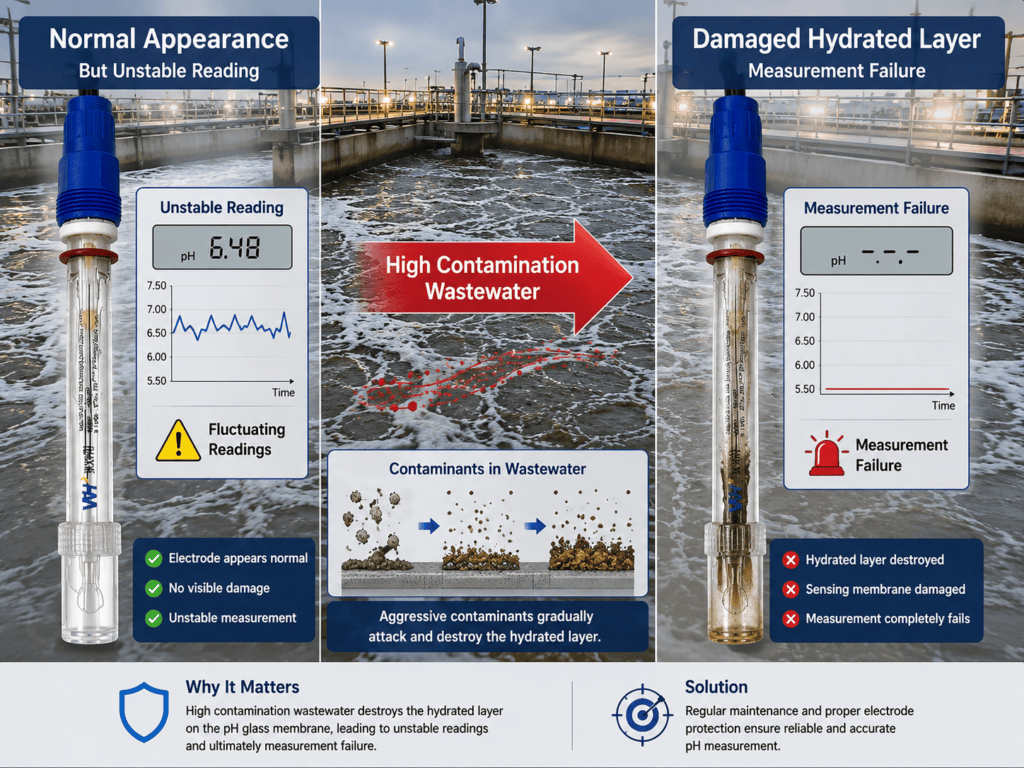
After troubleshooting the system, our engineers found a different cause. The neutralization tank contained a very high concentration of contaminants. Over time, these contaminants attacked and damaged the hydrated gel layer on the glass membrane.
Although the sensor showed no obvious physical damage, the hydrated layer responsible for hydrogen ion exchange had already been compromised. As a result, the electrode could no longer respond accurately to changes in pH, leading to unstable and unreliable measurements.
This case highlights an important lesson: visible condition alone does not determine electrode health. In heavily contaminated wastewater applications, degradation of the hydrated layer can occur long before obvious physical damage appears.
For high-contamination environments, selecting an electrode designed to resist fouling and aggressive process conditions can significantly improve long-term measurement stability.
pH Electrode Diagram: Understanding the Components
What the diagram shows: glass membrane, internal buffer, reference electrode, junction
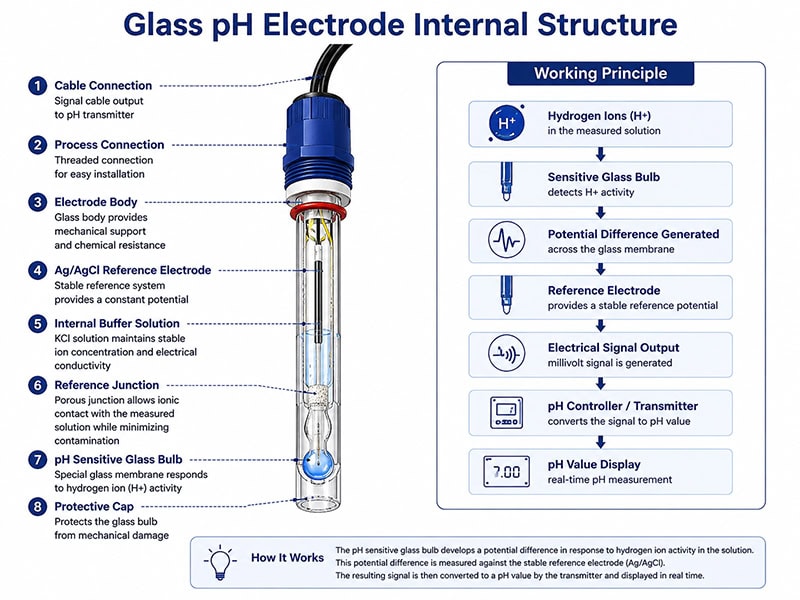
A typical pH electrode diagram reveals the internal structure of a combination probe, where the internal (sensing) electrode and the reference electrode share one glass body. At the very tip is the glass membrane, which responds to hydrogen ion activity in the sample. Inside, an internal buffer solution surrounds the silver wire of the sensing electrode.
The reference electrode runs alongside in its own electrolyte chamber. A junction—a small porous barrier, often a ceramic disk—creates the essential ionic path between the reference solution and the sample, completing the circuit without allowing the two liquids to mix freely.
How to read the diagram step by step
Start at the glass membrane tip and trace the internal components upward:
- Sensing element. Identify the internal electrode (a silver wire, usually coated with silver chloride) and the surrounding buffer that together generate a pH-dependent voltage.
- Reference assembly. Locate the separate chamber holding a stable electrolyte that stays independent of the sample.
- Junction. Inspect the porous junction region—the most maintenance-sensitive part of the probe.
Recognizing this layout lets you diagnose problems such as a clogged junction or a depleted fill solution before they degrade accuracy.
Why a stable reference potential matters
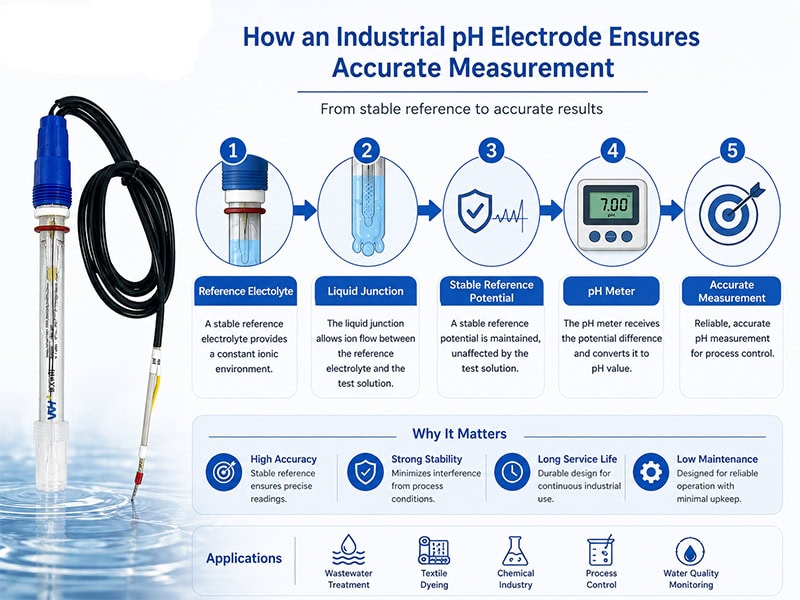
The reference electrode must deliver an unwavering potential, because any drift directly erodes precision and slows response time.
Well-designed references can reach roughly 0.01 pH precision with rapid response, making them suitable even for difficult sample types such as TRIS buffers, proteins, and sulfide-containing solutions. Refillable designs support long-term stability by allowing electrolyte to be replenished, and a range of body styles lets you match the probe to varied application demands.
Types of Reference Electrodes: Ag/AgCl and Beyond
Ag/AgCl reference electrode: construction, advantages, and applications
The Ag/AgCl reference electrode is built around a silver wire coated with silver chloride, immersed in a 3 molar potassium chloride solution that fills a glass chamber. This construction delivers a stable, reproducible reference potential—the key requirement for accurate pH measurement. It serves well in routine laboratory work and general-purpose field measurements. The most useful maintenance habit is to check and replenish the internal fill solution regularly, since concentration drift in the KCl directly undermines reliability.
Comparison with calomel and other reference types
While the Ag/AgCl system is widely adopted, the calomel electrode—based on a mercury/mercurous chloride system—has been used historically. Its main drawback is the mercury content, which raises environmental and safety concerns.
Where a different potential range or longer shelf life is needed, alternative reference chemistries may be considered, but the Ag/AgCl electrode remains a standard choice thanks to its balance of stability, low toxicity, and easy maintenance.
When comparing options, weigh fill-solution compatibility and potential stability against your specific sample matrix. The LibreTexts overview of reference electrodes in potentiometry provides additional background on these designs.
Standard specifications for reference electrodes
Industry specifications define key parameters for reference electrodes, including the concentration of the internal electrolyte (commonly 3 M KCl) and the materials of the internal element. Consistent specifications let electrodes from different sources deliver comparable potential and remain interchangeable, which helps avoid measurement errors caused by incompatible fill solutions or construction variations. Following established specifications is a reliable path to reproducible pH results.
How to Choose the Right Reference Electrode for Your pH Meter
Key selection factors: electrolyte, junction, and sample compatibility
Choosing a reference half-cell starts with the measurement environment. The electrolyte composition—typically a potassium chloride solution for Ag/AgCl designs—should match expected sample conditions. Routine aqueous samples work well with standard KCl fill, while high-viscosity or low-ionic-strength samples may call for a different electrolyte or junction style. The junction connecting the internal electrolyte to the sample influences both response time and contamination risk.
Sample chemistry matters too: an economy-grade pH meter electrode handles ordinary lab work, but more challenging samples benefit from a general-purpose design with improved stability. Some modern electrodes also emphasize sustainable materials for environmentally conscious labs.
Selection matrix for common applications
| Application Profile | Recommended Reference Electrode Type | Rationale |
|---|---|---|
| Routine lab measurements (aqueous buffers, simple solutions) | Economy silver/silver chloride electrode | Cost-effective for consistent, low-diversity samples |
| Daily general-purpose use (multiple sample types, moderate precision) | General-purpose combination silver/silver chloride electrode | Balances performance, durability, and cost for varied work |
| Environmentally conscious labs or field work | Sustainably produced (green) Ag/AgCl electrode | Reduces environmental impact without sacrificing measurement quality |
Use this matrix as a starting point, then factor in temperature range, sample agitation, and frequency of use.
For continuous or industrial pH monitoring—where probes run unattended in process streams rather than in occasional bench tests—a ruggedized inline sensor is usually a better fit than a standard lab electrode. If that describes your application, explore online pH controllers and sensors for water monitoring, which include general-purpose, high-temperature, anti-fouling, and heavy-duty industrial options. For broader process needs, the industrial water quality controllers and sensors range covers additional parameters.
Maintenance Checklist and Troubleshooting for Ag/AgCl Reference Electrodes
Daily and periodic maintenance checklist
- After each measurement: rinse the electrode with deionized water to remove sample residue.
- For storage: keep the electrode in a solution matching its internal fill, typically 3 M KCl, to keep the junction hydrated and prevent salt crystallization.
- Weekly (refillable designs): check the fill level and top off with fresh 3 M KCl as needed.
A consistent routine preserves the stable reference potential and extends the life of the silver/silver chloride electrode.
Troubleshooting table
| Issue | Possible Cause | Quick Fix |
|---|---|---|
| Drift | Dried junction or contaminated fill | Replace with fresh 3 M KCl, rehydrate the junction |
| Clogging | Sample residue blocking the junction | Rinse junction with warm deionized water or a mild cleaning solution |
| Slow response | Partially blocked junction or aged fill | Soak electrode in storage solution; refill if necessary |
These steps address the most common performance losses without specialized tools.
From Our Field Experience: Not All Measurement Problems Come from the Glass Membrane
In many cases, operators immediately focus on the glass membrane when pH readings become unstable. However, the reference system can be equally important.
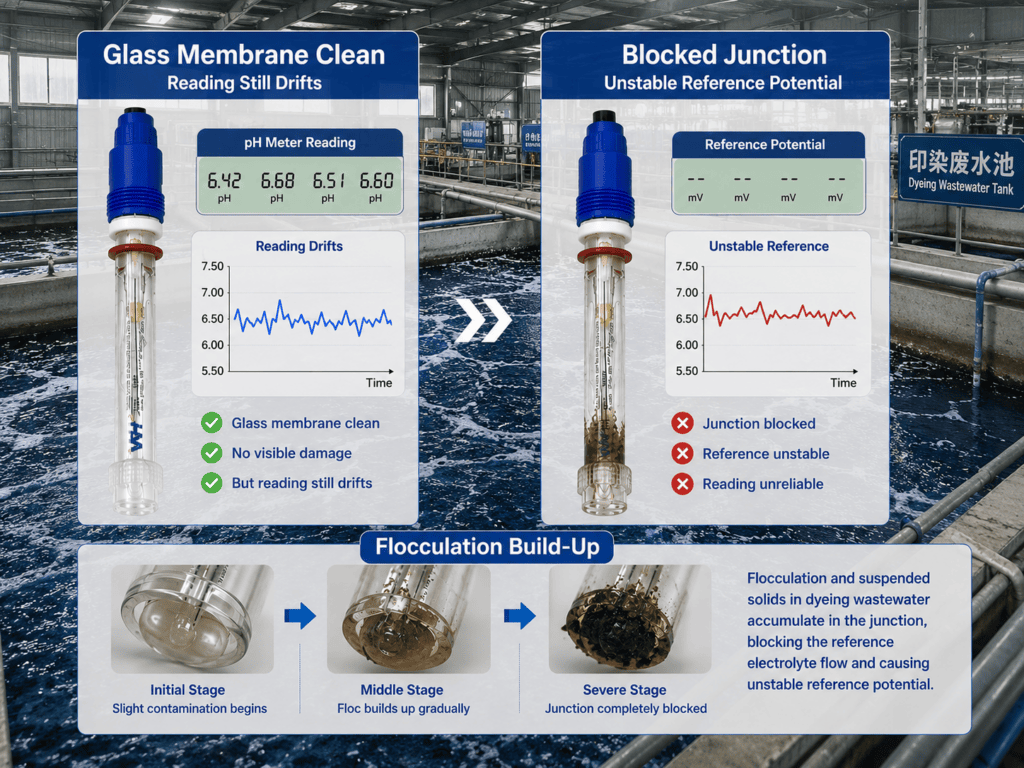
We once assisted a textile wastewater treatment facility that experienced a puzzling problem. The pH readings were relatively stable when the water was static, but as soon as the wastewater was mixed or circulated, the displayed values fluctuated significantly.
At first, the customer suspected contamination on the glass membrane. After cleaning, the sensor responded quickly again, but after several minutes in the process water, the readings gradually drifted and became unstable.
Further investigation by our engineers revealed that the real issue was not the glass membrane. Large amounts of flocculated solids in the wastewater had accumulated around the liquid junction, restricting the ionic exchange required by the reference electrode.
Because the reference potential could no longer remain stable, the measured pH value continuously drifted, especially when the process conditions changed.
This experience demonstrates why the liquid junction should never be overlooked during troubleshooting. In wastewater containing suspended solids, fibers, or flocculated particles, junction fouling can become a major source of measurement instability.
Selecting a pH electrode with an anti-clogging reference design is often one of the most effective ways to improve reliability in these applications.
How to refill and recondition the electrode
For refillable designs, locate the fill hole (usually on the side of the glass body), empty the old solution, and rinse the inner chamber with deionized water. Refill with fresh 3 M KCl, then tap the electrode gently to release air bubbles. Recondition by soaking the tip in storage solution for at least one hour. Repeating this periodically—especially after exposure to viscous or protein-rich samples—restores the junction’s ionic conductivity and extends the electrode’s useful life.
Keeping Your Measurements Reliable
The reference electrode is the quiet foundation of every accurate pH reading. Read the electrode diagram so you can recognize the glass membrane, sensing element, and junction; choose a reference design—usually an Ag/AgCl half-cell—matched to your samples; and maintain it with disciplined rinsing, correct storage, and periodic refilling.
Pair these habits with a sound calibration routine, and your pH system will stay stable, fast, and trustworthy across the full range of work it sees.
Frequently Asked Questions About pH Electrode Diagrams and Reference Electrodes
How do you read a pH electrode diagram?
First locate the glass membrane at the tip, which responds to hydrogen ion activity. The diagram then shows the internal electrode—typically a silver wire coated with silver chloride—and the reference electrode, both housed inside the glass probe. A porous junction connects the reference electrolyte to the sample. Recognizing these components clarifies how the probe converts chemistry into a measurable voltage.
What is the standard for reference electrodes developed by a standards committee?
Reference electrodes are governed by industry specifications that define parameters such as electrolyte concentration (commonly 3 M KCl) and internal materials so that electrodes remain interchangeable and reproducible. For details on a particular standard or its issuing committee, consult primary technical literature from electrochemical standardization bodies, as specific historical standards are not detailed here.
How does the reference electrode affect pH measurement accuracy?
The overall accuracy of a pH measurement is often determined by the reference electrode, because it supplies the defined electrical connection between the meter and the sample. If the reference potential drifts or the junction clogs, the pH reading becomes unreliable no matter how good the sensing glass is.
When should I replace an Ag/AgCl reference electrode?
Replace it when it no longer holds a stable potential, the junction becomes slow to respond, or visible contamination appears. Daily rinsing with deionized water and storage in 3 M KCl extend its life, but the internal fill and junction degrade over time, so eventual replacement is unavoidable.
Helpful Resources
Authoritative References
- pubmed.ncbi.nlm.nih.gov
- https://chem.libretexts.org/Bookshelves/Analytical Chemistry/Supplemental Modules (Anal…
Conclusion
The key to understanding reference electrode is separating the direct answer from supporting context, then using the evidence above to choose the most relevant next step.
About Reference Electrodes and Reliable pH Measurement
A stable reference electrode is the foundation of every accurate pH measurement. While many users focus on the glass sensing element, real-world performance often depends on factors such as electrolyte condition, junction cleanliness, sample compatibility, and proper maintenance.
As discussed in this guide, issues such as junction blockage, electrolyte contamination, and improper storage can lead to unstable readings, slow response, and calibration difficulties. Understanding how reference electrodes work and selecting the right design for the application can significantly improve measurement reliability and reduce maintenance requirements.
Wohuan Instrument specializes in industrial pH electrodes, Ag/AgCl reference electrodes, online pH analyzers, and water quality monitoring solutions. With extensive experience supporting wastewater treatment plants, chemical processing facilities, and industrial process applications, we help customers select suitable sensors for demanding operating environments.
Need Help Selecting the Right Reference Electrode or pH Sensor?
The performance of a pH measurement system depends not only on calibration, but also on choosing the correct reference electrode, junction design, and sensor configuration for the application.
Whether you are working with wastewater treatment, chemical processing, textile wastewater, electroplating solutions, or industrial process water, selecting the appropriate electrode can improve measurement stability, reduce maintenance costs, and extend service life.
If you are evaluating industrial pH electrodes, Ag/AgCl reference electrodes, online pH analyzers, or water quality monitoring systems, our engineering team can help identify suitable solutions based on your operating conditions.
Homepage
https://wxinstrument.com/
Industrial pH Electrodes & Online pH Analyzers
https://wxinstrument.com/product-cate/online-ph-meter/
Contact Us
https://wxinstrument.com/contact/
Send us your application details, process medium, temperature range, and installation requirements. We will be happy to recommend a suitable solution for your project.