Introduction
How can schools ensure campus drinking water safety between routine laboratory tests? This case study shows how an online water quality monitoring system provides 24/7 visibility into water conditions across a primary school campus.
By combining turbidity monitoring, residual chlorine monitoring, and pH monitoring, the school moved from periodic manual sampling to continuous data tracking, early warning, and traceable records.
In this article, we’ll explore the real monitoring challenges, system configuration, and field application results—and see how continuous monitoring can make campus drinking water management safer, faster, and more reliable.
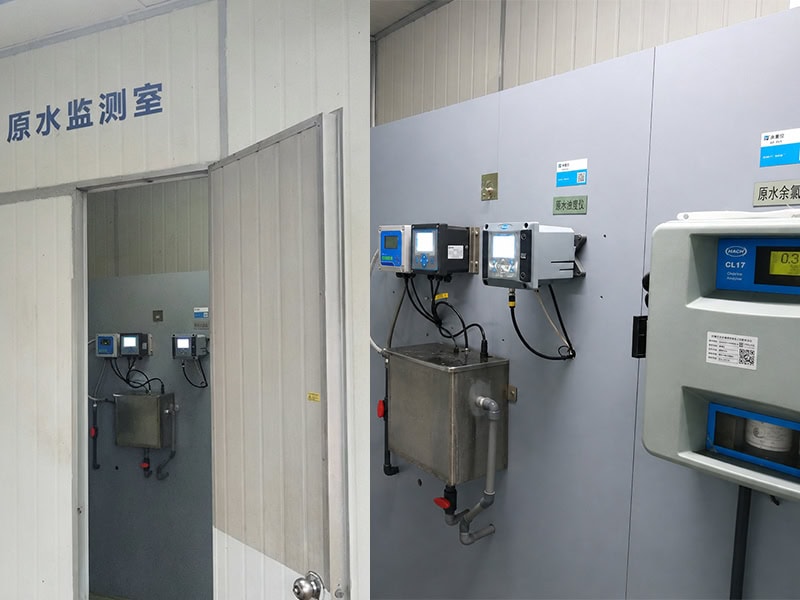
Challenges in Campus Drinking Water Management
Why Schools Need Continuous Water Quality Monitoring
Drinking water safety is an important part of daily campus management. For schools with hundreds or thousands of students and staff, even a small water quality problem can affect a large number of people.
This project involved an experimental primary school with more than 1,000 students and staff. The school mainly uses municipal tap water, which is further treated by on-campus direct drinking water equipment.
Although municipal water is already treated before entering the campus, several risks may still appear during storage, distribution, and periods of low water consumption.
Water Quality Risks After Long School Holidays
During summer and winter vacations, campus water consumption drops significantly.
Water may remain stagnant or move very slowly inside pipelines for extended periods. Before a new semester begins, the school normally needs to flush the water distribution system thoroughly.
The challenge is that traditional flushing depends heavily on experience. Without real-time water quality data, staff cannot easily determine when flushing is sufficient or when water quality has returned to normal.
Continuous monitoring provides a clearer basis for making this decision.
Limitations of Periodic Manual Testing
The school previously relied mainly on periodic sampling before the start of each semester.
While laboratory testing is important, it only shows water quality at the time the sample was collected. It cannot continuously reflect changes during daily campus operation.
If the water distribution network or drinking water equipment develops an abnormal condition, the problem may not be detected immediately.
For campus water management, this creates a major information gap between two manual inspections.
Risks at the End of the Water Distribution Network
Municipal tap water travels through the campus pipeline network before reaching classrooms, cafeterias, and drinking water stations.
Water quality may change during this process, especially at terminal points with lower water consumption.
Two important parameters are turbidity and free chlorine.
Changes in turbidity may indicate suspended particles or abnormal water conditions. Insufficient residual chlorine may reduce the protection against microbial growth within the distribution network.
For this reason, deploying an online campus water quality monitoring system allows schools to move from periodic inspection to continuous water quality management.
Online Water Quality Monitoring Solution for Schools
Real-Time Monitoring of Campus Water Supply
For this primary school, the monitoring solution focuses on municipal water entering the campus and selected points within the internal distribution network.
The system continuously monitors three core parameters:
- Turbidity
- Residual chlorine
- pH
Together, these parameters provide a practical overview of water clarity, disinfection conditions, and acid-base balance.
Online Turbidity Monitoring
The online turbidity analyzer uses the 90° scattered-light measurement principle to continuously track turbidity changes.
For drinking water applications, turbidity is an important indicator because sudden increases can reveal changes in incoming water or conditions inside the distribution network.
The monitoring range used for this application is 0.001–400 NTU, with a resolution down to 0.001 NTU.
Continuous turbidity data also helps school staff evaluate water conditions after long holidays and pipeline flushing.
Online Residual Chlorine Monitoring
The online residual chlorine analyzer continuously measures free chlorine in the water distribution system.
Residual chlorine is particularly important at terminal points because it helps operators understand whether sufficient disinfectant residual remains after water has traveled through campus pipelines.
The analyzer provides a measuring range of 0–5.00 mg/L, with a resolution of 0.001 mg/L.
Instead of relying only on occasional manual tests, school staff can observe residual chlorine trends throughout the day and respond more quickly to unusual changes.
Online pH Monitoring
The online pH analyzer continuously monitors the acid-base condition of the incoming water.
For drinking water, pH is an important basic water quality parameter and also provides useful information when operators investigate abnormal water conditions.
The system provides a measuring range of 0.01–14.00 pH with 0.01 pH resolution.
Combined monitoring of pH, turbidity, and residual chlorine gives the school a more complete picture than any single parameter alone.
Centralized Data Collection and Remote Monitoring
All online instruments connect to a central data acquisition unit through RS485 communication.
Monitoring data can then be transmitted to the management platform through available communication networks.
School facility managers can view current water quality conditions and historical trends from a centralized interface.
This is especially useful for schools with several buildings or multiple drinking water monitoring points.
Automatic Alarm and Historical Data Tracking
The system operates continuously and automatically records monitoring data.
When turbidity, residual chlorine, or pH moves outside a preset control range, the monitoring platform can generate an alarm so that facility staff can investigate the problem.
Historical data also provides an important reference for:
- Water network flushing
- Drinking water equipment maintenance
- Abnormal water quality investigation
- Long-term campus water management
This changes campus drinking water management from “test first, wait for results” to continuous monitoring with early warning.
Key Advantages of the Campus Water Quality Monitoring System
Lower Maintenance Through Automatic Cleaning
Online sensors must operate continuously, but long-term exposure to water can lead to deposits or biofilm on sensing surfaces.
This can gradually affect measurement stability and increase maintenance requirements.
The monitoring system uses sensors with automatic cleaning functions to reduce surface contamination and extend maintenance intervals.
For school facility teams with limited technical staff, this reduces routine cleaning work while helping maintain reliable measurements.
Reliable Design for Continuous Monitoring
Campus water quality monitoring requires instruments to operate continuously with minimal interruption.
The system uses an industrial watchdog function to improve long-term operating reliability.
Monitoring data is automatically stored and can be recovered after temporary communication or power interruptions.
This helps maintain data continuity and provides more complete historical records.
Flexible Installation and Future Expansion
The monitoring equipment has a compact design and can be installed at key locations such as:
- Campus municipal water inlet
- Drinking water equipment inlet
- Distribution network monitoring points
- Selected terminal water points
The system can also be expanded with additional parameters when required.
For example, schools can add temperature or conductivity monitoring as their water management requirements develop.
Technical Specifications of Core Monitoring Instruments
Online Turbidity Analyzer
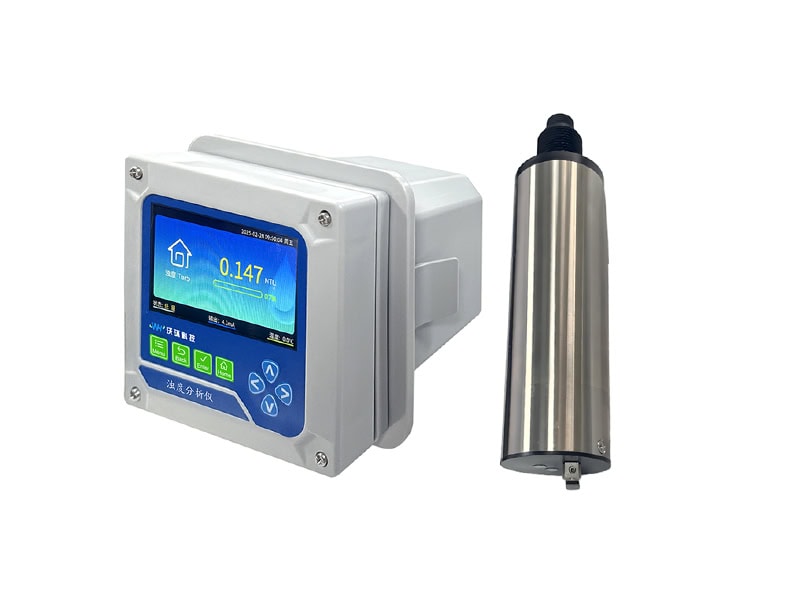
| Parameter | Specification |
|---|---|
| Measuring Range | 0.001–400 NTU |
| Accuracy | ±5% |
| Resolution | 0.001 NTU |
| Communication | MODBUS RS485 |
| Protection Rating | IP68 |
| Cleaning | Automatic cleaning |
Online Residual Chlorine Analyzer
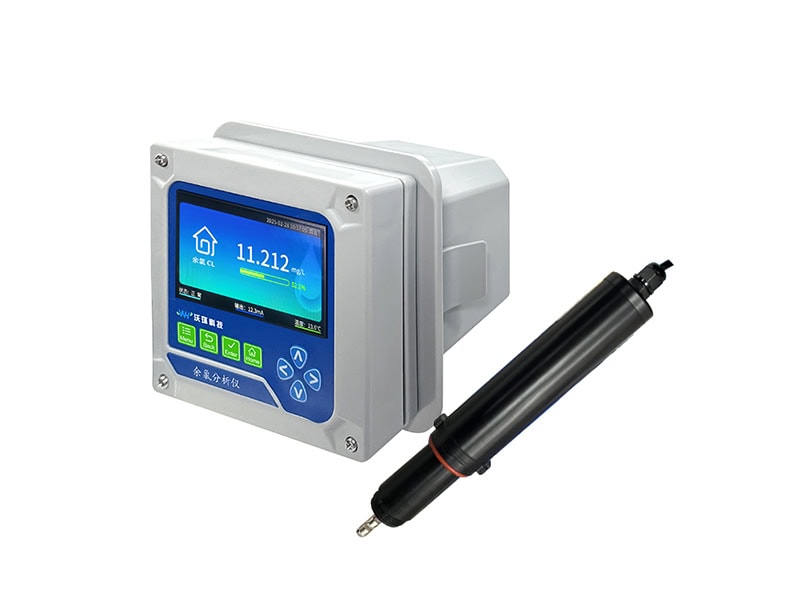
| Parameter | Specification |
|---|---|
| Measuring Range | 0–5.00 mg/L (ppm) |
| Resolution | 0.001 mg/L |
| Temperature Compensation | Automatic, 0–60°C |
| pH Compensation | Automatic / Manual |
| Response Time | <2 minutes (90%, 20°C) |
| Signal Output | 4–20 mA + RS485 |
Online pH Analyzer
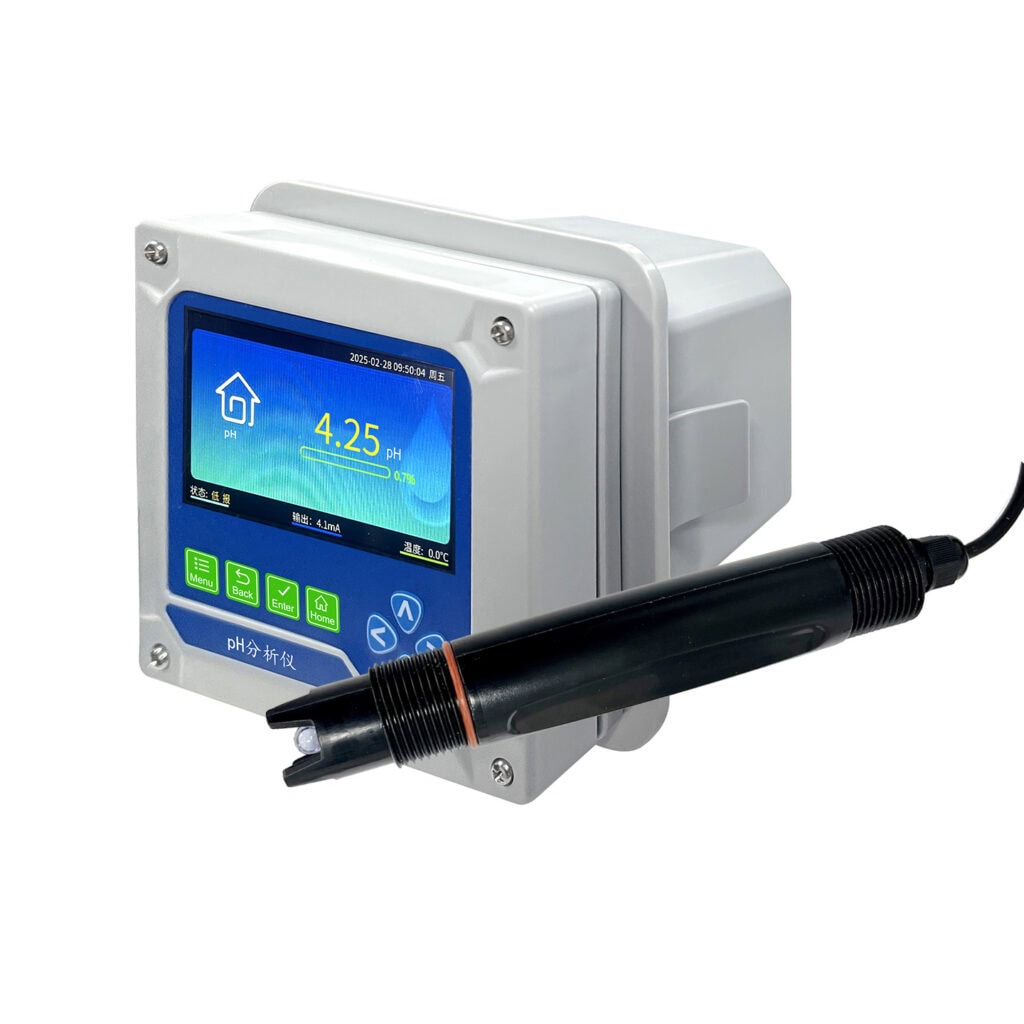
| Parameter | Specification |
|---|---|
| Measuring Range | 0.01–14.00 pH |
| Resolution | 0.01 pH |
| Intrinsic Error | 0.1 pH |
| Temperature Compensation | Automatic / Manual, 0–110°C |
| Signal Output | 4–20 mA + RS485 |
These specifications allow the three instruments to work together as a compact multi-parameter water quality monitoring system.
The system gives facility managers both real-time measurements and standardized signal outputs for integration with existing management platforms.
Field Application at a Primary School
From Periodic Sampling to 24/7 Monitoring
Before the system was installed, the school mainly relied on periodic water sampling, especially before students returned after long holidays.
This approach provided useful laboratory results, but only for individual sampling points and times.
After deployment, the school gained 24/7 online monitoring of key water quality parameters.
Facility staff can now view turbidity, residual chlorine, and pH trends without waiting for the next scheduled sampling test.
Better Water Management After School Holidays
Long holidays were one of the school’s main concerns.
Because water consumption falls sharply during these periods, the pipeline network requires sufficient flushing before normal use resumes.
Previously, staff mainly relied on operational experience to determine whether flushing was sufficient.
With online monitoring, they can observe water quality changes during flushing and use actual measurement trends as an additional basis for deciding when conditions have stabilized.
This makes reopening after summer and winter holidays easier to manage.
Improved Operation and Maintenance Efficiency
Water quality data is automatically collected and transmitted to the management platform.
Facility staff no longer need to depend entirely on frequent manual recording to understand daily water quality conditions.
The system also stores historical measurements automatically.
This reduces routine record-keeping work and gives maintenance teams more time to focus on drinking water equipment, pipeline conditions, and abnormal event handling.
More Stable and Traceable Monitoring Data
Periodic sampling creates gaps between individual measurements.
Continuous monitoring provides a much clearer picture of how water quality changes throughout the day.
The system provides:
- Continuous water quality monitoring
- Automatic data recording
- Historical trend tracking
- Abnormal condition alarms
Historical data can also support maintenance decisions for campus drinking water equipment and pipeline flushing.
Digital Water Quality Management Improvements
The most important change is not simply adding several online analyzers.
It is changing how the school manages drinking water quality.
| Indicator | Before Deployment | After Deployment |
|---|---|---|
| Monitoring Method | Periodic manual sampling | 24/7 continuous online monitoring |
| Key Parameters | Limited by each sampling test | Turbidity + residual chlorine + pH |
| Alarm Method | Problems identified after inspection or testing | Automatic abnormal-condition warning |
| Data Tracking | Individual test reports | Automatic storage and historical trends |
| Water Quality Management | Reactive | Continuous and preventive |
| Holiday Reopening | Flushing mainly based on experience | Water quality trends support flushing decisions |
This provides school facility managers with more continuous information while preserving manual or laboratory testing as an important verification method.
Supporting Drinking Water Safety and Compliance
Online monitoring does not replace professional laboratory testing or regulatory inspection.
Instead, it fills the information gap between periodic tests by continuously tracking key indicators.
For schools, this is particularly valuable because water quality can change between two scheduled inspections.
Continuous monitoring helps staff identify abnormal trends earlier and respond before they develop into larger operational problems.
It also provides traceable records to support internal water management and external inspections.
Conclusion: Moving from Periodic Testing to Continuous Campus Water Management
Campus drinking water safety requires more than a single test before the beginning of each semester.
Schools also need visibility into what happens between individual sampling events.
By monitoring turbidity, residual chlorine, and pH continuously, an online campus water quality monitoring system provides facility managers with real-time information, early warning, and historical data.
The main value can be summarized in four areas:
- Improve drinking water safety management
- Reduce routine monitoring workload
- Improve response to abnormal conditions
- Support digital water quality management
For schools with large numbers of students and multiple water-use points, this approach provides a practical way to strengthen everyday drinking water management.
Wohuan’s online water quality monitoring solution combines turbidity, residual chlorine, and pH monitoring with centralized data acquisition and remote management, helping schools build a more continuous and traceable water quality monitoring system.
Further Reading
- pH Electrode Diagram and Reference Electrode Types: How to Read, Choose, and Maintain Them
- Industrial Glass pH Electrodes Explained: Types, Applications and Selection Guide
- Turbidity Analyzer Guide: How It Works, Testing Methods, and Selection Tips
- Residual Chlorine Analyzer Guide: Choosing Between Online and Portable Monitoring for Drinking Water