Industry Challenges
Why Dissolved Oxygen Control Matters in Thermal Power Plants
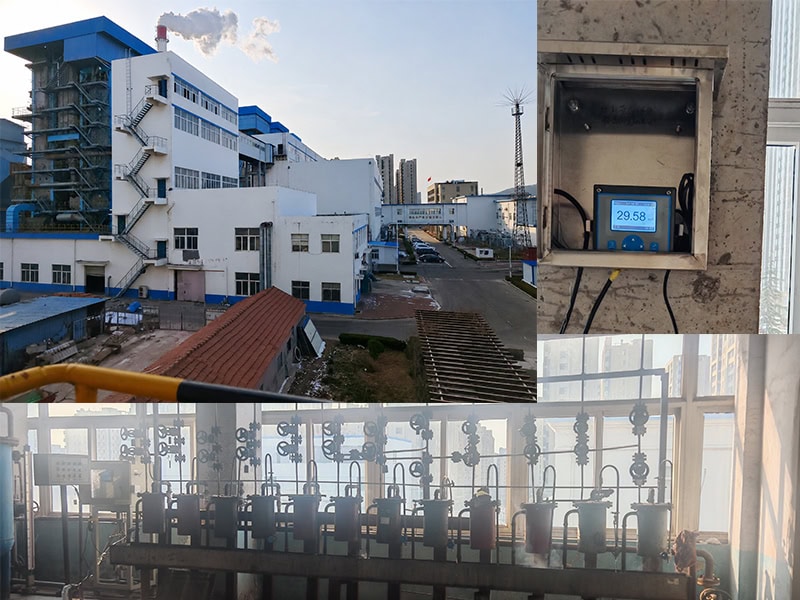
The water-steam system of thermal power plants has extremely strict requirements for dissolved oxygen control.
According to power industry standards, dissolved oxygen in high-pressure boiler feed water should be controlled below 15 μg/L. For supercritical boilers, the requirement is even stricter, with dissolved oxygen controlled below 5 μg/L.
Excess dissolved oxygen can react with metal surfaces inside the water-steam system.
Over time, this causes corrosion in critical equipment such as:
- Economizers
- Water walls
- Condensate pipelines
Corrosion products accumulate inside pipelines and reduce heat transfer efficiency.
This increases energy consumption and may lead to serious problems such as pipeline blockage or tube failure.
Therefore, dissolved oxygen control directly affects equipment safety, operating efficiency, and service life.
Limitations of Traditional Offline Sampling
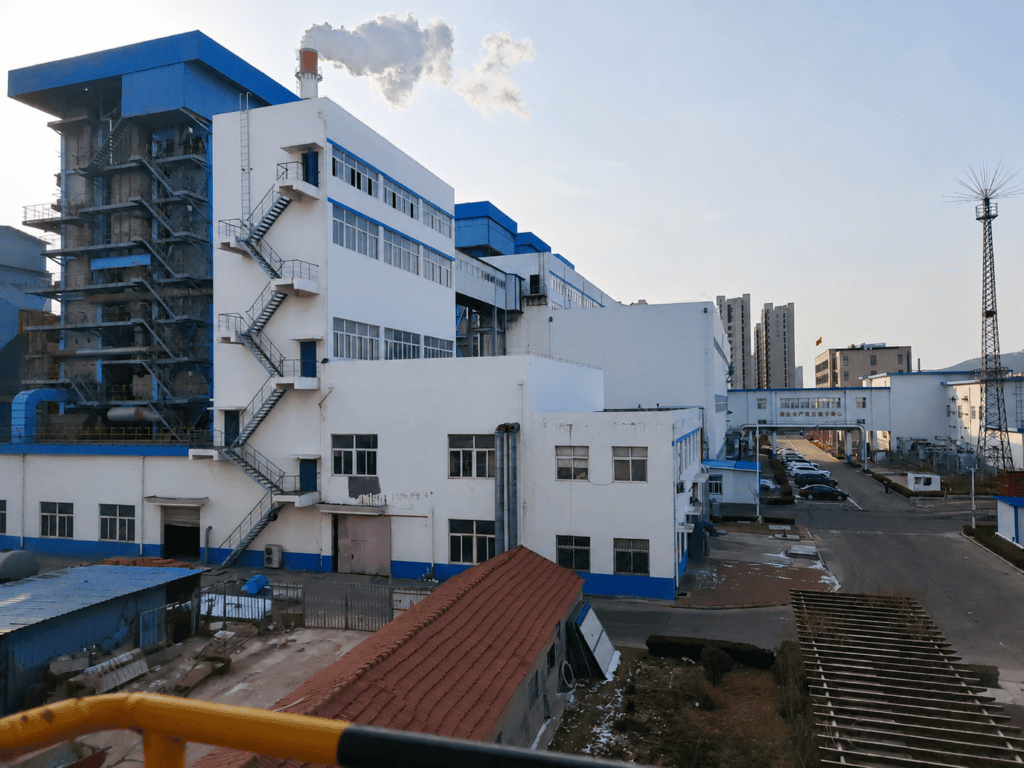
A thermal power company in Qingdao provides steam supply, winter heating, and electricity services for the local area.
During daily operation, the company faced several challenges in dissolved oxygen monitoring.
When the deaerator operates normally and dissolved oxygen remains within the required range:
Traditional offline sampling can only provide limited measurement results.
The data is delayed, making it difficult for operators to understand real-time water quality changes or optimize the deaeration process.
When abnormal conditions occur, such as:
- Deaerator packing blockage
- Insufficient steam pressure
- Unstable operating conditions
Dissolved oxygen levels may increase suddenly.
Without continuous monitoring, high-oxygen water may enter the boiler system.
Long-term exposure can accelerate corrosion of high-temperature and high-pressure equipment.
Dissolved oxygen corrosion is difficult to detect at an early stage.
The damage develops gradually, and problems are often discovered only after equipment performance has already declined.
Hidden Risk: Condenser Tube Leakage
Small leaks in condenser copper tubes are another potential risk in thermal power plants.
When leakage occurs, oxygen from cooling water can enter the condensate system.
Traditional manual inspection methods cannot detect these changes immediately.
As a result, hidden problems may continue developing until they affect equipment reliability.
These challenges show why thermal power plants need a continuous dissolved oxygen monitoring system.
Real-time monitoring and early warning help operators identify problems earlier and reduce corrosion risks.
Online Dissolved Oxygen Monitoring Solution
Real-Time DO Monitoring for Boiler Feed Water and Condensate Systems
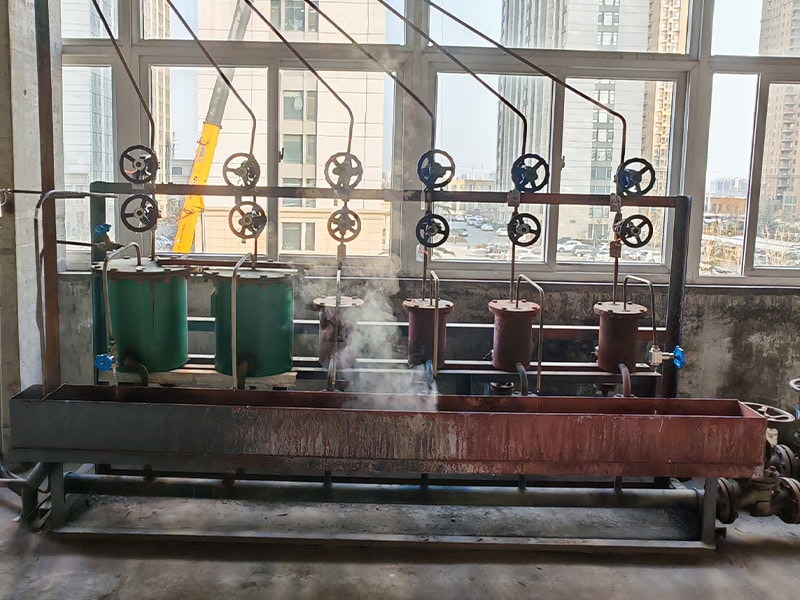
To solve dissolved oxygen control challenges in thermal power plants, an online monitoring solution can be applied to:
- Boiler feed water
- Condensate systems
- Cooling water systems
The system provides continuous dissolved oxygen measurement and helps operators maintain stable water quality conditions.
The core components include an online dissolved oxygen analyzer, high-precision DO sensor, and industrial communication system.
Core Equipment
The online dissolved oxygen analyzer uses advanced measurement technology to provide accurate oxygen concentration monitoring.
It supports ppb-level dissolved oxygen measurement, making it suitable for strict requirements in thermal power applications.
The analyzer continuously monitors oxygen concentration and provides reliable data for:
- Boiler feed water management
- Condensate quality control
- Corrosion prevention
The system integrates with plant control systems through industrial communication interfaces such as:
- 4–20 mA output
- RS485 communication
This allows centralized monitoring and easier operation management.
Intelligent Alarm and Data Management
The dissolved oxygen monitoring system operates 24/7 and continuously collects water quality data.
When dissolved oxygen exceeds the preset limit, the system immediately triggers an alarm.
Operators can quickly check abnormal conditions and adjust operating parameters, such as:
- Deaerator steam flow
- Water level
- Oxygen removal process conditions
All monitoring data can be transferred to the operation platform.
Historical trends help engineers analyze water quality changes and improve long-term process optimization.
Key Advantages of Online Dissolved Oxygen Analyzer
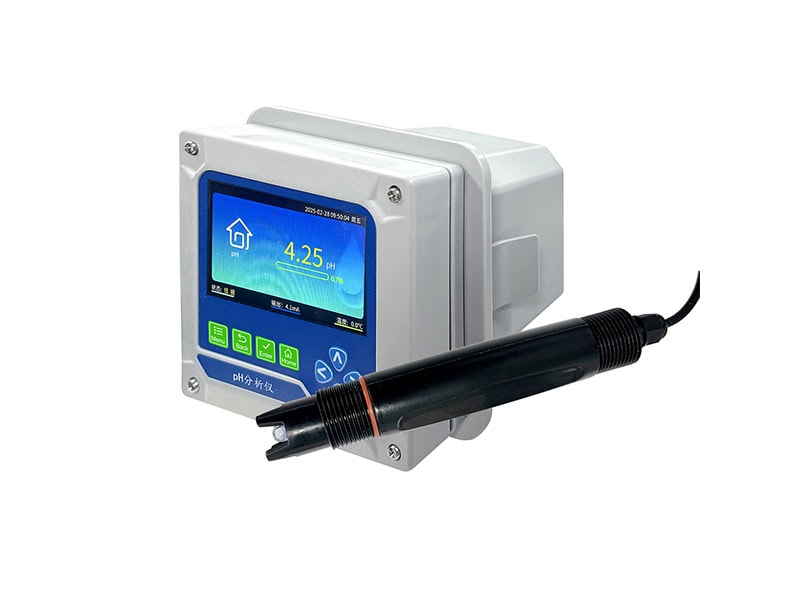
Continuous Monitoring Improves Equipment Protection
Compared with traditional offline sampling, an online dissolved oxygen analyzer provides continuous data from the water-steam system.
This helps operators understand oxygen concentration changes at any time and respond quickly to abnormal conditions.
Real-time dissolved oxygen monitoring provides several important benefits:
- Early corrosion warning
- Detection of abnormal water quality conditions
- Prevention of high-oxygen water entering the boiler system
When dissolved oxygen levels increase unexpectedly, operators can take action before corrosion causes serious equipment damage.
This improves the safety and reliability of thermal power plant operation.
Detecting Condenser Leakage Through Dissolved Oxygen Changes
Condenser tube leakage is difficult to identify through regular inspection.
However, changes in dissolved oxygen concentration can provide important warning information.
By continuously tracking dissolved oxygen trends, operators can identify abnormal oxygen increases and investigate potential leakage sources earlier.
This helps reduce the risk of cooling water contamination entering the condensate system.
Reliable Industrial Design
A thermal power plant requires monitoring equipment that can operate continuously under industrial conditions.
The online dissolved oxygen analyzer is designed for long-term stable operation.
Multi-Parameter Display and Historical Data Tracking
The analyzer displays important operating information on one screen, including:
- Dissolved oxygen concentration
- Temperature
- Instrument status
- Operating information
The system automatically stores measurement data for historical review.
Engineers can analyze previous dissolved oxygen trends and use the data to optimize deaeration performance.
Flexible Calibration and Communication
The analyzer supports multiple calibration methods to meet different application requirements.
These include:
- Standard calibration methods
- Manual zero-point adjustment
- Manual slope adjustment
The output signal can be configured according to system requirements.
The analyzer supports:
- 4–20 mA output
- RS485 communication
This makes integration with existing plant control systems easier.
Stable Long-Term Operation
The instrument uses industrial reliability design to ensure stable operation during continuous monitoring.
A built-in watchdog function helps prevent unexpected system interruptions.
The simple interface and clear operation logic reduce training requirements.
Operators can quickly complete daily operation and maintenance tasks.
Technical Specifications of Online Dissolved Oxygen Analyzer
| Parameter | Specification |
|---|---|
| Measuring Range | 0–1000 μg/L; 0–20.00 mg/L; 0–60°C |
| Resolution | 0.1 μg/L; 0.01 mg/L; 0.1°C |
| Accuracy | μg/L: ±1.0% FS; mg/L: ±0.5% FS |
| Response Time | Fast response for thermal power applications |
| Output Signal | 4–20 mA |
| Relay Output | High/low dissolved oxygen alarm |
| Communication | RS485 (supports multiple instrument connection) |
| Power Supply | 12V DC |
Field Application Case: Thermal Power Plant Dissolved Oxygen Monitoring
Customer Challenge
A thermal power company in Qingdao installed an online dissolved oxygen monitoring system for its boiler feed water and condensate system.
The company previously relied mainly on manual sampling and laboratory testing.
This method had several limitations:
- Limited measurement frequency
- Delayed data feedback
- Difficulty detecting sudden dissolved oxygen changes
When abnormal conditions occurred, such as deaerator performance changes or condenser leakage, operators could not immediately identify the impact on water quality.
This created potential corrosion risks for the boiler system.
Online Monitoring Solution
The company deployed an online dissolved oxygen analyzer to continuously monitor dissolved oxygen levels.
The system provided real-time measurement data and transmitted information to the plant control system.
The monitoring system helped operators:
- Track dissolved oxygen changes continuously
- Receive abnormal oxygen alarms quickly
- Adjust deaeration operation based on real-time data
After installation, the plant improved dissolved oxygen management and strengthened protection of key water-steam equipment.
Results After Installation
Equipment Safety Improvement
The online dissolved oxygen monitoring system provided continuous supervision of boiler feed water quality.
When oxygen concentration exceeded the limit, the system immediately generated an alarm.
This helped:
- Reduce corrosion risks
- Prevent high-oxygen water entering the boiler system
- Improve equipment operating reliability
Maintenance Efficiency Improvement
Before installation:
Manual sampling and periodic laboratory testing
After installation:
24-hour automatic dissolved oxygen monitoring
Operators no longer needed to rely on frequent manual sampling.
The system automatically collected and stored measurement data, reducing routine inspection workload.
Monitoring Data Stability Improvement
Traditional manual sampling methods often create delays between actual water conditions and test results.
Operators may not detect sudden dissolved oxygen changes in time.
The online dissolved oxygen monitoring system solves this problem through continuous measurement.
It provides:
- Real-time dissolved oxygen data
- Continuous monitoring without interruption
- Historical trend records for analysis
With reliable data support, engineers can better evaluate deaerator performance and optimize water-steam system operation.
This improves decision-making and reduces uncertainty during daily operation.
Energy Savings and Extended Equipment Life
Accurate dissolved oxygen monitoring helps operators optimize key process parameters, including:
- Deaerator steam flow
- Water level control
- Oxygen removal efficiency
By maintaining dissolved oxygen within the required range, the system helps reduce corrosion inside:
- Boilers
- Economizers
- Condensate pipelines
Lower corrosion rates can extend equipment service life and reduce unexpected shutdowns caused by water-steam system failures.
This helps thermal power plants reduce maintenance costs and improve long-term operating stability.
Digital Operation Management Improvements
After installing the online dissolved oxygen monitoring system, the thermal power plant achieved more efficient digital water quality management.
The comparison before and after installation is shown below:
| Indicator | Before Installation | After Installation |
|---|---|---|
| Monitoring Method | Manual sampling with limited daily data | 24/7 online monitoring with continuous data collection |
| Alarm Function | Problems found through manual inspection | Real-time dissolved oxygen warning |
| Data Management | Paper records, difficult to review | Automatic storage with historical trend analysis |
| Process Adjustment | Based on experience | Data-driven optimization |
From Periodic Inspection to Continuous Management
Before installation, operators mainly relied on manual sampling results.
This provided only limited information about actual water quality conditions.
After installation, dissolved oxygen data became continuously available.
Engineers can now identify trends, evaluate equipment conditions, and optimize operating parameters based on real measurement data.
This changes dissolved oxygen management from a reactive approach into a preventive strategy.
Instead of responding after corrosion problems appear, operators can take action earlier.
Conclusion: Reliable Dissolved Oxygen Monitoring for Thermal Power Plants
For thermal power plants, dissolved oxygen control is not only a water quality requirement.
It is an important part of corrosion prevention, equipment protection, and safe operation.
By installing an online dissolved oxygen monitoring system for boiler feed water, condensate, and cooling water systems, power plants can achieve four key goals:
- Prevent corrosion
- Improve equipment safety
- Reduce maintenance costs
- Enable digital operation management
Continuous monitoring provides operators with accurate data and early warnings.
This helps prevent oxygen-related damage before it affects critical equipment.
As thermal power plants continue to improve operational efficiency and reliability, online dissolved oxygen monitoring is becoming an essential solution for modern water-steam system management.
With experience in industrial water analysis and process monitoring, Wohuan provides reliable online dissolved oxygen monitoring solutions for thermal power plants and other industrial applications.
The goal is to help customers improve water quality control, reduce operational risks, and achieve safer long-term operation.
Further Reading
- Online Dissolved Oxygen Analyzer Selection Guide
- Boiler Feed Water Dissolved Oxygen Monitoring Solutions
- Industrial Water Quality Monitoring Systems for Power Plants