Industry Challenges
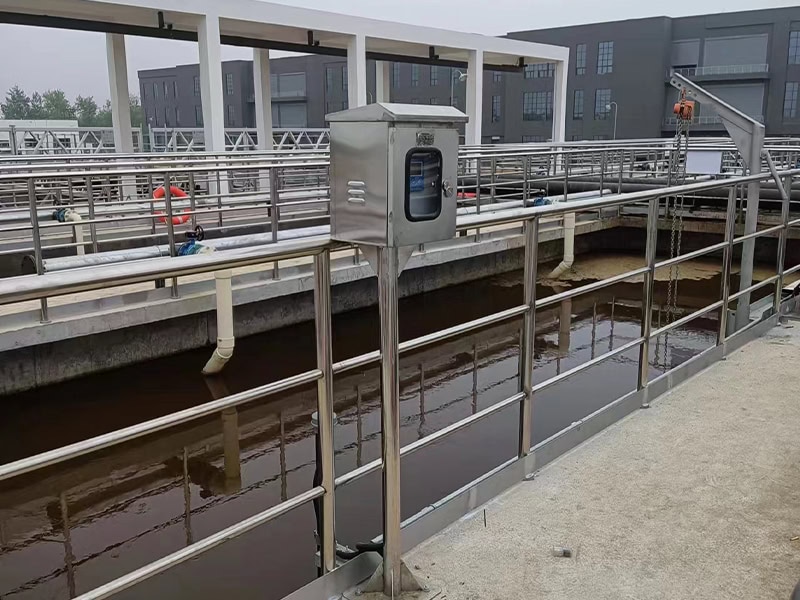
Wastewater Treatment Challenges in Glass Deep Processing Industry
Glass deep processing plants generate large amounts of industrial wastewater during production.
This wastewater usually contains multiple pollutants, including:
- Suspended solids (SS)
- Fluoride
- Oil-based contaminants
- Other industrial pollutants
If wastewater is discharged without effective treatment, it can create significant pressure on surrounding water environments.
For glass manufacturers, stable wastewater treatment is not only an environmental responsibility but also a key factor for maintaining continuous production.
Limitations of Traditional Wastewater Monitoring
Traditional wastewater treatment systems often rely on periodic manual sampling and laboratory testing.
This creates several operational challenges.
When production conditions are stable and wastewater treatment equipment operates normally:
Manual testing provides limited data points and delayed feedback.
Operators cannot continuously understand water quality changes in:
- Equalization tanks
- Sedimentation tanks
- Final discharge points
Without real-time data, it is difficult to optimize chemical dosing and improve treatment efficiency.
Operators often adjust chemical consumption based on experience rather than actual wastewater conditions.
Challenges During Production Fluctuations
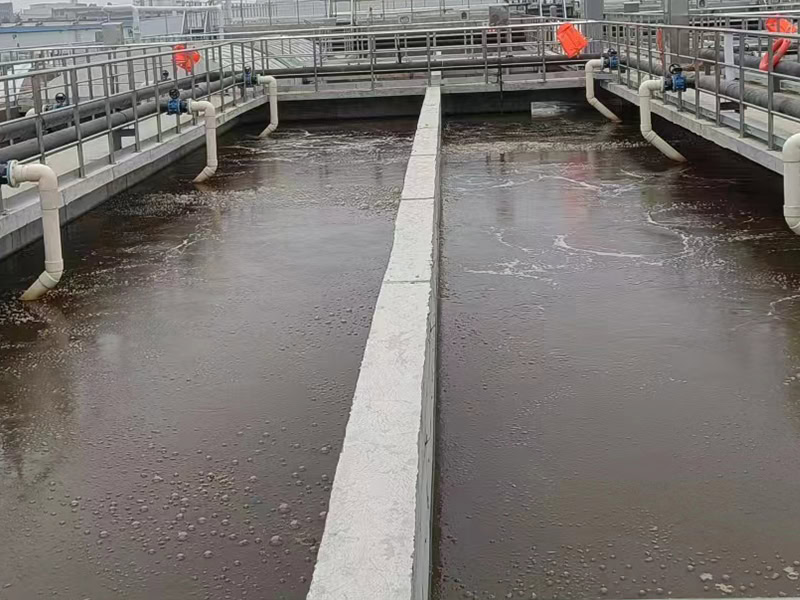
Production fluctuations can cause rapid changes in wastewater characteristics.
For example, wastewater from acid cleaning processes may experience significant pH variations.
Changes in pH directly affect coagulation and sedimentation performance.
If operators cannot adjust neutralization and chemical dosing parameters quickly, suspended solids and COD may exceed discharge limits.
Once non-compliant wastewater enters municipal pipelines, companies may face environmental penalties and compliance risks.
Problems with Manual Monitoring Methods
Manual sampling has several limitations:
- Low monitoring frequency
- Long feedback time
- Difficult detection of sudden changes
When wastewater treatment equipment operates abnormally, problems may only be discovered hours or even days later.
By then, the optimal time for adjustment may already be missed.
In addition, glass processing wastewater treatment usually includes:
- Neutralization adjustment
- Multi-stage coagulation
- Sedimentation processes
These processes require continuous dosing of:
- Calcium hydroxide
- PAC coagulant
- PAM flocculant
Without real-time water quality data, chemical dosing often relies on operator experience.
Overdosing increases chemical consumption and sludge production.
Insufficient dosing reduces treatment efficiency and increases compliance risks.
Therefore, deploying an online wastewater quality monitoring system has become an important solution for glass manufacturers.
Real-time monitoring helps ensure stable discharge, optimize chemical usage, and reduce environmental risks.
Online Wastewater Quality Monitoring Solution
Real-Time Water Quality Monitoring for Glass Manufacturing Wastewater Treatment
To address wastewater monitoring challenges in glass deep processing plants, we provide a complete online monitoring solution.
The system covers key treatment stages, including:
- Equalization tanks
- Coagulation and sedimentation processes
- Final discharge outlets
The solution combines online water quality monitoring, automatic dosing control, and digital operation management.
Core Monitoring Instruments
Online pH Monitoring System
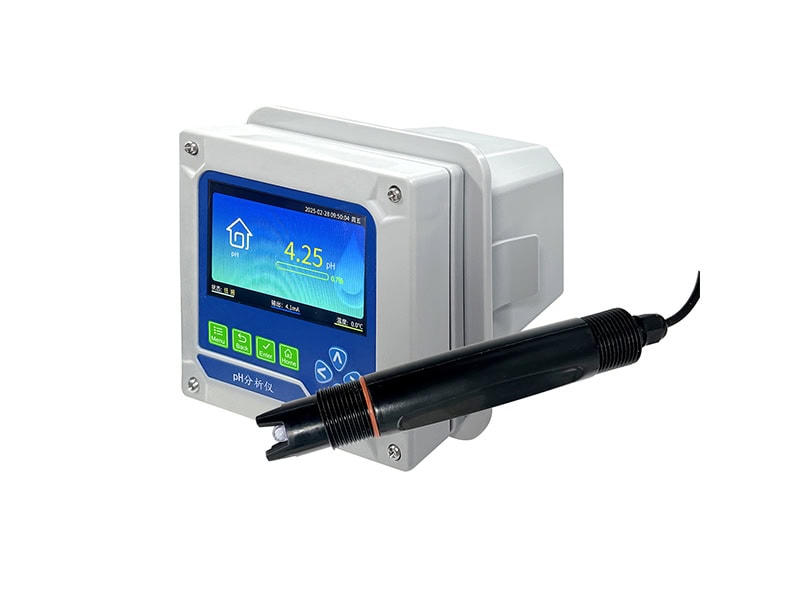
The online pH analyzer uses industrial glass electrode technology to continuously monitor pH changes.
It helps maintain wastewater discharge pH within the required range of:
pH 6–9
Real-time pH monitoring allows automatic adjustment of calcium hydroxide dosing.
This improves neutralization efficiency and reduces unnecessary chemical consumption.
Online COD Analyzer
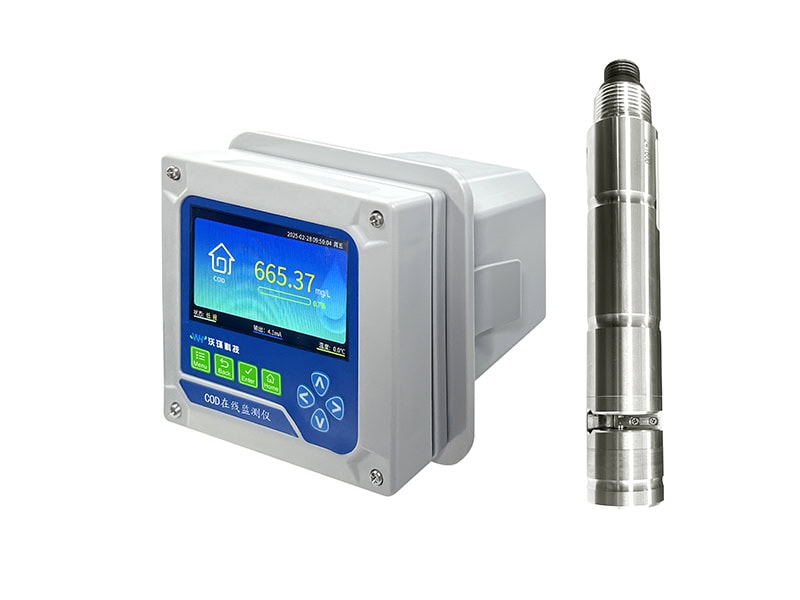
The COD analyzer uses the potassium dichromate digestion method with photometric detection.
It measures COD concentration based on the relationship between sample absorbance and COD value.
The system complies with the requirements of:
HJ377-2019 online COD monitoring standards
Online Suspended Solids (SS) Monitor
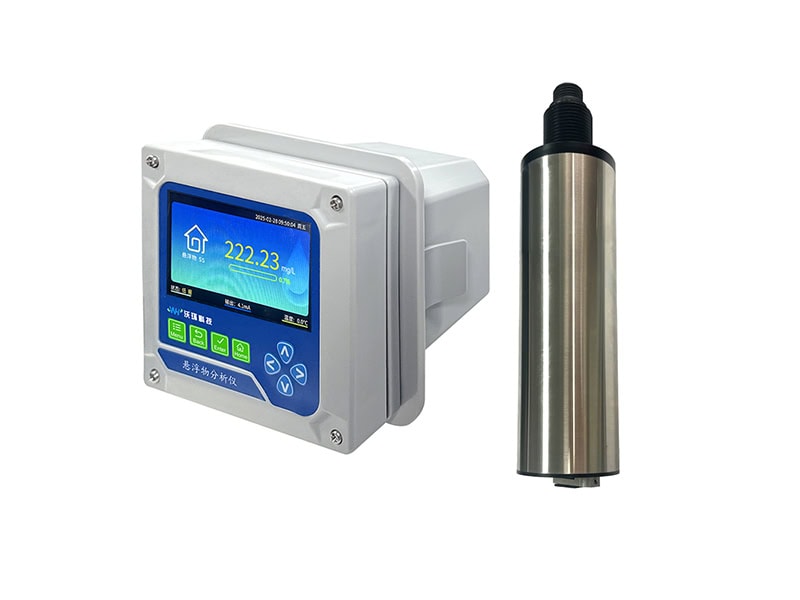
The SS analyzer continuously monitors suspended solids concentration in wastewater.
It helps evaluate the performance of the multi-stage coagulation and sedimentation process.
By tracking SS changes in real time, operators can adjust PAC and PAM dosing more accurately.
Flow Monitoring Equipment
A calibrated flow meter continuously measures wastewater discharge volume.
The system provides:
Flow measurement accuracy ≥ ±2%
Flow data helps operators understand total discharge conditions and improve treatment management.
Integrated Process Control
The online monitoring system can connect with wastewater treatment equipment to achieve automatic process adjustment.
Based on real-time water quality data, the system optimizes chemical dosing and improves treatment stability.
For the neutralization process:
The system automatically adjusts calcium hydroxide dosing according to real-time pH values.
This helps maintain stable pH conditions and prevents over-dosing or under-dosing.
For the coagulation and sedimentation process:
The system uses real-time COD and suspended solids data to optimize:
- PAC dosing rate
- PAM dosing rate
This improves floc formation and sedimentation performance.
Smart Operation and Maintenance
All monitoring data is transmitted to a digital operation platform.
Operators can view wastewater quality changes, equipment status, and historical trends in real time.
When any parameter exceeds the preset limit, the system immediately triggers an alarm.
This allows operators to respond quickly and adjust treatment processes before discharge problems occur.
The instruments support RS485 communication, allowing multiple monitoring devices to connect to one communication network.
This simplifies centralized monitoring and improves daily management efficiency.
Key Equipment Advantages
Multi-Parameter Display and Historical Data Tracking
The online monitoring system can display multiple parameters on one screen, including:
- pH value
- COD concentration
- Suspended solids concentration
- Temperature
- Time
- Equipment status
The system automatically stores measurement data and generates historical trends.
Operators can review wastewater changes and use real data to optimize treatment parameters.
Historical data also provides reliable records for environmental inspections and compliance management.
Industrial Reliability Design
Industrial wastewater treatment environments often involve humidity, contamination, and continuous operation requirements.
The monitoring system adopts industrial-grade reliability design for stable long-term operation.
Key features include:
- Industrial watchdog function to prevent system interruption
- Simple menu structure
- Clear operation interface
Operators can complete daily operation and maintenance tasks quickly without complicated training.
Anti-Fouling Sensor Design
Glass processing wastewater contains suspended solids and oil-based contaminants.
These substances can accumulate on sensors and affect measurement accuracy.
The system uses anti-fouling composite sensors with automatic cleaning functions.
This reduces contamination impact and significantly lowers manual cleaning frequency.
For wastewater treatment plants with limited maintenance personnel, anti-fouling design improves measurement stability and reduces operating costs.
Technical Specifications of Core Instruments
Online pH Monitor
| Parameter | Specification |
|---|---|
| Measuring Range | 0.01–14.00 pH |
| Resolution | 0.01 pH |
| Accuracy | 0.1 pH |
| Temperature Compensation | Automatic or manual, 0–110°C |
| Signal Output | 4–20 mA (Load <750Ω); optional 0–5V / 0–10V |
| Relay Output | Two groups, 3A 240VAC |
Online COD Analyzer
| Parameter | Specification |
|---|---|
| Measurement Method | Potassium dichromate digestion + photometric detection |
| Signal Output | 4–20 mA |
| Communication | RS485 |
Online Suspended Solids (SS) Monitor
| Parameter | Specification |
|---|---|
| Measuring Range | 0–4000 NTU (optional) |
| Accuracy | ±5% |
| Protection Rating | IP68 |
| Signal Output | MODBUS RS485 |
Field Application Results
Wastewater Monitoring Improvement in Glass Manufacturing
A glass deep processing company installed Wohuan’s online wastewater quality monitoring system to improve treatment stability and environmental compliance.
Before installation, the company mainly relied on manual sampling and experience-based chemical dosing.
This resulted in:
- Delayed water quality feedback
- Unstable chemical consumption
- Difficulty detecting sudden wastewater changes
After deploying the online monitoring system, the company achieved continuous monitoring of key wastewater parameters.
The system provided real-time data for:
- pH control
- COD monitoring
- Suspended solids management
Field-Tested O&M Efficiency Improvements
After installing the online wastewater quality monitoring system, the glass processing company achieved measurable improvements in treatment efficiency, operating costs, and environmental compliance.
Annual Chemical Consumption Reduction
Real-time pH monitoring enables more accurate control of calcium hydroxide dosing.
The company reduced neutralization chemical consumption by approximately 15%–25%.
Based on real-time COD and suspended solids data, the system dynamically adjusts PAC and PAM dosing rates.
Coagulant consumption was reduced by approximately 10%–20%.
With better control of the coagulation and sedimentation process, sludge production was also reduced.
This helped lower sludge handling and disposal costs.
Annual Labour Cost Optimisation
Before installation, operators needed to regularly collect wastewater samples and arrange laboratory testing.
This required significant manual effort and provided limited real-time information.
After installation:
- Water quality data is automatically collected and uploaded
- Monitoring records are generated automatically
- Operators no longer need frequent manual sampling
Maintenance teams can spend more time analyzing equipment conditions and optimizing wastewater treatment processes instead of performing repetitive inspections.
Monitoring Data Stability Improvement
Manual sampling methods often suffer from time delays and measurement differences.
The online monitoring system eliminates these problems through continuous measurement.
The system provides:
- 24/7 continuous monitoring
- Stable data transmission
- Automatic historical data storage
Historical records allow companies to review wastewater trends and provide complete traceable data during environmental inspections.
Compliance Assurance
The system continuously monitors key discharge parameters, including:
- pH
- COD
- Suspended solids
When any parameter exceeds the preset limit, the system immediately sends an alarm notification.
Operators can quickly adjust treatment parameters before discharge problems occur.
This helps wastewater discharge remain compliant with:
- Municipal wastewater acceptance requirements
- Integrated Wastewater Discharge Standard (GB8978-1996)
Digital Operation Management Metrics
| Indicator | Before Installation | After Installation |
|---|---|---|
| Monitoring Method | Manual periodic sampling with only several data points per day | 24/7 online monitoring with minute-level data collection |
| Alarm Function | Problems discovered manually, delayed by hours or days | Immediate over-limit alarm and notification |
| Data Management | Paper records, difficult to review | Automatic storage with historical trend tracking |
| Chemical Dosing Control | Based on operator experience | Real-time data-based automatic adjustment |
| Effective Data Coverage | <30% | >95% |
Conclusion: Smart Wastewater Management for Glass Manufacturing
By deploying an online wastewater quality monitoring system across key treatment stages, including equalization tanks, coagulation and sedimentation processes, and final discharge points, glass processing companies can achieve five major goals:
- Reduce chemical consumption
- Lower sludge production
- Reduce labour requirements
- Ensure discharge compliance
- Achieve digital operation management
Real-time monitoring provides continuous visibility into wastewater treatment performance.
It helps companies move from experience-based operation to data-driven process control.
For glass manufacturing enterprises, online water quality monitoring is not only a compliance tool.
It is also an effective solution for improving treatment efficiency, reducing operating costs, and minimizing environmental risks.
With experience in industrial water quality monitoring and process analysis, Wohuan provides reliable online monitoring solutions for wastewater treatment applications.
The goal is to help industrial customers achieve more stable operation, smarter management, and sustainable production.
Further Reading
- Online Dissolved Oxygen Analyzer Selection Guide
- Boiler Feed Water Dissolved Oxygen Monitoring Solutions
- Industrial Water Quality Monitoring Systems for Power Plants