Introduction
In smart water management, online water quality monitoring in urban drainage networks is widely used to track parameters such as pH, dissolved oxygen (DO), turbidity, COD, and ammonia nitrogen in real time. The data helps operators identify stormwater-sewage cross-connections and trace abnormal wastewater discharges.
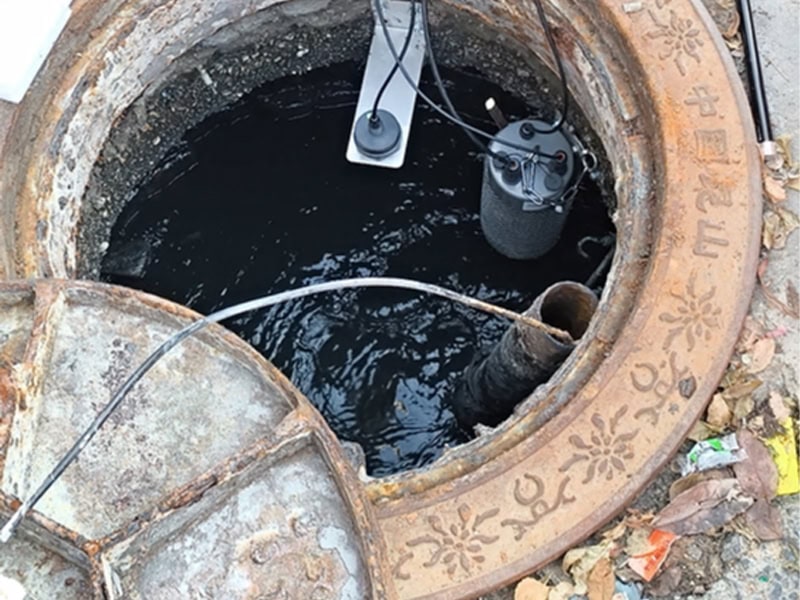
Most monitoring equipment is installed directly inside existing sewer manholes. However, these environments are challenging. High humidity, flooding, sludge, debris, and corrosive gases can all affect equipment life and measurement reliability.
Based on more than ten years of field experience, this article explains a standardized installation method for water quality monitoring instruments in sewer manholes, providing practical guidance for installation and O&M teams.
Challenges of Installing Monitoring Equipment in Sewer Manholes
Urban drainage manholes are underground confined spaces. Before installing any monitoring equipment, several environmental conditions must be considered.
High Humidity
Sewer manholes remain humid throughout the year.
Metal components, brackets, connectors, and cables can corrode if unsuitable materials are used.
Risk of Flooding
During the rainy season or periods of high upstream flow, the water level inside the manhole may rise significantly.
In some cases, water can reach the middle or even upper section of the manhole.
Sludge and Floating Debris
Sludge commonly accumulates at the bottom of drainage pipes.
Floating waste can also move through the pipeline and strike, cover, or become entangled with water quality sensors.
Corrosive Gases
Wastewater decomposition can produce hydrogen sulfide and other corrosive gases.
These gases may gradually damage equipment enclosures, metal components, cable connections, and other exposed parts.
How the Sewer Manhole Water Quality Monitoring System Works
The operating principle is relatively simple.
Water quality sensors → RTU monitoring unit → Wireless transmission → Central monitoring platform
Sensors are immersed directly in the wastewater flowing through the drainage pipe.
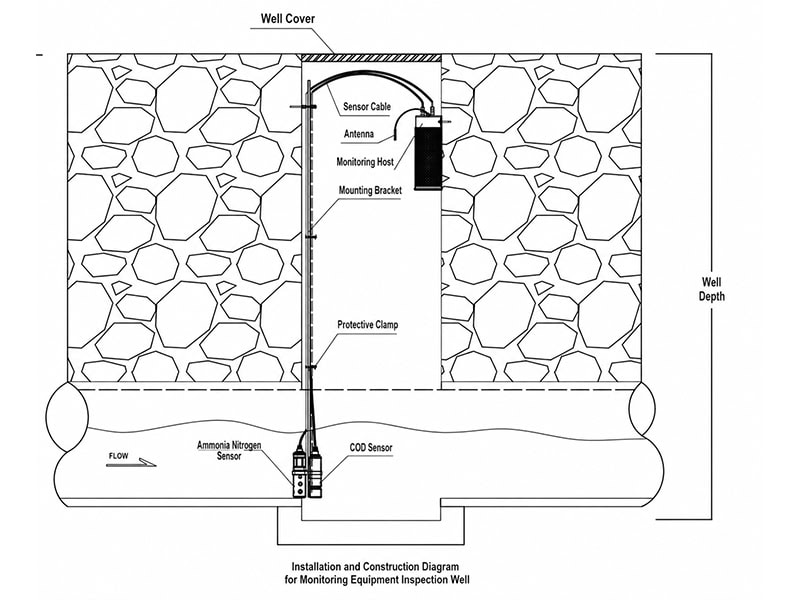
The sensor cables transmit measurement signals to an integrated Remote Terminal Unit (RTU) installed inside the manhole.
After processing and storing the data, the RTU uses a communication antenna to transmit monitoring information wirelessly to the central management platform.
The entire monitoring system can be installed inside the existing manhole.
There is no need to construct a separate monitoring station or significantly modify the road surface, making this approach particularly suitable for upgrading existing urban drainage networks.
Equipment Required for a Complete Monitoring System
A typical sewer manhole water quality monitoring system includes the following components:
- Water quality sensors: pH, DO, turbidity, COD, and ammonia nitrogen sensors directly contact the wastewater and collect water quality data.
- Integrated RTU monitoring unit: Processes sensor signals, stores monitoring data, and communicates with the remote management platform.
- Vertical mounting pole: Supports the sensors and allows their installation height to be adjusted.
- Sensor mounting clamps: Secure the sensors firmly to the mounting pole.
- RTU protective bracket: A perforated 304 stainless steel protective cage shields the monitoring unit from physical impact.
- Mounting fasteners: 304 stainless steel M8 × 90 expansion bolts secure the protective cage to the manhole wall.
- Sensor cables: Connect the sensors to the RTU and transmit measurement signals.
- Communication antenna: Provides wireless communication between the underground RTU and the remote monitoring platform.
Standard Installation Guidelines
Water Quality Sensor Installation
The vertical mounting pole should be installed securely against the manhole wall and fixed with multiple clamps.
Sensors are mounted near the lower end of the pole, with the sensing probes extending into the flowing wastewater.
The most important requirement is simple:
The sensing probes must remain in the main wastewater flow.
Do not install them directly in the sludge layer at the bottom of the pipe.
If a sensor becomes buried in sludge, measurements may no longer represent actual wastewater conditions, and the probe may also suffer from fouling or physical damage.
Cable Installation
Sensor cables should run upward along the mounting pole.
Leave a small amount of slack to prevent flowing water or debris from pulling directly on the cable connections.
Avoid leaving cables loose inside the manhole.
Loose cables can become entangled with floating debris or damaged during high-flow conditions.
Choosing the Monitoring Location
Whenever possible, select a manhole located along a straight section of the drainage pipeline.
Avoid installation points near:
- Pipe bends
- Drop structures
- Strong vortex zones
- Areas with severe turbulence
This reduces the mechanical impact of water flow and debris on the sensors.
Key point: The sensor should not be buried in sludge, but it should also not become exposed when the water level drops.
The installation height should keep the sensing element immersed whenever wastewater is flowing through the pipe.
RTU Installation and Protection
Use a Stainless Steel Protective Cage
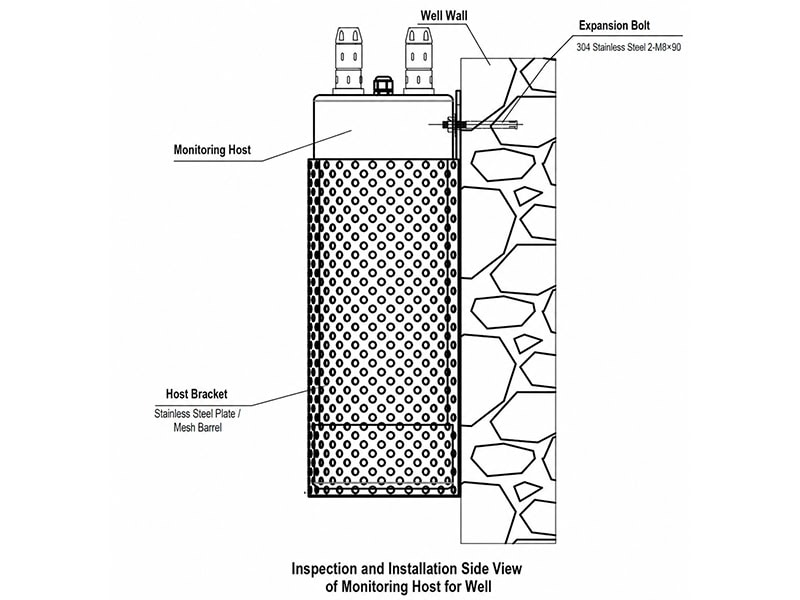
The monitoring RTU should be installed inside a 304 stainless steel perforated protective cage.
The cage protects the RTU from stones, tools, floating debris, and accidental impact during maintenance work.
Its perforated design also allows ventilation around the equipment.
Secure the RTU to the Manhole Wall
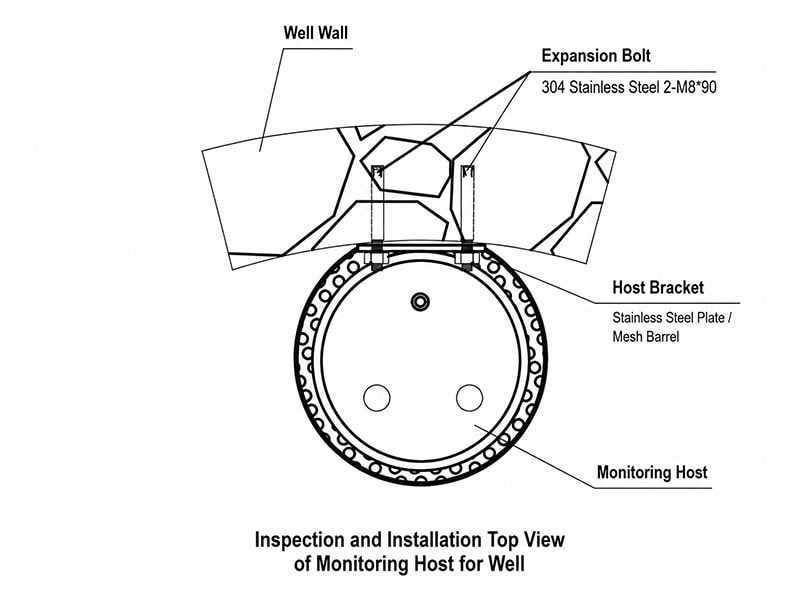
Use two sets of 304 stainless steel M8 × 90 expansion bolts to secure the protective cage firmly to the manhole wall.
The mounting structure must withstand vibration and the buoyancy forces that may occur when the water level rises.
Keep the RTU Above the Highest Historical Water Level
From a top-view perspective, the RTU and protective cage should not protrude excessively into the manhole.
Adequate working space should remain for inspection, maintenance, and sewer cleaning.
More importantly, the RTU installation height must remain above the highest historical flood level inside the manhole.
Never install the RTU where it can remain submerged during flooding.
Optimize Antenna Position
Wireless signals can be significantly weakened underground.
Place the communication antenna as close to the manhole cover as practical and avoid unnecessary obstruction from reinforced concrete walls.
A suitable antenna position helps maintain stable 4G/5G communication and reduces interruptions in data transmission.
Critical Installation Points
Use Corrosion-Resistant Materials
Manholes are humid and corrosive environments.
Mounting poles, brackets, clamps, and bolts should therefore use 304 stainless steel to reduce corrosion and prevent structural failure.
A corroded mounting structure can eventually break and allow monitoring equipment to fall into the drainage pipe.
Match Installation Height to Water Level Changes
Before installation, investigate historical water levels at the monitoring point.
The RTU should remain above the maximum expected water level.
At the same time, sensors should be positioned so that they remain in contact with wastewater under both rainy-season and dry-season conditions.
Protect Sensor Cables
Secure cables along the mounting pole instead of leaving them suspended freely.
This reduces the risk of floating debris damaging the cable jacket.
Cable connections should also receive appropriate waterproof protection.
Consider Future Maintenance
Do not install equipment in inaccessible corners of the manhole.
Leave enough working space for:
- Sensor cleaning
- Calibration
- RTU inspection
- Cable replacement
- Temporary sensor removal
Good installation design should make future maintenance easier, not harder.
Confined-Space Safety Comes First
Sewer manholes are confined spaces.
Before personnel enter a manhole, follow applicable confined-space procedures, including ventilation and testing for hazardous gases.
Appropriate supervision and safety procedures are essential during installation and maintenance.
Benefits of This Installation Method
Uses Existing Manhole Infrastructure
There is no need to construct a separate monitoring station.
This reduces installation costs and makes it easier to deploy monitoring points across a large urban drainage network.
Provides Direct In-Situ Measurement
Sensors measure wastewater directly inside the drainage pipe.
No sampling pump is required, reducing the risk of blocked sampling lines and measurement problems caused by sample transport.
Better Protection in Harsh Underground Conditions
The stainless steel protective cage shields the RTU from accidental impact and debris.
The overall installation structure is designed specifically for complex underground drainage environments.
Easier Routine Maintenance
The modular installation design makes sensors easier to remove, clean, calibrate, and reinstall.
This can significantly simplify long-term O&M work across multiple monitoring locations.
Conclusion
In-situ water quality monitoring in sewer manholes is a practical approach for smart urban drainage management.
However, proper installation involves much more than simply placing sensors inside a sewer pipe.
Engineers must consider manhole dimensions, historical water levels, wastewater flow, sludge accumulation, equipment protection, cable routing, communication conditions, and future maintenance requirements.
A standardized installation can reduce equipment failures, extend sensor service life, and provide more stable and reliable water quality data.
Reliable monitoring data can then support stormwater-sewage separation, pollution source tracing, and urban drainage network management.
FAQ
Why shouldn’t the RTU simply be mounted directly on the manhole wall without a stainless steel protective cage?
During sewer cleaning and maintenance, tools, stones, and floating debris can easily strike the RTU.
The stainless steel cage provides physical protection against accidental impact. Its perforated structure also allows ventilation around the equipment.
Can water quality sensors be installed at the bottom of the drainage pipe?
It is generally not recommended.
Sludge accumulates at the bottom of drainage pipes. If a probe becomes buried in sludge, the measurement may no longer represent the actual flowing wastewater.
Sludge can also cause sensor fouling, blockage, and physical wear.
The sensor should therefore be positioned in the main flowing section of the wastewater and above the sludge layer.
What should I do if the underground RTU frequently loses communication?
First, position the antenna closer to the manhole cover and minimize obstruction from reinforced concrete structures.
Second, consider using a higher-gain communication antenna.
When selecting monitoring locations, prioritize manholes without thick soil or structures above the cover whenever possible.
Can the sensors and RTU withstand the environment inside a sewer manhole?
The sensors used in this application feature anti-fouling designs for wastewater monitoring.
The RTU is mounted on the manhole wall and has an IP68 protection rating, allowing the monitoring system to operate under demanding underground conditions.
However, installation location and protection remain important for long-term reliability.
Will rising water levels during the rainy season damage the monitoring equipment?
Historical maximum water levels must be checked before installation.
The RTU mounting position should remain above the highest expected water level.
Sensors are designed for immersion, but the monitoring RTU should not be installed where it may remain underwater.
For manholes that frequently flood, raise the RTU installation position or consider selecting another monitoring location.
Can sewer cleaning damage the monitoring equipment?
It can if the installation is poorly planned.
Monitoring equipment should not obstruct access inside the manhole, and maintenance teams should be informed about the monitoring installation before cleaning begins.
Sensors can be temporarily raised or removed before sewer cleaning and returned to their original position afterward.
Quick-release mounting clamps can make this process easier.
What if the wall of an old manhole is too weak for expansion bolts?
Old or deteriorated concrete may not provide enough holding strength for standard expansion bolts.
In this situation, a custom mounting clamp or support structure can be used instead of relying only on expansion bolts.
The final mounting method should provide enough mechanical strength to prevent the protective bracket and monitoring equipment from becoming loose or falling into the sewer.