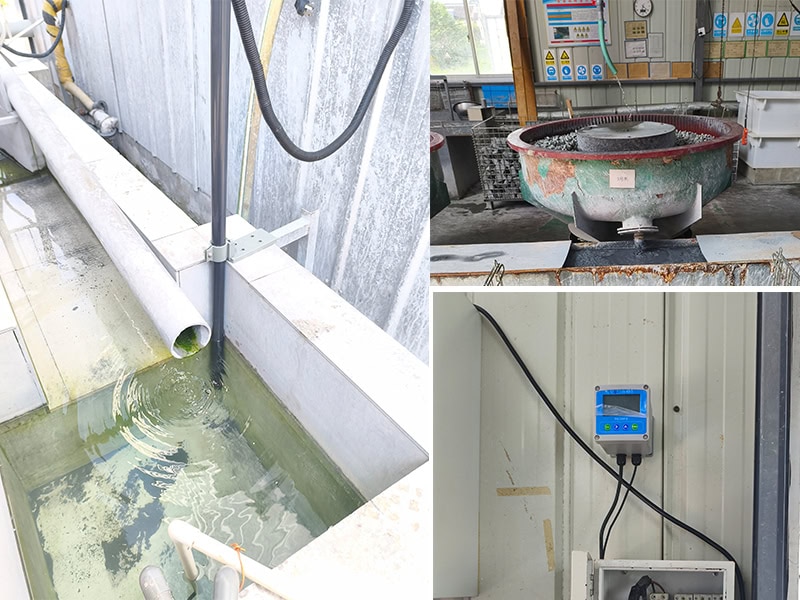
Industry Challenges
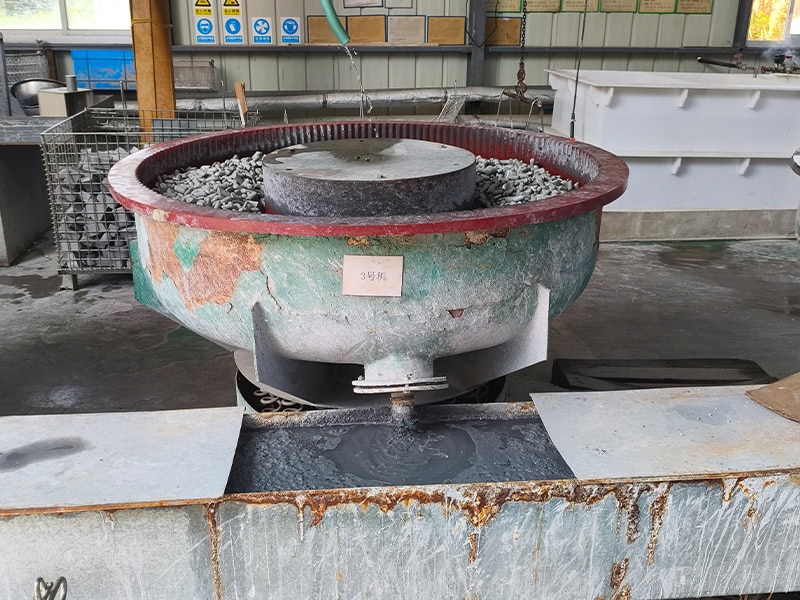
Aluminum alloy vibratory finishing, also known as vibratory polishing, is an important surface treatment process for aluminum components. A vibratory finishing machine uses high-frequency friction between abrasive media and workpieces to remove burrs, oxide scale, and machining marks, creating a smoother and brighter surface.
During this process, chemicals such as grinding compounds, polishing agents, and cleaning agents are added. Water is continuously supplied to keep the workpieces and abrasive media wet, while a certain amount of wastewater is discharged after finishing.
This wastewater contains not only large quantities of metal debris and fine suspended particles, but also difficult-to-degrade organic contaminants originating from polishing agents and degreasers.
A large aluminum alloy manufacturer with an annual production capacity of tens of thousands of tons generates a considerable amount of vibratory finishing wastewater every day. The main water quality parameters of concern include pH, COD, suspended solids (SS), and petroleum-related pollutants.
Because the grinding compound contains water, glycerol stearate, and Na₂CO₃, the wastewater is slightly alkaline, typically with a pH of approximately 8–8.5. The wastewater contains a high concentration of inorganic contaminants, with suspended solids representing one of the major treatment challenges.
The facility currently uses a pH adjustment + coagulation and sedimentation process.
Wastewater first enters the pH adjustment tank, where acid or alkali is added to adjust the pH to approximately 8–9, providing suitable conditions for flocculation. The wastewater then enters the sedimentation tank for solid-liquid separation.
However, controlling the pH at the sedimentation tank outlet presents several important operational challenges.
Sedimentation Tank Outlet pH Is a Critical Compliance Checkpoint
After coagulation and sedimentation, the clarified water is either discharged or sent to subsequent advanced treatment.
Whether the final pH remains within the required 6–9 range directly affects wastewater discharge compliance.
However, chemical dosing in the upstream pH adjustment tank often depends heavily on operator experience. Limited dosing accuracy can result in fluctuations in the sedimentation tank outlet pH, increasing uncertainty before discharge.
Manual Sampling Cannot Detect pH Deviations Quickly Enough
Under the traditional operating model, operators periodically collect samples from the sedimentation tank outlet and manually measure pH.
The problem is the low testing frequency and delayed feedback.
If pH begins to move outside the target range between two sampling events, operators may not detect the problem for several hours or even longer.
During this period, off-specification wastewater may continue flowing toward the final discharge point, causing operators to miss the best opportunity for corrective action.
Lack of Closed-Loop pH Control
When the sedimentation tank outlet pH becomes too high or too low, operators traditionally need to identify the deviation through manual sampling and then manually adjust acid or alkali dosing upstream.
This measurement → judgment → adjustment process is too slow for continuously changing wastewater conditions.
The problem becomes particularly important when the outlet wastewater is excessively alkaline.
Acid must be added quickly to bring the pH back into the required range. With manual control, however, the dosing quantity is usually estimated based on experience, which can easily result in either insufficient correction or excessive dosing.
No Immediate Warning for pH Excursions
The sedimentation tank outlet is one of the final checkpoints before wastewater discharge.
If pH exceeds the permitted range at this stage, the treated wastewater may already be approaching the municipal sewer network or the next discharge stage.
Without continuous monitoring and immediate alarms, abnormal wastewater could be discharged before operators recognize the problem.
This increases both environmental compliance risks and potential reputational losses for the manufacturer.
These challenges demonstrate why installing an online pH monitoring system at the sedimentation tank outlet is important for aluminum alloy vibratory finishing wastewater treatment.
Continuous 24/7 monitoring, real-time alarms, and closed-loop chemical dosing provide a more reliable way to maintain stable outlet pH and reduce discharge risks.
Technical Solution for Online pH Monitoring
Real-Time pH Monitoring at the Sedimentation Tank Outlet
To address the pH control requirements of aluminum alloy vibratory finishing wastewater, an online monitoring and intelligent closed-loop dosing solution was deployed specifically at the sedimentation tank outlet.
The system focuses on continuous pH measurement, abnormal condition detection, automatic chemical dosing, and centralized data management.
Core Monitoring Instruments
Online pH Analyzer
The online pH analyzer uses the glass electrode measurement principle and is equipped with a specially designed glass-sensitive membrane resistant to strong acids and alkalis.
Its optimized reference system helps reduce electrode poisoning and reference instability under challenging wastewater conditions.
The analyzer is designed for continuous monitoring in wastewater containing relatively high levels of suspended solids and organic contaminants.
It provides 24/7 continuous pH monitoring at the sedimentation tank outlet.
The measuring range covers 0.00–14.00 pH, with a resolution of 0.01 pH, providing the measurement capability required for pH control in vibratory finishing wastewater treatment.
Critical Monitoring Point
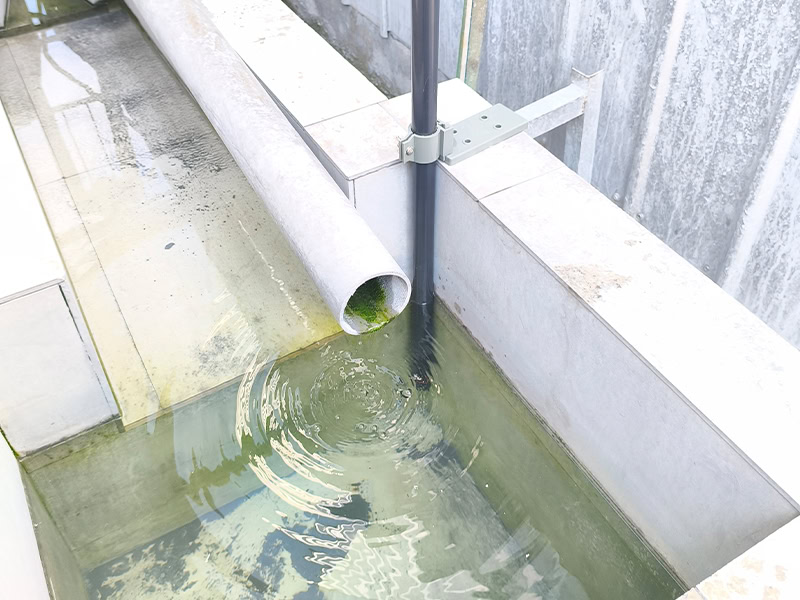
The online pH sensor is installed at the sedimentation tank outlet, such as near the overflow weir or outlet pipe.
This location continuously captures changes in the pH of treated wastewater.
Because it is one of the final water quality checkpoints before wastewater discharge, it is also one of the most important monitoring locations in the entire treatment process.
Monitoring data is transmitted to the central control platform through RS485 communication.
Closed-Loop Dosing Control
The online pH monitoring system is integrated with the outlet pH adjustment system to create an intelligent closed-loop control process.
Real-Time Outlet pH Measurement
The pH analyzer installed at the sedimentation tank outlet operates continuously, measuring the outlet pH 24 hours a day.
Every change in pH can be detected and transmitted to the control system without waiting for the next manual sampling cycle.
Intelligent Acid Dosing
When the outlet pH exceeds the preset compliance range—for example, pH > 9—the control system can automatically activate the acid dosing system.
Based on the real-time pH deviation, the system adjusts the dosing of acid, such as sulfuric acid or hydrochloric acid, to bring the wastewater pH back into the required 6–9 range.
When the outlet pH returns to the target range, the dosing system automatically stops or maintains a low dosing rate according to the control strategy.
This avoids unnecessary chemical consumption while reducing the risk of overcorrection.
Automatic Closed-Loop Control
The entire process follows a continuous control loop:
pH monitoring → Data transmission → Control algorithm → Dosing command → Measurement feedback
Instead of requiring operators to manually measure, judge, and adjust the process, the system continuously responds to changing wastewater conditions.
As a result, the response time can be reduced from hours to seconds.
Dual Protection at the Final Discharge Point
An additional online pH monitoring instrument can also be installed at the final discharge outlet.
The sedimentation tank outlet measurement and final discharge measurement can then verify each other, providing an additional layer of protection before wastewater leaves the treatment system.
Smart Operation and Maintenance
All pH monitoring data is transmitted to the O&M management platform, enabling more digital and intelligent wastewater treatment management.
Real-Time pH Display and Trend Monitoring
Operators can view the current sedimentation tank outlet pH and its historical trend on the same interface.
Continuous trend monitoring makes it easier to identify gradual pH drift before it develops into a serious compliance problem.
Automatic Alarm for Out-of-Range pH
When the outlet pH exceeds the preset threshold, the system can send an alarm to O&M personnel within seconds.
Alarm notifications can be delivered through multiple channels, including mobile messages and APP notifications.
This allows operators to respond much faster than with periodic manual sampling.
Historical Data and Automatic Reports
Monitoring data is automatically stored by the system.
Historical pH curves, daily reports, and monthly reports can be generated for process analysis and environmental compliance management.
These records provide traceable evidence during environmental inspections.
Remote Equipment Monitoring
O&M personnel can remotely check the operating status of monitoring equipment.
When an instrument or sensor shows abnormal conditions, maintenance teams can identify the issue and respond more quickly.
Key Equipment Advantages
Anti-Fouling Electrode Design
Even after sedimentation, vibratory finishing wastewater may still contain fine suspended particles.
When conventional pH electrodes remain immersed in this type of wastewater for long periods, deposits can gradually accumulate on the sensing surface, resulting in increased measurement deviation and slower response.
The pH electrode used in this application features a special glass-sensitive membrane resistant to strong acids and alkalis, together with an optimized reference system.
This design helps reduce electrode poisoning and reference instability.
When combined with an automatic cleaning device, it can also reduce the frequency of manual sensor cleaning and improve long-term measurement stability.
Industrial-Grade Reliability
The monitoring instrument incorporates a watchdog circuit to reduce the risk of system crashes during continuous operation.
It also supports automatic data recovery and retransmission after a temporary power interruption, helping prevent monitoring data from being lost.
With an IP68 protection rating, the monitoring equipment is designed to operate in the humid and potentially corrosive environment of an industrial wastewater treatment facility.
Flexible Communication and Output
The analyzer supports both 4–20 mA analog output and RS485 digital communication.
This allows the monitoring instrument to integrate with chemical dosing systems, PLCs, and centralized management platforms.
Technical Specifications of the Online pH Analyzer
| Parameter | Specification |
|---|---|
| Measuring Range | 0.00–14.00 pH |
| Resolution | 0.01 pH |
| Intrinsic Error | 0.1 pH |
| Stability | ≤0.01 pH/24 h |
| Temperature Compensation | Automatic or manual, 0–110°C |
| Electrode Features | Acid- and alkali-resistant glass-sensitive membrane, optimized reference system, anti-fouling design |
| Signal Output | 4–20 mA (load <750 Ω) + RS485 |
| Protection Rating | IP68 |
| Applications | Sedimentation tank outlet, vibratory finishing wastewater, high-suspended-solids wastewater |
Field-Tested O&M Efficiency Improvements
After deploying the online pH monitoring and intelligent acid dosing control system at the sedimentation tank outlet, the aluminum alloy manufacturer achieved several measurable improvements.
Significantly Improved Outlet pH Control
The sedimentation tank outlet pH became continuously visible, allowing operators to monitor treated wastewater conditions 24 hours a day.
The time required to detect pH deviations was reduced from several hours to only a few seconds, improving abnormal-condition response speed by more than 99%.
The outlet pH remained stable within the required 6–9 range, significantly reducing the risk of non-compliant wastewater discharge.
Annual Chemical Consumption Reduction
The intelligent acid dosing system calculates chemical demand according to real-time pH measurements.
Acid is added only when correction is required.
This reduced acid consumption by approximately 30–50%.
More precise pH adjustment also prevents excessive neutralization, which can otherwise push pH in the opposite direction and waste additional chemicals.
Overall acid and alkali adjustment costs were reduced by approximately 20–30%.
Annual Labour Cost Optimisation
The sedimentation tank outlet pH is measured continuously and automatically, reducing the need for scheduled manual sampling.
The acid dosing adjustment process also operates automatically.
As a result, O&M personnel spend less time performing repetitive manual measurements and dosing adjustments.
This reduces routine workload and the frequency of on-site inspections.
Compliance Assurance
Continuous monitoring helps maintain stable pH at the sedimentation tank outlet and provides an additional safeguard for final wastewater discharge.
The treated wastewater meets the relevant requirements of China’s Integrated Wastewater Discharge Standard (GB 8978-1996) as stated for this project.
The system also automatically generates complete and traceable pH monitoring records, providing data support for environmental inspections and internal compliance management.
Digital Operation Management Metrics
| Indicator | Before Deployment | After Deployment |
|---|---|---|
| pH Monitoring | Periodic manual sampling with only several measurements per day | 24/7 continuous online monitoring at the sedimentation tank outlet |
| pH Deviation Detection | Several hours or even days | Detected within seconds |
| Outlet pH Control | Manual upstream dosing adjustment after sampling | Automatic closed-loop acid dosing based on real-time outlet pH |
| Outlet pH Compliance Rate | <85% | >99% |
| Alarm Mechanism | None | Immediate pH alarm with multi-channel notification |
| Data Traceability | Paper records, difficult to retrieve | Automatic storage with historical trend tracking |
| Acid Consumption | Experience-based dosing, often excessive | Real-time dosing control, reducing acid consumption by 30–50% |
Conclusion
By installing an online pH monitoring system at the sedimentation tank outlet and integrating it with an intelligent acid dosing system, the aluminum alloy manufacturer achieved five important goals:
Continuous visibility, faster response, more precise dosing, lower chemical consumption, and more reliable compliance.
The sedimentation tank outlet is one of the last critical checkpoints before treated wastewater is discharged.
Controlling pH at this point therefore provides an important safeguard against non-compliant discharge.
The solution combines real-time outlet pH monitoring with intelligent closed-loop acid dosing, ensuring that every change in pH can be detected quickly and corrected when necessary.
Instead of relying on periodic sampling and operator experience, the wastewater treatment process can move toward data-driven and automated pH control.
For aluminum alloy manufacturers using vibratory grinding or finishing processes, continuous pH monitoring can provide more than a single water quality measurement.
It creates a direct link between measurement, alarms, chemical dosing, process adjustment, and compliance management.
By making the sedimentation tank outlet continuously measurable and controllable, manufacturers can reduce chemical waste, simplify routine O&M, and improve the reliability of wastewater discharge management.