Challenges of Specialty Gas Wastewater Treatment
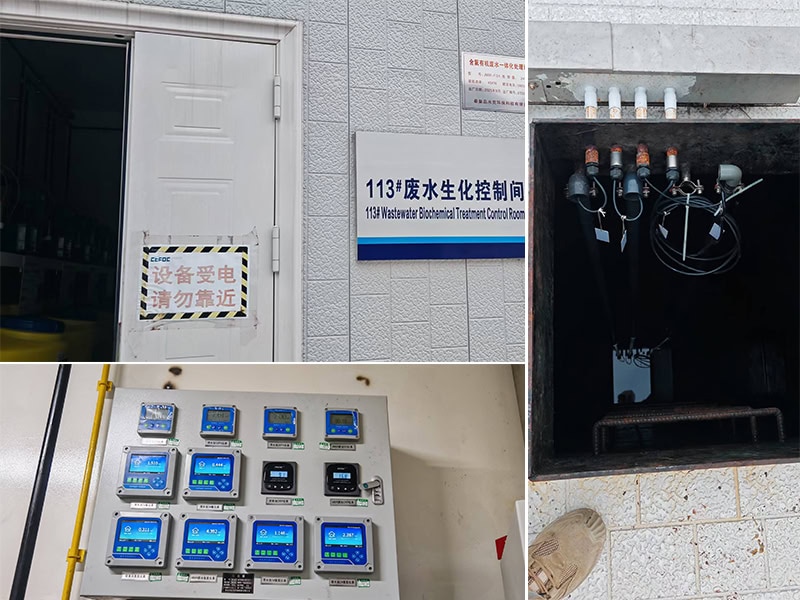
Why Specialty Gas Wastewater Requires Advanced Monitoring
Specialty gases are an important part of advanced manufacturing industries.
Their production processes involve electronic specialty gases, chemical precursors, and fluorinated materials.
However, these processes generate highly complex industrial wastewater.
Compared with conventional wastewater, specialty gas wastewater usually has:
- High fluoride concentration
- Complex chemical composition
- Strong corrosion characteristics
- Poor biodegradability
These characteristics create significant challenges for wastewater treatment systems.
Stable operation requires not only advanced treatment processes but also reliable online monitoring and automatic control.
A specialty gas manufacturer developed a patented fluoride wastewater zero-liquid-discharge treatment process (Publication No. CN122325043A).
The process includes:
Three-stage reaction sedimentation → Softening → Membrane concentration → Evaporation crystallization
In this complex treatment system, an industrial wastewater monitoring system plays a critical role.
Online instruments provide continuous data throughout the entire process, including:
- Fluoride removal stages
- Sedimentation control
- pH adjustment
- Final discharge monitoring
This article focuses on four key treatment units:
- Primary sedimentation tank
- Secondary sedimentation tank
- Chlorine removal mixing tank
- Final pH adjustment tank
It explains how online monitoring improves treatment stability, chemical control, and environmental compliance.
Primary Sedimentation Tank: Sludge Interface and Fluoride Monitoring
The First Stage of Calcium-Based Fluoride Removal
The first treatment stage uses calcium-based chemical precipitation to remove fluoride from wastewater.
Calcium hydroxide or calcium chloride is added to react with fluoride ions.
The main reaction is:
Ca²⁺ + 2F⁻ → CaF₂↓
The generated calcium fluoride forms solid particles and settles at the bottom of the sedimentation tank.
The performance of this stage directly affects:
- Fluoride removal efficiency
- Downstream treatment load
- Overall system stability
Dual Monitoring Requirements in Sedimentation Process
The primary sedimentation tank requires two important measurements.
Sludge Interface Monitoring
The sludge layer height directly affects sedimentation efficiency.
If the sludge interface becomes too high:
- More solids may enter the next treatment stage
- Downstream treatment load increases
If sludge accumulation becomes excessive:
- Effective tank volume decreases
- Sedimentation performance declines
A sludge interface analyzer provides continuous monitoring of sludge level changes.
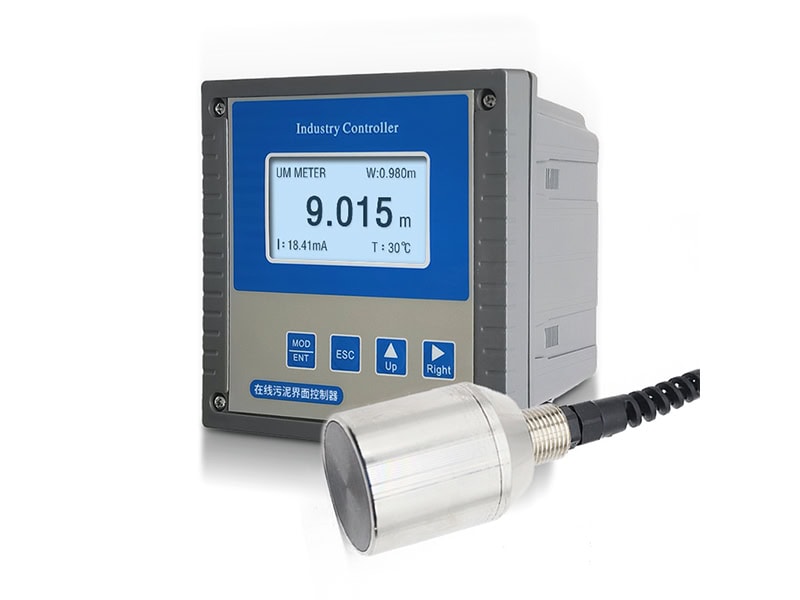
This allows operators to optimize sludge discharge timing and maintain stable sedimentation performance.
Fluoride Concentration Monitoring
Fluoride concentration after primary treatment is an important indicator of chemical dosing performance.
If fluoride remains too high:
- Calcium dosage may be insufficient
- Fluoride removal efficiency decreases
If fluoride concentration is too low:
- Chemical consumption may increase unnecessarily
- Operating costs rise
Therefore, an online fluoride analyzer provides essential data for optimizing calcium dosing.
Online Monitoring Solution: Sludge Interface Analyzer + Fluoride Analyzer
The primary sedimentation tank uses two online monitoring devices:
- Ultrasonic sludge interface analyzer
- Online fluoride analyzer
The sludge interface analyzer uses ultrasonic measurement technology.
The sensor sends ultrasonic signals into wastewater and detects the reflection from the sludge-water boundary.
By analyzing signal changes, the instrument calculates sludge interface height in real time.
This helps achieve:
- Automatic sludge control
- Stable sedimentation operation
- Reduced manual inspection requirements
The online fluoride analyzer uses the ion-selective electrode (ISE) method.
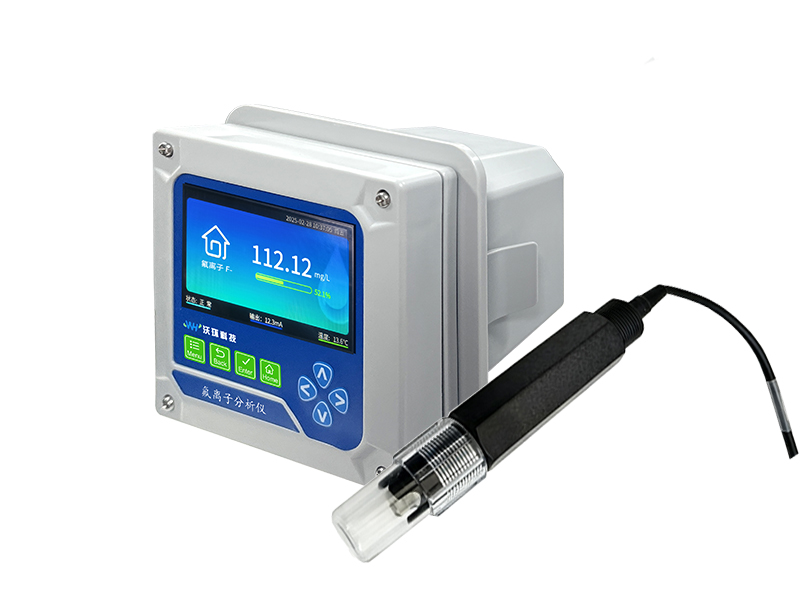
The fluoride electrode measures the electrical potential generated by fluoride ion activity and converts it into fluoride concentration data.
The analyzer provides real-time fluoride monitoring and supports measurement ranges up to:
0–9990 mg/L
Both monitoring devices connect to the PLC control system.
The sludge interface analyzer controls sludge discharge operation.
The fluoride analyzer provides feedback for calcium chemical dosing adjustment.
Together, they create a more stable and efficient fluoride removal process.
Secondary Sedimentation Tank: Advanced Fluoride Removal Control
Deep Fluoride Removal Process and Monitoring Requirements
After the primary sedimentation process, wastewater enters the secondary coagulation and sedimentation stage.
The main purpose of this stage is to further reduce fluoride concentration through the addition of composite fluoride removal chemicals.
These chemicals usually contain aluminum salts, iron salts, or other combined treatment agents.
The efficiency of this process directly affects whether the wastewater can meet the requirements of downstream membrane treatment.
Compared with the primary sedimentation tank, the secondary sedimentation stage requires more precise monitoring.
The main challenges include:
- Higher fluoride removal accuracy requirements
- Smaller and slower-settling sludge particles
- Potential interference from chemical additives
Dual Monitoring Solution for Secondary Sedimentation
The secondary sedimentation tank continues to use the combined monitoring solution:
- Sludge interface analyzer
- Online fluoride analyzer
The sludge interface analyzer is especially important at this stage.
Because secondary treatment produces finer flocs, sludge settling characteristics may change more frequently.
Real-time sludge interface monitoring helps operators:
- Optimize sludge discharge timing
- Maintain effective sedimentation volume
- Reduce sludge overflow risks
The online fluoride analyzer provides continuous fluoride concentration data after deep fluoride removal.
This allows operators to adjust composite fluoride removal chemical dosage more accurately.
By connecting monitoring data with the automatic control system, the process can achieve:
- More stable fluoride removal performance
- Reduced chemical waste
- Better protection for downstream membrane systems
Chlorine Removal Mixing Tank: Dual Monitoring of Fluoride and pH
Process Background: Controlling Chlorine Removal Conditions
During specialty gas production, some processes may generate chlorine-containing wastewater.
Examples include:
- Chlorinated solvent wastewater
- Hydrogen chloride absorption wastewater
Chloride-related pollutants can create additional challenges for wastewater treatment.
High chloride concentration may:
- Increase equipment corrosion risks
- Affect downstream membrane treatment performance
The chlorine removal mixing tank uses chemical treatment to convert chlorine-related compounds into removable forms.
The efficiency of this reaction strongly depends on pH conditions.
Different chlorine removal chemicals require different optimal pH ranges.
If pH conditions are not properly controlled, removal efficiency may decrease.
Monitoring Challenges: Maintaining Fluoride and pH Stability
The chlorine removal process requires two key parameters to be monitored.
Fluoride Concentration Monitoring
After the primary and secondary fluoride removal stages, wastewater may still contain residual fluoride.
Continuous monitoring ensures fluoride levels remain within acceptable limits.
This prevents:
- Interference with chlorine removal reactions
- Potential damage to downstream membrane systems
pH Control During Chlorine Removal
pH directly affects chemical reaction efficiency.
If pH deviates from the optimal range:
- Chemical reaction performance decreases
- Chemical consumption increases
Therefore, real-time pH monitoring is essential for stable chlorine removal operation.
Online Monitoring Solution: Fluoride Analyzer + pH Analyzer
The chlorine removal mixing tank uses:
- Online fluoride analyzer
- Industrial pH monitoring system
The fluoride analyzer provides continuous monitoring of residual fluoride concentration.
Using the ion-selective electrode method, it delivers fast and reliable fluoride measurement data.
The industrial pH monitoring system continuously measures wastewater pH conditions.
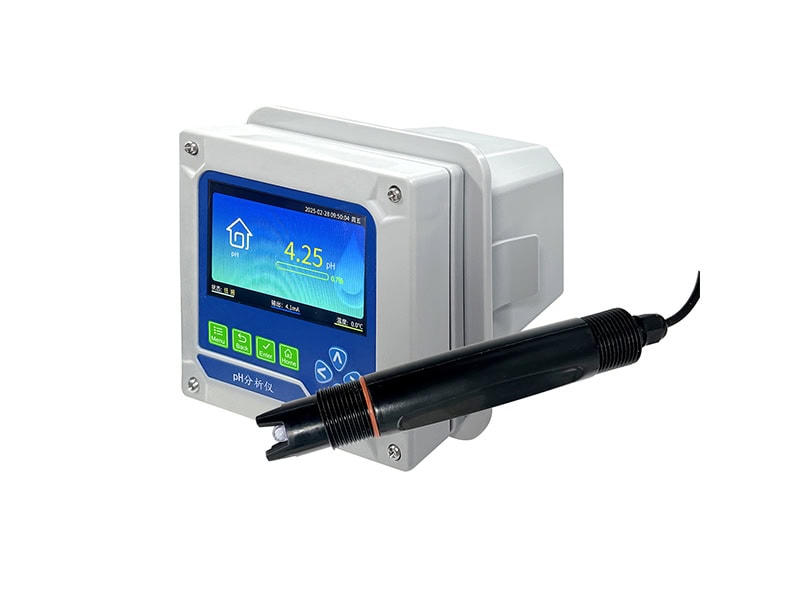
The measurement signal is transmitted through:
- 4–20 mA output
- RS485 Modbus communication
to the PLC/DCS control system.
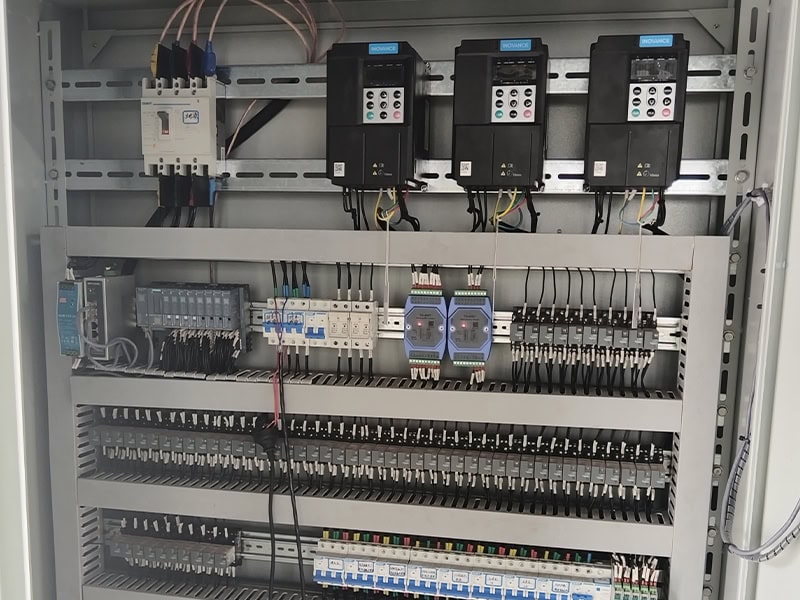
Based on real-time pH data, the system can automatically adjust acid or alkali dosing.
This creates a closed-loop control process for chemical treatment.
Final pH Adjustment Tank: The Last Protection Barrier for Discharge Compliance
Final pH Control Before Wastewater Discharge
After multiple treatment stages, including:
- Reaction sedimentation
- Softening
- Membrane concentration
wastewater pH may shift due to chemical reactions during treatment.
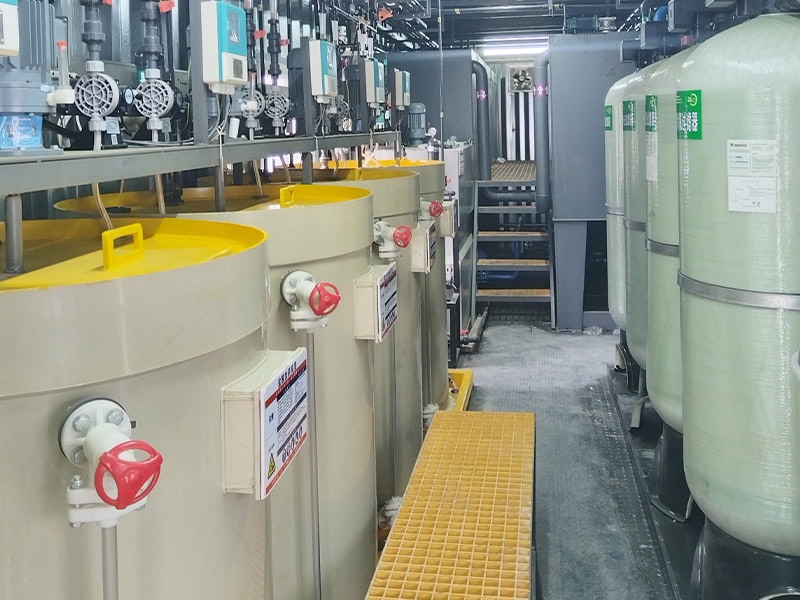
Before final discharge, the pH adjustment tank performs the final correction process.
If wastewater is too acidic, alkaline chemicals are added.
If wastewater is too alkaline, acid dosing is applied.
The final target is to maintain wastewater discharge within:
pH 6–9
Monitoring Requirements for Final Compliance Control
The final pH adjustment stage has several critical monitoring requirements.
Reliable pH Measurement
The final discharge point is directly related to environmental compliance.
Incorrect pH measurement may create:
- Compliance risks
- Incorrect dosing decisions
- Unstable discharge quality
Low Conductivity Wastewater Challenges
After advanced treatment processes, wastewater conductivity may become relatively low.
Low ionic strength conditions can affect conventional pH electrode performance.
Therefore, the system requires an industrial pH electrode designed for stable measurement in low-conductivity environments.
Data Recording and Environmental Reporting
Environmental regulations require:
- 24/7 continuous monitoring
- Automatic data storage
- Traceable measurement records
Online monitoring data provides complete records for environmental inspections and compliance verification.
Final pH Monitoring Solution: Ensuring Stable and Compliant Discharge
Industrial pH Monitoring System for Final Discharge Control
The final pH adjustment tank uses an industrial pH monitoring system as the key measurement solution.
The pH analyzer continuously measures wastewater conditions before discharge.
When the pH value meets the required range, wastewater can be discharged safely.
If the pH value exceeds the limit, the system automatically controls acid or alkali dosing to restore the wastewater condition.
A reliable pH monitoring system should include:
- High-stability pH electrode
- Automatic temperature compensation
- Intelligent transmitter
- Data communication function
For low-conductivity wastewater after advanced treatment, the pH electrode must provide stable signal output under challenging conditions.
This helps avoid measurement drift and improves long-term monitoring reliability.
The pH signal is transmitted through:
- 4–20 mA output
- Digital communication such as RS485
to the environmental monitoring and control system.
The specialty gas company follows environmental monitoring requirements based on:
- HJ819-2017 Technical Guidelines for Self-Monitoring of Pollution Sources
- HJ1253-2022 Technical Guidelines for Self-Monitoring of Electronic Industry Pollution Sources
Regular monitoring data transmission provides a complete compliance record.
The final pH adjustment tank becomes the last protection barrier before wastewater discharge.
Complete Online Monitoring Configuration for Fluoride Wastewater Treatment
The specialty gas wastewater treatment system uses different monitoring instruments for different process stages.
Each instrument focuses on a specific control target.
| Treatment Unit | Process Function | Online Monitoring Equipment | Monitoring Parameters | Control Objective |
|---|---|---|---|---|
| Primary Sedimentation Tank | Initial calcium-based fluoride removal | Sludge Interface Analyzer + Fluoride Analyzer | Sludge level, fluoride concentration | Automatic sludge discharge control and calcium dosing optimization |
| Secondary Sedimentation Tank | Advanced fluoride removal | Sludge Interface Analyzer + Fluoride Analyzer | Sludge level, fluoride concentration | Precise sludge management and fluoride removal chemical control |
| Chlorine Removal Mixing Tank | Chlorine removal reaction control | Fluoride Analyzer + pH Monitoring System | Fluoride concentration, pH value | Stable reaction conditions and automatic chemical adjustment |
| Final pH Adjustment Tank | Final discharge pH correction | Industrial pH Monitoring System | pH value | pH 6–9 compliant discharge and environmental data reporting |
Application Benefits of Full-Process Online Monitoring
Improved Wastewater Treatment Stability
Traditional wastewater management often relies on periodic sampling.
This approach provides limited data and may miss sudden process changes.
With a complete industrial wastewater monitoring system, operators can continuously understand:
- Fluoride concentration changes
- Sludge settlement conditions
- pH fluctuations
Real-time data allows faster response to abnormal conditions.
This improves treatment stability and reduces operational risks.
Optimized Chemical Consumption
Chemical dosing is one of the major operating costs in fluoride wastewater treatment.
Without reliable monitoring, dosing is often based on experience.
Online monitoring provides real-time process data for:
- Calcium chemical dosing
- Fluoride removal agent adjustment
- Acid and alkali dosing control
This helps avoid:
- Excessive chemical consumption
- Insufficient treatment performance
- Increased sludge production
Improved Environmental Compliance Management
Industrial wastewater discharge requires continuous monitoring and reliable records.
Online monitoring systems provide:
- 24/7 measurement
- Automatic data storage
- Historical trend analysis
When abnormal conditions occur, operators receive early warnings and can adjust the treatment process immediately.
This helps companies reduce environmental compliance risks.
Conclusion: From Single Measurement to Full-Process Control
The application of online monitoring in specialty gas wastewater treatment demonstrates an important industry trend:
Complex industrial wastewater requires a complete monitoring system, not a single measuring instrument.
From:
- Primary sedimentation tank fluoride and sludge monitoring
- Secondary fluoride removal control
- Chlorine removal pH optimization
- Final discharge pH protection
each treatment stage requires a specific monitoring strategy.
In this system:
The sludge interface analyzer acts as the “eye” of the sedimentation process, continuously tracking sludge movement.
The online fluoride analyzer acts as the “sensor” for fluoride removal control, providing accurate concentration data.
The industrial pH monitoring system acts as the final safeguard, ensuring wastewater discharge remains within compliance requirements.
When every treatment stage is supported by accurate online measurement, wastewater treatment systems can achieve:
- More stable operation
- Better chemical control
- Lower environmental risks
- Improved long-term reliability
For specialty gas manufacturers and other high-risk industrial industries, online multi-parameter monitoring is becoming an essential technology for achieving efficient wastewater treatment and sustainable production.