Introduction
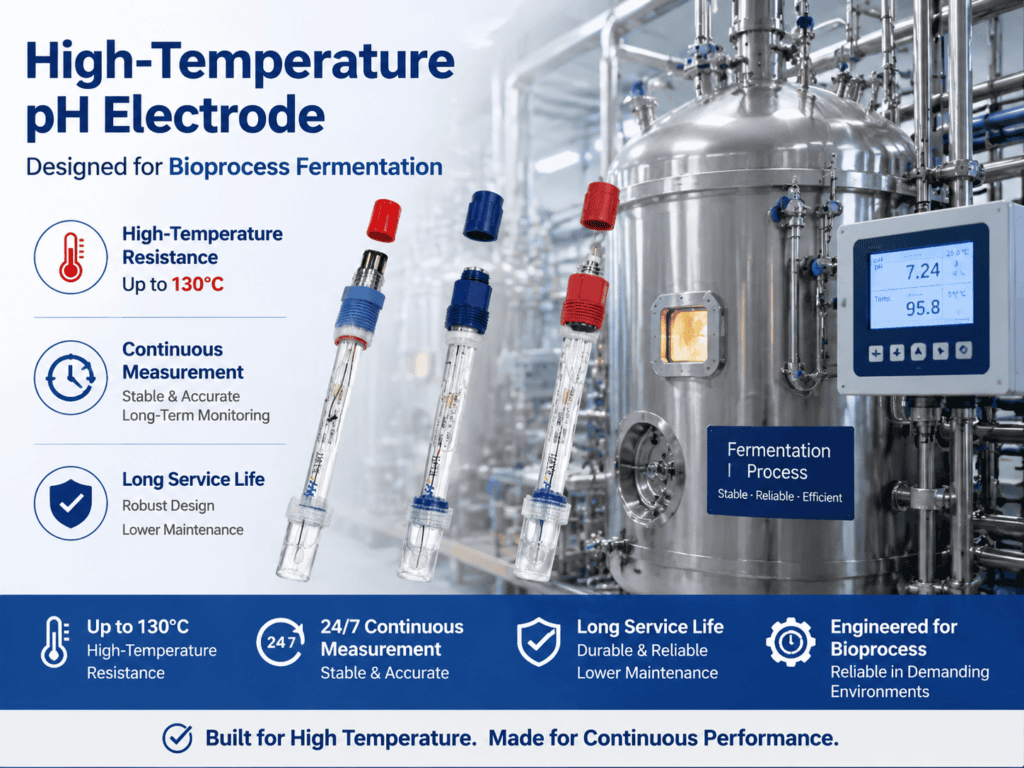
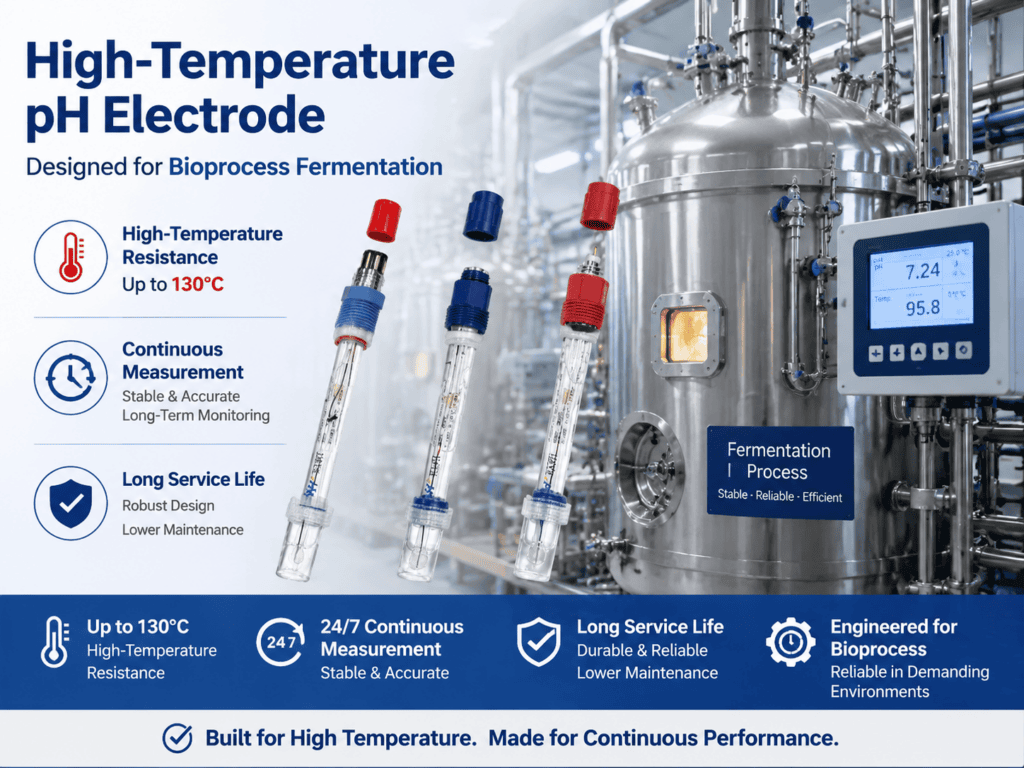
Industrial processes such as biological fermentation, pharmaceutical synthesis, and chemical manufacturing often operate under elevated temperatures. Steam sterilization at 121°C, reaction temperatures above 95°C, and reactor temperatures approaching 130°C create significant challenges for continuous pH monitoring.
Conventional industrial pH electrodes are typically designed for temperatures below 80°C. Under prolonged exposure to high temperatures, they commonly suffer from reading drift, slow response, electrolyte degradation, and even glass bulb failure.
Industrial online high-temperature resistant glass pH electrodes extend the operating temperature range to 130–140°C, allowing continuous and stable measurement in demanding applications. This article explains where these electrodes are used, why they perform better, and shares a real biological fermentation application.
Why High-Temperature pH Measurement Matters
High temperatures shorten electrode life
Many industrial processes require both high temperatures and continuous online pH monitoring. Examples include:
- Biological fermentation
- Pharmaceutical production
- Chemical reactors
- Chlor-alkali processing
- Power plant desulfurization
Under these conditions, conventional electrodes often fail long before their expected service life because the glass membrane, reference system, and electrolyte degrade rapidly.
Continuous monitoring is more important than laboratory accuracy
Unlike laboratory testing, industrial production requires 24/7 stable measurements.
A drifting pH signal may lead to incorrect chemical dosing, unstable product quality, or unnecessary process interruptions. Therefore, measurement reliability is often more valuable than achieving the highest possible laboratory precision.
Biological Fermentation: A Typical High-Temperature Application
Steam sterilization is the biggest challenge
Before every fermentation batch, fermenters are sterilized using saturated steam, typically at 121°C, 0.1 MPa, for approximately 30 minutes.
During sterilization, the hydrated layer on the glass membrane gradually dissolves, changing the electrode potential and accelerating sensor aging. Repeated sterilization cycles significantly reduce the lifespan of conventional pH electrodes.
According to the 2024 PDA Guidelines for Biopharmaceutical Production Monitoring, approximately 85% of conventional pH electrodes show noticeable performance degradation after repeated 121°C autoclave sterilization.
Fermentation requires both durability and precision
After sterilization, fermentation usually proceeds at 30–40°C, but pH must remain tightly controlled throughout the process.
Modern pharmaceutical production often requires monitoring accuracy of ±0.01 pH. Therefore, electrodes must quickly recover after sterilization while maintaining stable long-term performance throughout the fermentation cycle.
Field Application Case
From frequent replacement to long-term stability
One of our customers is a large amino acid manufacturer using microbial fermentation to produce glutamic acid products.
Previously, conventional electrodes required replacement after approximately 10–15 sterilization cycles because measurement stability gradually deteriorated.
After switching to high-temperature resistant glass pH electrodes, the sensors successfully completed approximately 50 sterilization cycles while maintaining stable online measurements consistent with laboratory analysis.
The customer reported significant improvements in measurement consistency, sensor lifetime, and overall maintenance efficiency.
Why High-Temperature Resistant Electrodes Perform Better
Special materials improve thermal stability
Unlike standard glass membranes, high-temperature resistant glass is specially formulated to maintain a stable hydrated layer during repeated heating and cooling cycles.
This allows the electrode to recover more quickly after sterilization while reducing long-term measurement drift.
Structural improvements increase service life
Several design improvements contribute to long-term stability:
- Dual liquid junction reduces contamination of the reference system.
- Gel electrolyte eliminates routine electrolyte refilling.
- Optimized internal structure improves resistance to thermal shock and pressure fluctuations.
Together, these improvements help reduce maintenance frequency while extending electrode service life.
Other Industrial Applications
Besides biological fermentation, high-temperature resistant pH electrodes are widely used in:
- Chemical reactors for continuous acid-base control
- Chlor-alkali production with strong oxidizing environments
- Dyes, pigments, and pulp & paper processing involving viscous slurries
- Power plant flue gas desulfurization systems requiring stable pH control
In these applications, stable online measurement helps improve process efficiency while reducing maintenance costs.
Performance Comparison
| Technical Indicator | High-Temperature Resistant Glass pH Electrode | Traditional High-Temperature Electrode | Standard Electrode |
| Temperature Range | 0–140°C | 0–100°C | 0–80°C |
| Response Time | 30–60 s | 60–90 s | 90–120 s |
| Pressure Resistance | 0.6–1.3 MPa | 0.4 MPa | 0.2 MPa |
| Maintenance Interval | 6–12 months | 3–6 months | 1–3 months |
| Service Life | 24–36 months | 12–18 months | — |
Selecting the Right High-Temperature pH Electrode
When choosing an industrial high-temperature electrode, engineers should evaluate:
- Maximum operating temperature
- Process pressure
- Sterilization frequency
- Chemical composition of the medium
- Fouling tendency
- Installation method
Selecting an electrode based only on temperature is rarely sufficient. Matching the sensor to the complete process conditions is the key to long-term reliability.
Conclusion
High-temperature resistant glass pH electrodes solve more than a measurement problem—they improve overall process reliability.
In biological fermentation, repeated steam sterilization is unavoidable. A properly designed electrode can continue delivering stable measurements after dozens of sterilization cycles, reducing maintenance while improving process consistency.
As industries such as biopharmaceuticals, synthetic biology, and fine chemicals continue to demand higher process reliability, high-temperature resistant industrial pH electrodes are becoming an essential component of modern online analytical systems.